Al-Ameen: Honesty and Trust in the Seerat
The Al-Ameen honesty trust Seerat lessons explain why the Prophet (PBUH) was known as Al-Ameen, the Trustworthy, long before his mission began. People in Makkah trusted him with their valuables, their disputes, and their word. They knew he would speak the truth, keep promises, and return what was entrusted to him. This guide explains what that title means, how honesty and trust shaped his life, and what pupils can learn from it. Honesty is not only about avoiding lies. It is about being reliable in words, work, and promises every day.
What Al-Ameen Means
Al-Ameen means the trustworthy one, a person who can be relied upon completely. In Makkah, this title was earned through years of honest conduct. The Prophet (PBUH) spoke truthfully, dealt fairly, and protected what others had entrusted to him. People gave him this title because they had tested his character over time.
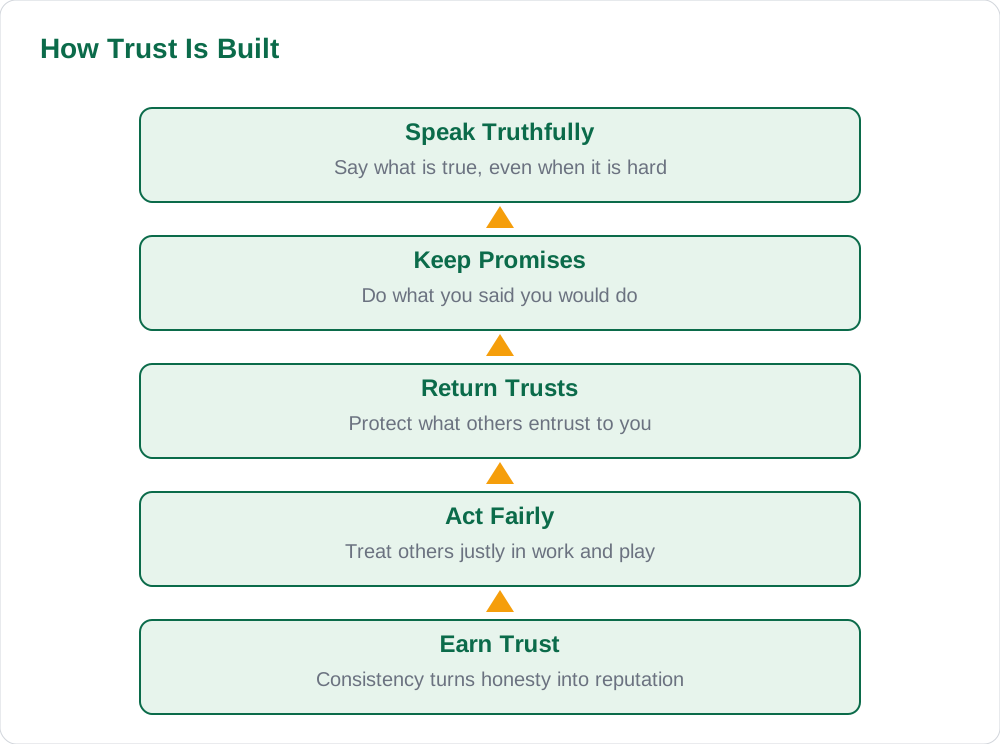
Pupils should understand that trust is earned, not claimed. It grows through small, consistent acts: telling the truth, returning borrowed items, and keeping promises. One honest act builds trust, and one dishonest act can weaken it. The title Al-Ameen therefore teaches a lifelong lesson about character.
- Al-Ameen means the trustworthy one.
- The title was earned through years of honest conduct.
- Trust grows through small, consistent acts.
- Honesty covers words, work, and promises.
Honesty Before Prophethood
Before prophethood, the Prophet (PBUH) was already known for honest trade and fair dealing. He weighed fairly, kept agreements, and refused to cheat. Merchants trusted him with goods, and neighbours trusted him with disputes. His honesty was part of daily business, not a special display.
This teaches pupils that character comes before position. A person does not become honest by gaining a title. Honesty in ordinary life, at home, in class, and in play, prepares a person for greater responsibility. Pupils who are honest in small matters build the habits they need for adult life.
Trust in Daily Life
Trust in the Seerat was practical. People left valuables with the Prophet (PBUH) because they knew he would guard them. Even when Makkah became hostile, he arranged for entrusted goods to be returned to their owners. Trust did not end when friendship ended. Duty remained.
Pupils face similar tests in smaller ways. Borrowing a book, holding a secret, or carrying a message all involve trust. Returning items on time, keeping confidences, and admitting mistakes protect trust. See the mercy lessons for how trust and kindness work together.
- Guard what others entrust to you with care.
- Return borrowed items on time and in good condition.
- Keep confidences and admit mistakes honestly.
- Duty of trust remains even after disagreement.
Keeping Promises and Returning Trusts
Keeping promises was central to the Prophet's (PBUH) character. A promise was a trust, and breaking it without excuse was a failure of faith and conduct. He taught that promises should be made carefully and kept faithfully. If a promise could not be kept, the honest course was to explain and apologise, not to hide or lie.
Pupils can practise this by making fewer, clearer promises. Instead of promising everything, promise what you can do, and then do it. When plans change, tell the other person early and honestly. This habit builds a reputation for reliability that teachers and friends will value.
Honesty for Pupils Today
Honesty for pupils today includes exams, homework, and friendships. It means doing your own work, citing help honestly, and refusing to copy or cheat. It also means telling the truth to teachers and parents, even when the truth is uncomfortable. Honest pupils may face short-term pressure, but they gain long-term confidence.
Build honesty with a daily check: did I tell the truth, keep my promises, and return what I borrowed? If not, correct it quickly. You can find study help in the solved notes and browse related Seerat lessons to connect honesty with other Seerat values.
AI Help: Muse AI
Muse AI is Meta's personal AI assistant. It can help you make an honesty checklist for school, draft examples of keeping promises, or summarise the meaning of Al-Ameen in your own words. Muse AI does not give official STBB answers — always verify against your STBB book and your teacher. Always check your notes against your Sindh Textbook Board book and your teacher's guidance.
Join Muse with invite code LTGSWD — in the Muse app, go to Settings > Redeem token and enter the code.
Disclosure: LTGSWD is the author's Muse invite code.
5 key points you must know
- Al-Ameen means the trustworthy one, earned through years of honest conduct.
- Honesty covers truthful speech, fair dealing, and kept promises.
- Trust is earned through small, consistent, reliable acts.
- Entrusted goods and confidences must be guarded and returned faithfully.
- Pupils build honesty through own work, truthfulness, and kept promises.
Frequently asked questions
Why was the Prophet (PBUH) called Al-Ameen?
People called him Al-Ameen because they had seen his honesty over many years. He spoke the truth, dealt fairly, kept promises, and protected what others entrusted to him.
What does honesty mean beyond not lying?
Honesty includes fair dealing, keeping promises, returning trusts, doing your own work, and admitting mistakes. It means being reliable in words, work, and promises every day.
Why must trusts be returned even after disagreement?
Because a trust is a duty, not a favour that ends with friendship. In the Seerat, entrusted goods were returned even when relations became hostile, showing that duty survives disagreement.
How can pupils practise honesty at school?
Do your own work, refuse to copy, tell the truth to teachers and parents, return borrowed items, and keep promises. A short daily honesty check helps pupils correct mistakes quickly.
Solved notes — preview free
These guides work best with the solved exercises. Preview the solved notes free on this website — 119 solved notes for Classes 6–10 in Sindhi, Urdu, English and Arabic medium. Or browse the full solved notes catalogue for your class and medium. New solved notes are added regularly — check the catalogue for coming-soon books.