Mercy and Kindness in the Seerat
The mercy kindness Seerat lessons teach pupils that strength and compassion belong together. The Prophet (PBUH) is remembered as a mercy to the worlds, and his daily life showed what that means in practice. He was gentle with family, kind to neighbours, patient with children, and forgiving even toward those who had opposed him. He cared for the weak, the poor, and the stranger. This guide collects clear examples of that mercy, explains why kindness is a form of strength, and helps pupils practise mercy in family life, school, and the neighbourhood.
Mercy Begins at Home
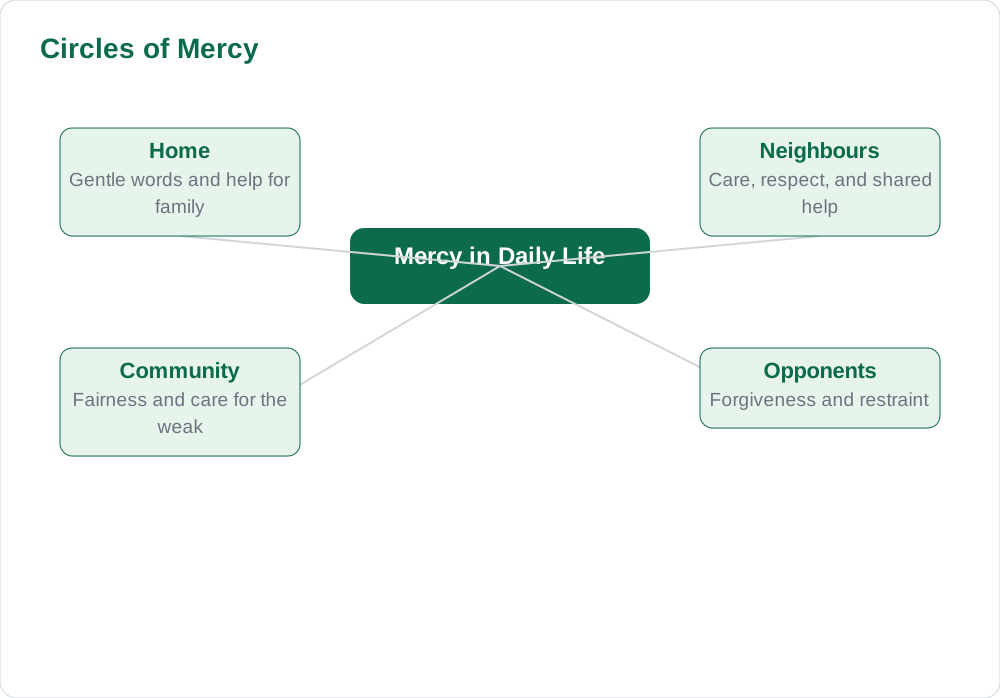
Mercy in the Seerat begins in the home. The Prophet (PBUH) treated family members with gentleness, patience, and respect. He played with children, listened to family concerns, and helped with household life. His home was a place of calm words and kind conduct, even when he carried heavy responsibilities outside it.
Pupils can learn that kindness is tested most at home, where people know us best. Speaking politely to parents and siblings, helping without being asked, and controlling anger are acts of mercy. A pupil who is kind at home will find it easier to be kind everywhere else.
- Gentle words at home show real character.
- Listening to family concerns is an act of mercy.
- Helping without being asked builds love and trust.
- Patience with siblings practises self-control daily.
Kindness to Neighbours
The Prophet (PBUH) taught that neighbours hold a special claim on our kindness. He urged Muslims to share food, check on the sick, and avoid harming neighbours by word or action. Kindness to neighbours was not limited to those who shared the same faith. It extended to all who lived nearby.
Pupils can practise this by greeting neighbours, keeping noise and litter in check, and offering help to elderly neighbours. Small acts, such as carrying a bag or sharing a meal, build trust and make a street feel like a community.
Forgiveness Toward Opponents
One of the most powerful examples of mercy in the Seerat is forgiveness toward opponents. After years of hardship and opposition, the Prophet (PBUH) chose forgiveness when he had the power to take revenge. He released captives, pardoned former enemies, and opened a path to peace. This choice showed that mercy is not weakness.
For pupils, forgiveness may mean letting go of a quarrel, refusing to spread gossip, or giving a classmate a second chance. Forgiveness does not mean ignoring harm. It means choosing peace, setting fair limits, and moving forward without hatred. See the Ghazwat lessons for mercy even in conflict.
- Forgiveness after power shows true strength.
- Mercy replaces revenge with peace and fairness.
- Letting go of grudges protects friendships.
- Second chances help people learn and improve.
Care for the Weak and Young
Mercy in the Seerat always included care for the weak. The Prophet (PBUH) showed tenderness to children, respect to elders, and concern for the poor, the orphan, and the traveller. He reminded his companions that a community is judged by how it treats those who cannot protect themselves.
Pupils can live this lesson by including younger children, standing up for a bullied classmate, and sharing with those who have less. Kindness to the weak is not charity alone. It is recognition that every person deserves dignity and care.
Practising Mercy at School
School is a daily training ground for mercy. Pupils practise it when they listen without interrupting, help a struggling classmate, apologise sincerely, and refuse to laugh at others. Teachers also model mercy when they correct with patience and give pupils a chance to improve.
Keep a simple mercy habit for one week: one kind act each day, one apology when needed, and one moment of patience when annoyed. Write down what changed. You can find more study help in the solved notes and browse related Seerat lessons for further examples.
AI Help: Muse AI
Muse AI is Meta's personal AI assistant. It can help you list examples of mercy from the Seerat, turn them into a daily kindness plan, or draft short reflections on forgiveness and care. Muse AI does not give official STBB answers — always verify against your STBB book and your teacher. Always check your notes against your Sindh Textbook Board book and your teacher's guidance.
Join Muse with invite code LTGSWD — in the Muse app, go to Settings > Redeem token and enter the code.
Disclosure: LTGSWD is the author's Muse invite code.
5 key points you must know
- Mercy in the Seerat begins at home with gentle words and patient conduct.
- Kindness to neighbours extends to all who live nearby.
- Forgiveness toward opponents shows that mercy is strength, not weakness.
- Care for the weak, young, and poor is a mark of a just community.
- Pupils practise mercy through listening, helping, apologising, and patience.
Frequently asked questions
Why is the Prophet (PBUH) called a mercy to the worlds?
Because his life showed compassion in every setting: family, neighbours, community, and even toward opponents. His mercy was practical, shown through forgiveness, care for the weak, and gentle conduct.
How did the Prophet (PBUH) show mercy at home?
He treated family with gentleness, listened to their concerns, played with children, and helped with household life. His home reflected calm words, patience, and respect even under heavy responsibility.
What does forgiveness mean in the Seerat?
Forgiveness means choosing peace and fairness instead of revenge. It includes pardoning opponents, releasing captives with kindness, and giving people a fair chance to live peacefully and improve.
How can pupils practise mercy at school?
Listen without interrupting, help a struggling classmate, apologise sincerely, include younger pupils, and refuse to mock others. One kind act each day builds a habit of mercy.
Solved notes — preview free
These guides work best with the solved exercises. Preview the solved notes free on this website — 119 solved notes for Classes 6–10 in Sindhi, Urdu, English and Arabic medium. Or browse the full solved notes catalogue for your class and medium. New solved notes are added regularly — check the catalogue for coming-soon books.