Taharat and Pakeezgi: Cleanliness as a Daily Habit
Islam teaches that cleanliness is part of faith. The Urdu words Taharat and Pakeezgi both point to this beautiful teaching: keeping the body, the clothes, the home, and the surroundings clean. For Class 6 pupils, cleanliness is not only a lesson for exams. It is a daily habit that protects health, pleases others, and brings a person closer to Allah. This guide explains what Taharat and Pakeezgi mean, how pupils can practise them at home and at school, and how small daily habits build a clean and healthy life.
What Taharat and Pakeezgi Mean
Taharat means purity and cleanliness in the Islamic sense. It includes wudu before prayer, washing after using the toilet, keeping clothes and the prayer place clean, and removing impurities. Pakeezgi is the wider habit of cleanliness in daily life: clean hands, clean teeth, clean nails, clean hair, clean shoes, and a clean room. Together, these two words cover both the religious duty of purity and the everyday habit of tidiness. A pupil who practises both is clean before Allah and clean before people.
Cleanliness also protects health. Washing hands before eating and after playing, brushing teeth twice a day, bathing regularly, and keeping nails short all prevent illness. A clean classroom prevents the spread of germs and helps pupils concentrate. Teachers can explain this link clearly: cleanliness is both a religious duty and a health habit. When pupils understand both reasons, they practise cleanliness with more care, because they see that it protects their body as well as their faith.
- Taharat: purity for worship, including wudu and clean clothes.
- Pakeezgi: daily tidiness of body, dress, room, and surroundings.
- Cleanliness is both a religious duty and a health habit.
- A clean body and a clean place help a calm and focused mind.
Cleanliness of the Body: Daily Habits That Protect Health
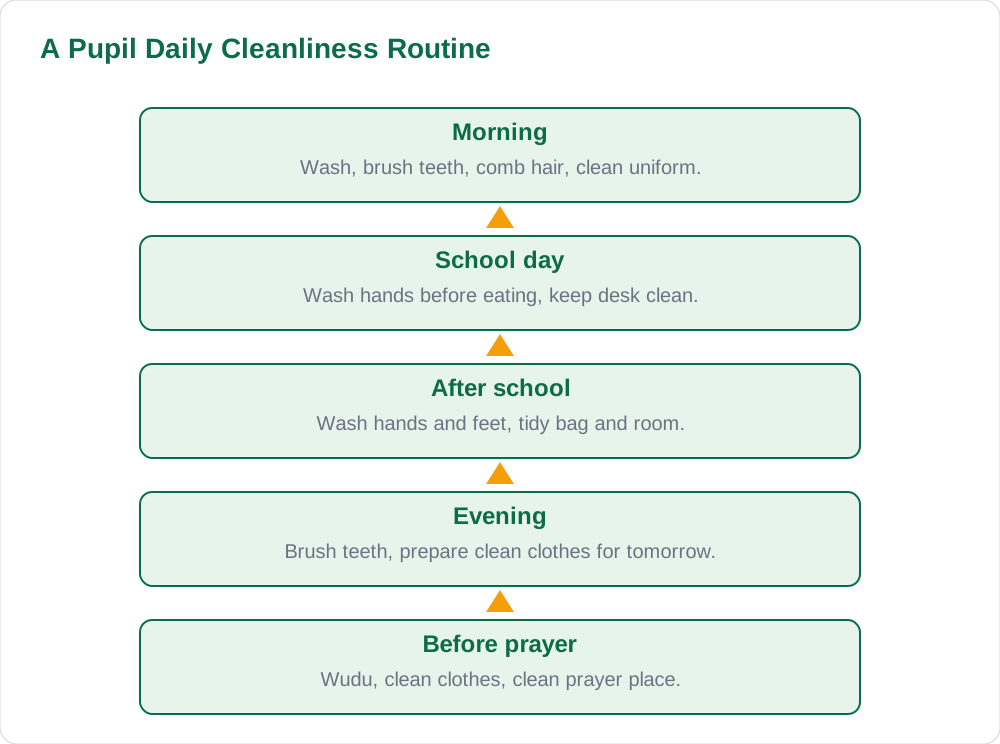
Cleanliness of the body begins with simple daily habits. Pupils should wash their hands with soap before eating and after using the toilet, after playing outside, and after touching animals. They should brush their teeth in the morning and before sleeping, keep their nails trimmed, comb their hair, and bathe regularly. Clean clothes matter too. A school uniform that is washed, ironed, and worn with care shows respect for oneself, for the school, and for others.
Parents can help by building a short morning and evening routine. Morning: wash face, brush teeth, comb hair, check uniform, pack a clean handkerchief. Evening: wash hands and feet, change out of the uniform, tidy the school bag, and prepare for the next day. When these steps become routine, pupils no longer need reminders. They carry the habit for life. A useful classroom activity is to let pupils design a cleanliness checklist for their own desks and bags, and to check it once a week.
Cleanliness at Home and in the Classroom
Cleanliness does not stop at the body. A clean home is a happy home. Pupils can help by keeping their rooms tidy, making their beds, putting shoes in place, throwing rubbish in the bin, and keeping the kitchen and bathroom clean after use. Small acts matter. A pupil who leaves a room cleaner than they found it is practising Pakeezgi in the truest sense. Parents should praise this habit, because praise makes good habits grow faster than scolding.
In the classroom, cleanliness is a shared duty. Pupils should keep their desks clean, throw paper in the bin, keep the floor free of rubbish, and look after school property. A class monitor or a weekly cleanliness team can check the room at the end of the day. When the whole class takes pride in a clean room, learning becomes easier and the room becomes a pleasant place to be. Discussion question: what is one way our class can become cleaner this week, and who will take responsibility for it?
- At home: tidy room, made bed, rubbish in the bin, clean after use.
- At school: clean desk, clean floor, care for school property.
- Leave every room cleaner than you found it.
- A weekly class cleanliness team builds shared responsibility.
Cleanliness of the Surroundings: Streets, Water, and Nature
Pakeezgi also means caring for the surroundings. Pupils should not throw rubbish in streets, drains, or canals. They should use bins, and where there is no bin, they should keep rubbish in a bag until they find one. They should protect water by not wasting it and by keeping wells, taps, and water coolers clean. They should care for plants and trees, because a green and clean environment is a blessing for the whole community.
A clean neighbourhood begins with each home. If every family keeps its street clean, the whole town becomes clean. Pupils can take part in a school cleanliness drive, planting trees, cleaning a park, or painting a wall with a cleanliness message. Such drives teach teamwork and civic pride. They also show that Islam cares for the whole environment, not only for the prayer mat. A pupil who picks up a wrapper without being asked is practising faith in action.
Study Method: A One-Week Cleanliness Challenge
The best way to study Taharat and Pakeezgi is to practise them for one week. Pupils can keep a simple chart with five rows: body, clothes, room, classroom, surroundings. Each day, they tick the rows they completed and write one sentence about what they did. At the end of the week, they review the chart with a parent or teacher and set one goal for the next week. This challenge turns a lesson into a habit.
For revision, pupils can answer questions such as: what is the difference between Taharat and Pakeezgi? Why is cleanliness called part of faith? What are three daily habits that protect health? How can our class keep the room clean? What is one way I can care for my street? Short written answers and class discussion both work well. For more on daily worship habits, see the blog and the companion guide Understanding Namaz Step by Step.
- Keep a one-week chart: body, clothes, room, classroom, surroundings.
- Tick each row daily and write one sentence about it.
- Review the chart weekly and set one new goal.
- Practise one new cleanliness habit each week.
AI Help: Muse AI
Muse AI is Meta's personal AI assistant, and it can help with this topic by turning Taharat and Pakeezgi into a daily checklist, explaining cleanliness habits in simple words, or making short practice questions for revision.
Join Muse with invite code LTGSWD — in the Muse app, go to Settings > Redeem token and enter the code.
Disclosure: LTGSWD is the author's Muse invite code.
Muse AI does not give official STBB answers — always verify against your Sindh Textbook Board book and your teacher.
5 key points you must know
- Taharat is purity for worship; Pakeezgi is daily tidiness of body and surroundings.
- Clean hands, teeth, nails, hair, and clothes protect health.
- A clean home and classroom make learning easier and life happier.
- Caring for streets, water, and nature is part of Pakeezgi.
- Small daily habits, tracked for a week, build cleanliness for life.
Frequently asked questions
What is the difference between Taharat and Pakeezgi?
Taharat means purity for worship, such as wudu and clean clothes for prayer. Pakeezgi is the wider daily habit of tidiness: clean body, dress, room, classroom, and surroundings.
Why is cleanliness called part of faith in Islam?
Because Islam teaches that a believer keeps the body, clothes, and surroundings clean as an act of worship. Cleanliness protects health, shows respect for others, and prepares a person for prayer.
What are three daily cleanliness habits for pupils?
Wash hands with soap before eating and after the toilet, brush teeth twice a day, and keep nails trimmed and clothes clean. Add a tidy room and a clean desk for full daily practice.
How can a class keep its room clean?
By keeping desks tidy, using bins, keeping the floor free of rubbish, caring for school property, and running a weekly cleanliness team that checks the room at the end of the day.
How can pupils care for their surroundings?
By using bins, never throwing rubbish in streets or drains, saving water, keeping taps clean, caring for plants, and joining school cleanliness drives. See also the companion Namaz guide for cleanliness before prayer.
Solved notes — preview free
These guides work best with the solved exercises. Preview the solved notes free on this website — 119 solved notes for Classes 6–10 in Sindhi, Urdu, English and Arabic medium. Or browse the full solved notes catalogue for your class and medium. New solved notes are added regularly — check the catalogue for coming-soon books.