Social Studies: How Local Government Works
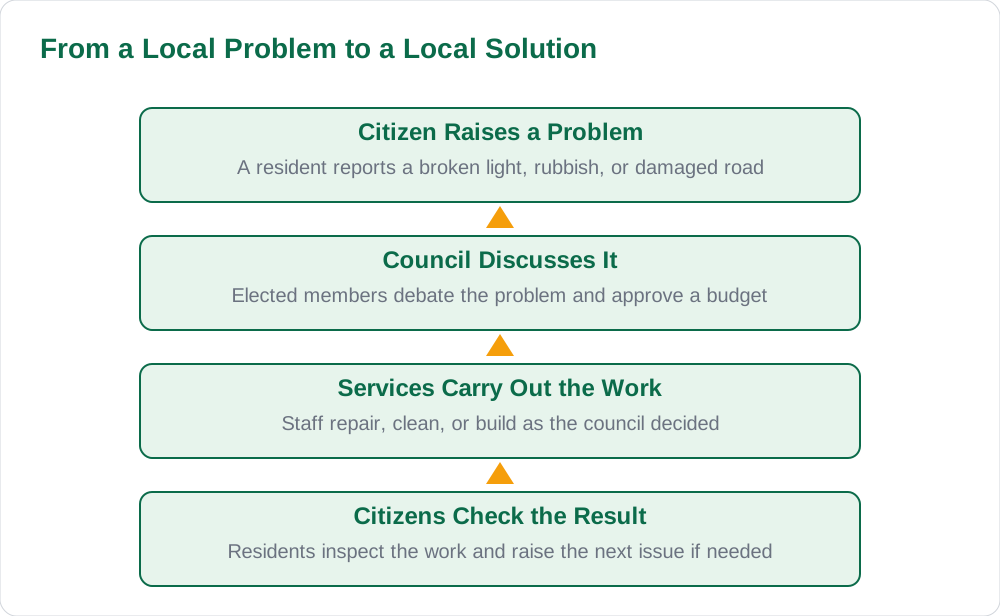
Local government is the level of government closest to daily life, and it looks after the streets, water supply, cleanliness, street lights, parks, and basic services in a town, city, or village area. While the federal and provincial governments handle national and provincial matters, local bodies handle the practical problems that residents notice first: a broken street light, an uncollected pile of rubbish, a damaged road, or a need for a new park. Local councils are usually elected by the people of the area, so residents can choose their representatives, attend meetings, and raise complaints directly. In this guide, we explain how local government works in simple words, what services it provides, and how citizens, including students, can take part in making their neighbourhood better.
Why Local Government Exists
Local government exists because the people who live in an area understand its problems best. A central office far away cannot know which street floods after rain, which neighbourhood needs a new water pipe, or which park needs repair, but local councillors who live in the area can see these problems themselves. Local government therefore brings decision-making closer to the people, so services can respond faster and spending can match local priorities. It also gives ordinary citizens a real chance to take part in politics, because local elections and council meetings are open and close to home, unlike national politics which can feel distant.
Another reason for local government is accountability. When a service fails in a neighbourhood, residents know exactly which council to approach, and they can judge its performance at the next election. This closeness creates pressure to perform, because councillors meet their voters in markets, mosques, and schools every day. For students, this is an important lesson: democracy is not only about national elections every few years, but also about local choices that affect the walk to school, the cleanliness of streets, and the safety of playgrounds. Local government is where citizenship becomes practical and visible.
The Main Levels of Local Government
Local government is usually organised in levels, starting from the smallest unit and rising to larger areas. At the base are union councils in rural and urban neighbourhoods, which represent a small cluster of villages or city blocks and handle very local issues. Above them sit town or municipal committees and municipal corporations in larger towns and cities, which manage services across a wider urban area. At the district level, a district council coordinates development across towns and villages in the district, linking local plans with provincial programmes for roads, health, and education. The exact names and powers can vary over time, so students should learn the general structure and check their textbook for the current arrangement.
Each level has elected members and a chairperson or mayor who leads its meetings and represents the area. Members debate budgets, approve small development projects, and oversee the staff who carry out services such as sanitation and water supply. A union council might prioritise a village street or a hand pump, while a city corporation might plan a bus route or a large park. Understanding this ladder helps students answer questions accurately: they can explain which level handles which problem, instead of saying vaguely that the government will fix everything. Good answers name the level, the service, and the reason it fits that level.
Services Local Government Provides
The most visible services of local government are cleanliness, water supply, and street maintenance. Councils arrange collection of solid waste, cleaning of streets and drains, supply of drinking water, and repair of local roads and footpaths. They also look after street lighting, public parks, playgrounds, graveyards, and markets, and they may run libraries, community halls, and vaccination or health camps in cooperation with provincial departments. In cities, municipal bodies also manage traffic parking, building permissions for small construction, and the licensing of markets and trades, so that urban life stays orderly and safe.
Students can observe these services on a walk around their own neighbourhood and turn the walk into a study exercise. Note which services work well, such as a clean park or a working street light, and which need attention, such as a blocked drain or a broken footpath. Then ask which local body is responsible for each item and how a citizen could report it. This observation habit connects textbook definitions to real streets and makes revision memorable. It also builds civic sense, because students learn to see public services as shared responsibilities rather than as favours granted by officials.
Where the Money Comes From
Local government needs money to provide services, and it raises funds from several sources. Local taxes and fees, such as property-related charges, market fees, and charges for water or other services, provide part of the income. Provincial governments also transfer funds to local bodies, because many local services serve provincial goals such as health and education. In addition, local bodies may receive grants for special projects, such as a new water scheme or a road programme. A council budget lists expected income and planned spending, and members debate it publicly so that residents can see where money will go.
Understanding local finance helps students answer a common question: why do some services improve slowly? The answer is often that income is limited, costs are rising, or funds arrive late, so councils must prioritise the most urgent needs first. Citizens can help by paying local charges honestly, avoiding waste of water and electricity, and protecting public property from damage, because every rupee saved on repairs is a rupee available for new services. Students who explain this link between honest payment, careful use, and better services show mature civic understanding in their answers. More civic guides are listed on Blog.
How Citizens Can Take Part
Citizens take part in local government first by voting in local elections, choosing councillors who understand local problems and promise practical solutions. They can also attend open council meetings where the law allows, raise problems through written complaints or complaint cells, and follow up politely until action is taken. Community groups, parent-teacher associations, and neighbourhood committees can collect shared concerns, such as a dangerous crossing near a school, and present them as one clear request instead of many scattered complaints. This organised, peaceful participation is far more effective than anger or rumour.
Students can take part too, even before voting age, by keeping their school and street clean, reporting a broken facility to a teacher or elder, and joining cleanliness or tree-planting drives. They can write a short, polite letter to a council about a local problem, stating the place, the problem, and a suggested solution, and they can discuss local issues respectfully at home. Such habits build the confidence and communication skills that active citizens need. For solved notes and further study material, visit Solved Notes and the book list on Books. Local government works best when citizens watch, participate, and care.
AI Help: Muse AI
Muse AI is Meta's personal AI assistant, and it can help you understand local government by explaining which council level handles a problem such as a broken street light or a blocked drain. For example, you can ask it to trace a complaint from a citizen to a council decision, to draft a polite complaint letter, or to quiz you on local services. Muse AI does not give official STBB answers — always verify against your STBB book and your teacher. Always verify against your Sindh Textbook Board book and your teacher before using anything in classwork.
Join Muse with invite code LTGSWD — in the Muse app, go to Settings > Redeem token and enter the code. Disclosure: LTGSWD is the author's Muse invite code.
5 key points you must know
- Local government is the level closest to daily life: streets, water, cleanliness, and parks.
- Levels run from union councils up through towns and cities to district councils.
- Councils are elected, debate budgets, and oversee local services.
- Local funds come from local charges, provincial transfers, and project grants.
- Citizens take part by voting, complaining lawfully, and caring for shared services.
Frequently asked questions
What is local government?
Local government is the elected body that manages services in a town, city, or village area, such as cleanliness, water supply, street lighting, roads, and parks. It works close to residents, so problems can be reported and solved faster than through distant offices. Its members are chosen by local voters and are accountable to the people of that area.
What is a union council?
A union council is the smallest unit of local government, representing a small cluster of villages or city neighbourhood blocks. It handles very local issues, such as neighbourhood streets, small water points, and community concerns, and it brings residents' voices to higher levels. Students should learn it as the base level from which larger town and district bodies build.
What services does a city corporation provide?
A city corporation manages services across a large urban area, including waste collection, water supply, road repair, street lighting, parks, markets, and building permissions. It may also run libraries, community halls, and health camps with provincial departments. Its wider area and larger budget let it plan services that a single neighbourhood council could not manage alone.
How does local government get its money?
Local government raises money from local charges and fees, such as market fees and service charges, and it receives transfers and grants from the provincial government for wider goals like health and development. Its budget lists income and planned spending, debated openly by elected members. Limited income is one reason councils must prioritise urgent needs first.
How can a student help improve their neighbourhood?
A student can keep streets and school grounds clean, report a broken facility politely to a teacher or elder, and join cleanliness or tree-planting drives. They can also help write a clear, polite complaint stating the place, the problem, and a suggested solution. These habits build civic confidence and show that young citizens can improve their area even before voting age.
Solved notes — preview free
These guides work best with the solved exercises. Preview the solved notes free on this website — 119 solved notes for Classes 6–10 in Sindhi, Urdu, English and Arabic medium. Or browse the full solved notes catalogue for your class and medium. New solved notes are added regularly — check the catalogue for coming-soon books.