Social Studies: Culture and Festivals of Sindh
Culture is the way of life of a people: their language, food, dress, music, crafts, beliefs, and celebrations, and Sindh has one of the oldest and richest cultures in South Asia. From the ancient city of Mohenjo-daro to the poetry of Shah Abdul Latif Bhittai, from the colours of ajrak cloth to the music of the ektara, Sindhi culture blends history, river life, and warm hospitality into a distinct identity that Sindhis carry with pride wherever they live. Festivals in Sindh, whether cultural, religious, or seasonal, bring families and communities together, renew old friendships, and pass traditions to children through joy rather than through lessons alone. In this guide, we explore Sindhi language, music, crafts, food, and festivals in simple words, so students can describe their own culture with pride and understand the cultures of others with respect.
Sindhi Language and Literature
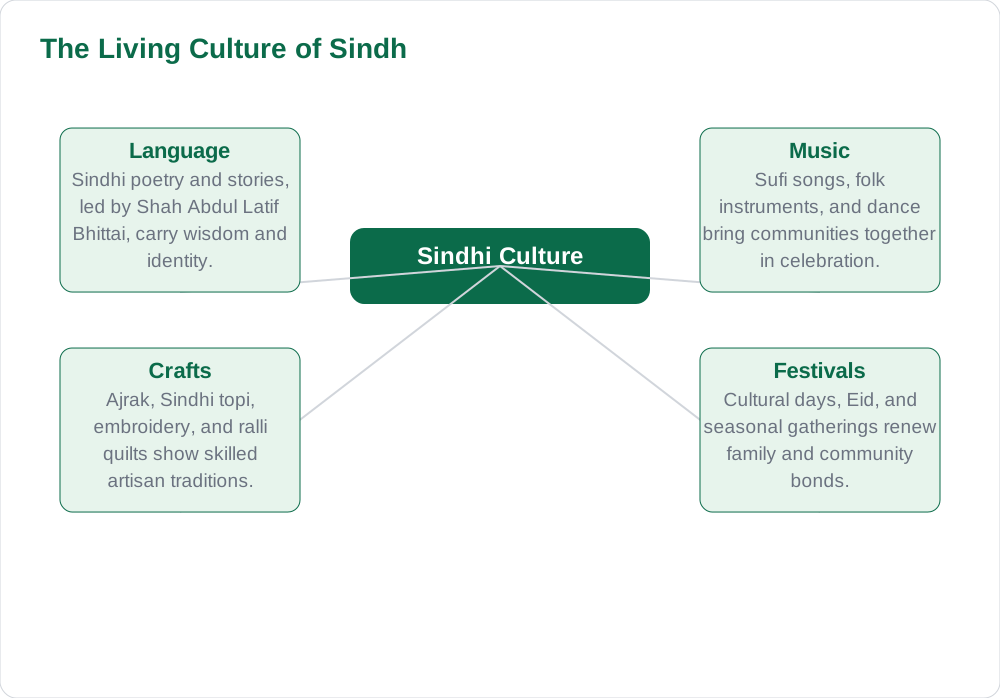
Sindhi is the language of Sindh, spoken by millions and written in the Arabic script in Pakistan, and it carries a literary tradition that students should know with pride. Its greatest poet, Shah Abdul Latif Bhittai, wrote verses that teach love, humility, courage, and respect for ordinary working people, and his shrine at Bhit Shah remains a centre of music and devotion. Other poets and writers have enriched Sindhi with stories, songs, and histories that record how people lived along the Indus through centuries of change. Language is more than a tool for talking: it holds proverbs, jokes, lullabies, and wisdom that no translation can fully replace, which is why learning and using Sindhi matters for cultural identity.
Students can honour their language by reading Sindhi stories, learning a poem by heart, and speaking Sindhi proudly at home and with friends, alongside Urdu and English for wider communication. Multilingual skill is a strength, not a confusion, because each language opens a different world of books, people, and opportunities. In class answers, students can explain that Sindhi literature teaches moral lessons through beautiful images of the river, the desert, and the lives of fisherfolk, farmers, and craftspeople. Such examples show that literature is not separate from daily life, but a mirror of the land and its people.
Music, Dance, and the Arts
Sindhi music is known for its soulful melodies, Sufi poetry, and instruments such as the ektara, chapri, and dhol, and it is performed at shrines, weddings, and cultural gatherings across the province. Sufi singers set the poetry of Bhittai and other saints to music, turning spiritual lessons into songs that crowds can sing together and remember. Folk dances, performed in colourful dress at celebrations, add joy and movement to these occasions, while storytelling and theatre keep old tales alive for new generations. Music in Sindh is therefore not only entertainment; it is a way of teaching, remembering, and bringing a community together in shared feeling.
Students studying Sindhi arts should learn to name one instrument, one poet, and one occasion, and to explain how they fit together. For example, a Sufi song at a shrine gathering teaches humility through poetry, while a wedding dance celebrates family and community bonds. This method of one example per idea makes answers concrete and memorable, instead of vague praise for culture in general. Schools can support this learning by inviting local musicians, organising cultural days, and encouraging students to perform a song or poem in Sindhi with confidence. Pride in one's own art grows best when it is practised, not only described.
Crafts and Dress: Ajrak, Topi, and Embroidery
Sindhi crafts are famous across Pakistan, above all ajrak, the block-printed cloth in deep indigo and red patterns, and the Sindhi topi, the embroidered cap worn with pride on cultural occasions. Ajrak making is a skilled craft involving dyeing, printing, and washing in repeated stages, and each pattern carries meanings passed down through generations of artisans. Women’s embroidery, mirror work, and ralli quilts add further colour and skill, turning everyday cloth into art that is used, gifted, and treasured. These crafts support artisan families economically, so buying genuine handmade work, rather than cheap imitation, helps preserve both livelihoods and traditions.
Dress in Sindh reflects climate, work, and identity: light cotton suits the hot plains, while ajrak shawls and embroidered caps mark cultural occasions and show respect for guests. On Sindhi Cultural Day, people wear ajrak and topi, sing Sindhi songs, and celebrate their language and heritage in rallies, schools, and homes. Students can describe this day in answers as an example of cultural pride expressed peacefully and joyfully, bringing together people of different backgrounds who share Sindh as home. Learning the names and meanings of crafts helps students see that culture lives in skilled hands, not only in books or museums.
Food, Hospitality, and Daily Life
Sindhi food reflects the land and river: rice, wheat, lentils, fish, and vegetables form everyday meals, with dishes such as Sindhi biryani, sai bhaji, and fish preparations enjoyed at family gatherings. Hospitality, called mehman-nawazi, is a proud Sindhi value, and guests are welcomed with food, tea, and respectful conversation, whether they arrive in a village home or a city flat. Markets display this food culture vividly, with fresh produce, spices, sweets, and crafts side by side, and cooking itself passes knowledge from elders to children through shared work in the kitchen. Students can learn culture simply by helping prepare a family dish and asking elders about its story, ingredients, and occasion.
Daily life in Sindh also shows the influence of the Indus and the seasons. Farming families plan around river water and harvests, fishing families around tides and seasons, and city families around markets, schools, and workplaces that never sleep in Karachi. Respect for elders, care for neighbours, and generosity to guests are values taught at home before they are taught at school, and they shape how communities handle both joy and hardship. When students describe Sindhi culture, they should include these everyday values alongside festivals and crafts, because culture is lived on ordinary days, not only on special occasions.
Festivals That Bring People Together
Festivals in Sindh include religious celebrations such as Eid-ul-Fitr and Eid-ul-Adha, when families pray, share meals, give charity, and visit relatives and neighbours, including friends of other faiths who join in the joy. Sindhi Cultural Day is a celebration of language, dress, music, and identity, when ajrak and topi are worn proudly and Sindhi songs fill streets, schools, and homes. Urs gatherings at the shrines of Sufi saints draw devotees for prayer, music, and charity, showing the spiritual side of Sindhi culture. Seasonal and harvest gatherings, village fairs, and weddings add further occasions for music, food, and reunion throughout the year.
Festivals teach important social lessons that students can name in answers: sharing with the poor at Eid teaches charity, wearing ajrak on Cultural Day teaches pride without exclusion, and gathering at Urs teaches devotion and community service. Good celebrations also respect others, keeping noise and traffic in mind, caring for cleanliness after gatherings, and welcoming guests of every background. In this way, festivals strengthen both identity and harmony, because a community that celebrates its own culture confidently can also respect the cultures of others. For more cultural and social guides, visit Blog, read solved notes on Solved Notes, and browse the book collection on Books.
AI Help: Muse AI
Muse AI is Meta's personal AI assistant, and it can help you learn Sindhi culture by explaining a festival, a craft, or a poem in simple words with its story and meaning. For example, you can ask it to describe ajrak making step by step, to summarise a poem of Shah Abdul Latif Bhittai, or to quiz you on Sindhi festivals and their lessons. Muse AI does not give official STBB answers — always verify against your STBB book and your teacher. Always verify against your Sindh Textbook Board book and your teacher before using anything in classwork.
Join Muse with invite code LTGSWD — in the Muse app, go to Settings > Redeem token and enter the code. Disclosure: LTGSWD is the author's Muse invite code.
5 key points you must know
- Sindhi culture blends language, music, crafts, food, and festivals shaped by the Indus.
- Shah Abdul Latif Bhittai's poetry teaches love, humility, and respect for working people.
- Ajrak and Sindhi topi are proud symbols of Sindhi identity and artisan skill.
- Hospitality, respect for elders, and generosity are everyday Sindhi values.
- Festivals such as Eid, Cultural Day, and Urs teach charity, pride, and community harmony.
Frequently asked questions
What is ajrak and why is it important?
Ajrak is a traditional block-printed cloth from Sindh, known for its deep indigo and red patterns made through skilled dyeing and printing stages. It is worn as a shawl on cultural occasions and gifted as a mark of honour to guests. Ajrak matters because it preserves artisan skills, supports craftspeople's livelihoods, and symbolises Sindhi identity with pride.
Who was Shah Abdul Latif Bhittai?
Shah Abdul Latif Bhittai was Sindh's greatest poet, whose verses teach love, humility, courage, and respect for ordinary people such as farmers, fisherfolk, and craftspeople. His poetry, sung at his shrine in Bhit Shah and across Sindh, remains central to Sindhi music and literature. Students remember him as the voice of Sindhi wisdom expressed through beautiful images of land and river.
What is Sindhi Cultural Day?
Sindhi Cultural Day is a celebration of Sindhi language, dress, music, and identity, when people wear ajrak and Sindhi topi, sing Sindhi songs, and gather in schools, streets, and homes. It expresses cultural pride peacefully and joyfully, and it welcomes all who share Sindh as home. For students, it is a clear example of identity celebrated through language, crafts, and music together.
Which religious festivals are celebrated in Sindh?
Muslims in Sindh celebrate Eid-ul-Fitr after Ramazan and Eid-ul-Adha with prayer, charity, family meals, and visits to relatives and neighbours. Hindu, Christian, and other communities celebrate their own festivals, and neighbours often share greetings and sweets across faiths. Urs gatherings at Sufi shrines add a spiritual dimension, with prayer, music, and service to visitors.
How can students learn about their own culture?
Students can learn by speaking their language at home, reading a poem or story, helping cook a family dish, asking elders about crafts and festivals, and taking part in cultural days at school. Visiting a museum, a shrine gathering, or a craft market with family also brings culture to life. Culture is learned best by practising it respectfully, not only by reading about it.
Solved notes — preview free
These guides work best with the solved exercises. Preview the solved notes free on this website — 119 solved notes for Classes 6–10 in Sindhi, Urdu, English and Arabic medium. Or browse the full solved notes catalogue for your class and medium. New solved notes are added regularly — check the catalogue for coming-soon books.