Social Studies: Rights and Duties of a Citizen
A citizen is a legal member of a country, and citizenship brings both rights and duties that fit together like two sides of the same coin. Rights are the freedoms and protections that the state guarantees, such as equality before the law, freedom of expression, and access to education, while duties are the responsibilities citizens owe in return, such as obeying the law, paying taxes honestly, and respecting the rights of others. A society works well when citizens claim their rights responsibly and perform their duties willingly, because rights without duties become selfishness, and duties without rights become unfairness. In this guide, we explain the main rights and duties of a citizen in simple words, with school and community examples that students can use in class answers and in daily life.
Who Is a Citizen?
A citizen is a person who legally belongs to a country and enjoys its protection, its rights, and its opportunities to take part in public life. Citizenship is usually gained by birth in the country or by descent from citizen parents, and in some cases it can be gained later through a legal process. Citizens can vote in elections, hold public office where the law allows, and seek help from their country's institutions when they travel or face difficulty. They also carry an identity document that proves their citizenship, which is used for schooling, employment, banking, and many official purposes throughout adult life.
It is useful for students to distinguish a citizen from a visitor or a resident who is not a citizen. A visitor may enjoy safety and basic courtesies while staying in a country, but does not vote or hold the full political rights of a citizen. A citizen, by contrast, is a permanent member of the political community, with a voice in choosing leaders and a stake in the country's future. This is why civic education matters: young people who understand citizenship early grow into adults who vote thoughtfully, follow the law willingly, and contribute to their communities instead of only expecting services from the state.
The Main Rights of a Citizen
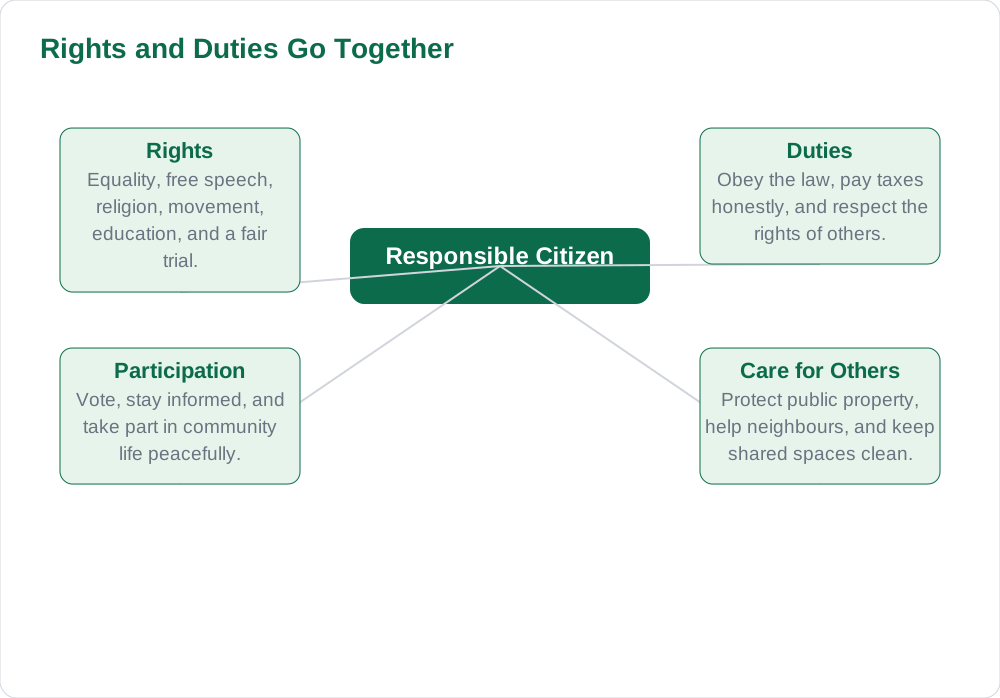
The main rights of a citizen begin with equality before the law, which means that the law treats rich and poor, strong and weak, by the same standard. Freedom of speech and expression allows citizens to share opinions, discuss public issues, and criticise policies peacefully and respectfully. Freedom of religion allows each person to follow their faith without fear, while freedom of movement allows citizens to travel and settle within the country. The right to education opens the door to learning and employment, and the right to a fair trial protects a person accused of an offence from unfair punishment without proper legal process.
These rights are practical, not abstract, and students can see them in daily life. A student exercises freedom of expression when they ask a question in class or write a letter to a newspaper, and they benefit from the right to education every time they attend school. Equality before the law matters when a dispute is settled by rules rather than by wealth or influence. When students give examples like these in answers, they show that they understand rights as living protections, not as words copied from a book. The solved notes on Solved Notes offer more revision material on civic topics.
The Main Duties of a Citizen
Duties begin with obeying the law, because a society in which everyone follows their own rules quickly becomes unsafe and unfair. Citizens should pay taxes honestly, since taxes fund schools, hospitals, roads, and other services that everyone uses. They should respect public property, such as parks, libraries, and buses, and avoid damaging what belongs to the whole community. They should also respect the rights and beliefs of others, even when they disagree, because freedom for one person ends where harm to another begins. Finally, citizens should stay informed about public affairs and vote in elections, since democracy depends on thoughtful participation, not on indifference.
Students can practise civic duties at school long before they can vote. Following school rules, caring for classroom furniture, keeping the playground clean, and treating classmates with respect are all small forms of good citizenship. Helping a new student settle in, returning lost property, and standing up politely against bullying are duties of character as much as of law. Teachers notice these habits, and classmates benefit from them, so the school becomes a training ground for the larger community. A student who is a good citizen at school is already preparing to be a good citizen of the country.
When Rights and Duties Seem to Clash
Sometimes rights and duties appear to clash, and students should learn to think through such cases calmly. For example, freedom of speech allows a person to express an opinion, but it does not allow spreading false rumours that damage another person's reputation or safety. Freedom of movement allows travel, but it does not allow entering private property without permission. In each case, the solution is balance: enjoy your own freedom fully, but stop where another person's freedom, safety, or property begins. Courts and laws exist precisely to draw these lines fairly when citizens disagree about where they fall.
A helpful classroom exercise is to discuss a short case and ask what right is involved, what duty limits it, and what a fair outcome would be. For instance, students may debate whether loud music late at night is an exercise of freedom or a disturbance of neighbours' rest, and most will conclude that freedom must respect the peace of others. Such discussions build the judgement that citizenship requires, because real life rarely offers a rule for every situation. The aim is not to memorise a slogan, but to learn the habit of asking: what is my right, what is my duty, and how can both be honoured?
Being a Good Citizen Every Day
Good citizenship is shown in ordinary actions more than in grand speeches. It means queuing patiently, using water and electricity carefully, disposing of litter properly, helping elderly neighbours, and speaking politely to officials and shopkeepers alike. It means voting after learning about candidates and issues, rather than following rumours or pressure from others. It means protecting the environment by planting trees, saving water, and keeping streets clean, because public spaces belong to everyone. These habits may look small, but multiplied across millions of citizens, they decide whether a country feels orderly, kind, and fair.
Students can start today with a simple weekly habit: one act of service, one act of honesty, and one act of learning about their country. Service might mean helping a classmate or cleaning a shared space, honesty might mean admitting a mistake, and learning might mean reading a news story and discussing it with family. Over time, these habits build character and civic sense together. For more guides on citizenship and community life, visit Blog and the book collection on Books. A country is only as strong as the daily conduct of its citizens, and young citizens are its future.
AI Help: Muse AI
Muse AI is Meta's personal AI assistant, and it can help you learn citizenship by explaining a right or a duty with a simple school or neighbourhood example. For example, you can ask it to give a short case study, to compare two rights, or to make quiz questions that test whether you can spot the balance between freedom and responsibility. Muse AI does not give official STBB answers — always verify against your STBB book and your teacher. Always verify against your Sindh Textbook Board book and your teacher before using anything in classwork.
Join Muse with invite code LTGSWD — in the Muse app, go to Settings > Redeem token and enter the code. Disclosure: LTGSWD is the author's Muse invite code.
5 key points you must know
- Citizenship means legal membership of a country, with rights and duties together.
- Key rights include equality, free speech, religion, movement, education, and fair trial.
- Key duties include obeying the law, paying taxes honestly, and respecting others.
- Freedom ends where harm to another person's rights, safety, or property begins.
- Good citizenship shows in daily habits: honesty, service, cleanliness, and voting thoughtfully.
Frequently asked questions
What is the difference between a right and a duty?
A right is a freedom or protection guaranteed to a citizen, such as equality before the law or freedom of speech. A duty is a responsibility a citizen owes in return, such as obeying the law or respecting others. Rights and duties fit together: claiming rights without duties is selfish, while duties without rights would be unfair.
Can a citizen do anything they want under freedom of speech?
No, freedom of speech allows peaceful and respectful expression of opinions, but it does not allow harming others, spreading dangerous falsehoods, or disturbing public order. Every freedom has reasonable limits so that one person's freedom does not injure another person's safety or reputation. Learning these limits is a key part of civic education.
Why should citizens pay taxes?
Taxes fund the services everyone uses, such as schools, hospitals, roads, clean water, and security. Paying taxes honestly is a duty because enjoying public services while avoiding payment would be unfair to fellow citizens. When tax money is used well, the whole community benefits, and citizens have a right to expect honest and careful use of public funds.
How can a student be a good citizen before voting age?
A student practises citizenship by following school rules, respecting teachers and classmates, caring for public property, keeping shared spaces clean, and helping others. Honesty in examinations, kindness to new students, and learning about public affairs are all civic habits. These daily actions prepare young people to vote thoughtfully and participate responsibly when they reach voting age.
What should a citizen do if their rights are violated?
A citizen should first stay calm and gather the facts, then seek help through lawful channels, such as approaching the relevant authority or, where needed, the courts. Peaceful and lawful action protects both the citizen and the community, while violence or revenge only creates new harm. Knowing your rights and the proper remedy is itself an important civic skill.
Solved notes — preview free
These guides work best with the solved exercises. Preview the solved notes free on this website — 119 solved notes for Classes 6–10 in Sindhi, Urdu, English and Arabic medium. Or browse the full solved notes catalogue for your class and medium. New solved notes are added regularly — check the catalogue for coming-soon books.