Reading Sindhi Poetry: A Beit-by-Beit Meaning Method
Many pupils open a Sindhi poetry lesson, read the whole page at once, and feel lost. The lines look beautiful but the meaning slips away. The method of reading Sindhi poetry beit meaning solves this problem by slowing you down. Instead of rushing through a full poem, you read one beit at a time and ask three small questions: what do the words say, what picture do they create, and what message does the poet leave behind. A beit is usually two lines that belong together, like one complete thought. When you master one beit, the next beit becomes easier, and the whole poem starts to make sense. This method works for class lessons, homework, and exam preparation, and it needs nothing more than your textbook, a pencil, and ten focused minutes.
What a Beit Really Is
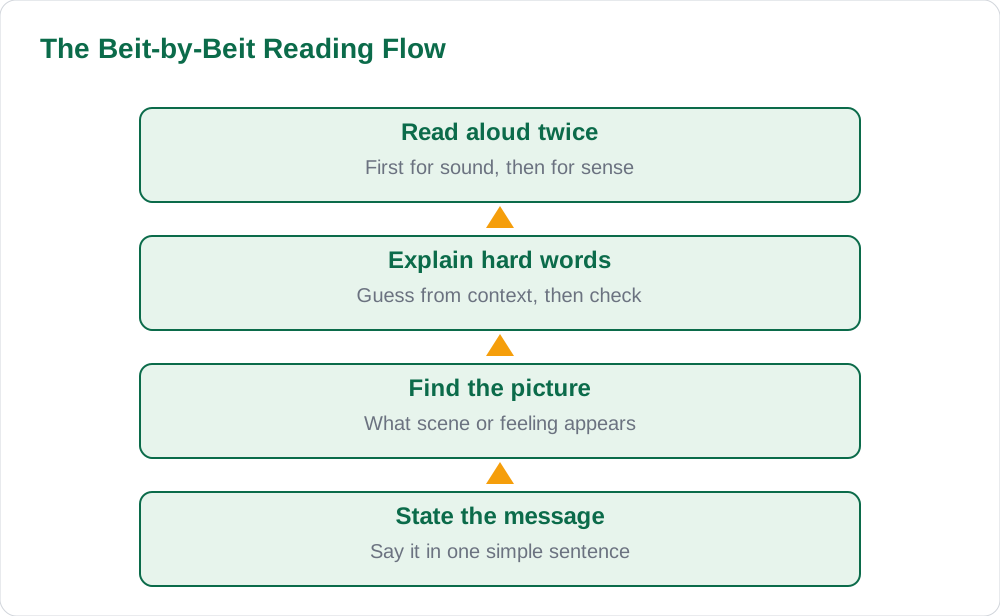
A beit is a small unit of meaning inside a Sindhi poem. In most school poems, each beit carries one image or one idea, and the beits join together like steps on a staircase. When you read a poem beit by beit, you climb one step at a time instead of trying to jump to the top. Start by reading the beit aloud twice. The first reading is for sound and rhythm. The second reading is for sense. Notice where the line pauses and which words the poet repeats. Repetition is often a signal that a word matters. If your textbook gives a short introduction to the poem or the poet, read that first, because it tells you the situation behind the poem. A beit about a journey, for example, reads differently when you know the poet is describing a spiritual search rather than an ordinary trip. You can find your class poetry lessons in your Sindh Textbook Board book, and extra solved support is listed on the solved notes page.
Before you look up any difficult word, try to guess its meaning from the words around it. Poets often place a hard word beside a familiar one, or they repeat the same idea in two ways inside one beit. Your guess may not be perfect, but it trains your mind to think in Sindhi rather than translating every word. After guessing, check the word in the textbook glossary or ask your teacher. Write the meaning lightly in pencil above the word so you can revise it later. Do not write a full translation of every line at this stage. The goal of this first pass is to understand the beit as a whole, not to turn it into a word list.
Step One: Words First
The first step of the beit-by-beit method is word work. Underline two or three words in the beit that you do not fully understand. For each word, write a short meaning in your own Sindhi words, not a long dictionary definition. If a word has more than one meaning, choose the meaning that fits this beit. For example, a word for light can mean sunshine in one poem and guidance in another. The surrounding words tell you which meaning is correct. Keep a small vocabulary notebook for poetry words. Write the word, the beit where you found it, and one short sentence of your own using the word. This habit builds a personal dictionary that grows with every lesson. Pupils who keep such notebooks revise faster before exams because they review words they actually met in poems, not random lists.
Also watch for words that change their meaning when they appear together. Sindhi poetry uses many fixed pairs and phrases whose sense is larger than the single words. When you meet such a phrase, do not break it apart word by word. Learn it as one unit and note the feeling it carries. If the textbook gives the meaning of a phrase in a footnote, copy that meaning into your notebook in simple language. Over time you will recognise the same phrases in new poems, and your reading speed will improve. Word work should take about three minutes per beit. If it takes much longer, the beit may be too hard for independent study, and you should mark it and ask your teacher in class.
Step Two: Picture and Feeling
After the words are clear, close your book for a moment and ask yourself what picture the beit paints. Does it show a river, a desert, a mother, a traveller, a bird, or a night sky. Good poetry works through images that you can see in your mind. Describe the picture in one or two sentences in your own words. You do not need beautiful language. A plain sentence such as the poet sees a traveller walking far from home is enough. Next, name the feeling of the beit. Is it sad, hopeful, loving, fearful, or peaceful. Often the feeling comes from the image itself. A lonely road suggests longing, while a bright morning suggests hope. Naming the feeling helps you remember the beit later, because memory holds feelings more strongly than definitions.
If two pupils read the same beit and see slightly different pictures, both can be right, as long as each picture is supported by the words of the beit. Poetry allows more than one honest reading. In class discussion, listen to how others picture the same beit. You may notice a detail you missed, such as a word for distance that changes the whole mood. When you write about a poem in an exam, mention the picture briefly before the meaning. Examiners appreciate answers that show the pupil actually felt the poem, not only memorised a summary. A short sentence about the image makes your answer stand out and shows real understanding.
Step Three: Message and Connection
The third step is the message. Ask what the poet wants the reader to learn, feel, or do after reading this beit. State the message in one simple sentence in your own words. For example, the poet says that true love asks for patience, or the poet says that a sincere seeker never gives up on the journey. If the beit belongs to a longer poem, ask how it connects to the beit before it. Does it continue the same idea, give an example, ask a question, or offer a conclusion. Noticing the link between beits turns separate lines into a connected argument. Many pupils lose marks because they explain each beit alone and never show how the poem moves forward. A single linking sentence, such as this beit gives an example of the patience praised in the first beit, fixes that weakness.
For a deeper connection, ask whether the message relates to your own life, your family, or your village. A beit about a traveller may remind you of a relative who works far away. A beit about waiting may remind you of waiting for exam results. Such connections are not part of the exam answer, but they help the meaning stay in your memory. They also make poetry feel alive rather than old and distant. When you revise, cover the textbook and try to retell the poem beit by beit in your own words. If you can retell it without looking, you understand it. If you get stuck at one beit, that beit needs another round of word work and picture work.
A Ten-Minute Daily Practice Routine
The beit-by-beit method works best as a short daily habit. Choose one beit each evening, not a whole poem. Read it aloud twice, explain the hard words, describe the picture, and write the message in one sentence. Keep these notes in a poetry copy, one beit per page, so you can add corrections later. After five days, you will have five beits explained in your own words. At the weekend, read all five beits together and write a short paragraph about how they connect. This weekly review turns small daily steps into a full understanding of the poem. Pupils who follow this routine often find that poetry becomes their strongest part of Sindhi, because they stop fearing long poems and start enjoying small victories.
For exam preparation, practise writing the message of a beit in two forms. First, write it as a short explanation in simple Sindhi. Second, write it as one clear sentence you could use in a tashreeh answer. The related guide on the tashreeh method shows how reference, meaning, and message fit together in exam answers. You can also browse your class books on the books page to plan which poems to practise next. Avoid the habit of memorising ready-made explanations without reading the beit yourself. Memorised answers fade quickly, while a beit you have worked through step by step stays with you because you built the meaning yourself.
- One beit per day beats one full poem rushed in one sitting.
- Read aloud, explain words, picture the scene, then state the message.
- Write the message in your own words before checking any guide.
- Review five beits together at the weekend and link them.
- Practise retelling the poem with the book closed.
AI Help: Muse AI
Muse AI is Meta's personal AI assistant, and it can help with explaining one difficult word or image in a Sindhi beit in simple language. Muse AI does not give official Sindh Textbook Board answers — always verify against your Sindh Textbook Board book and your teacher.
Join Muse with invite code LTGSWD — in the Muse app, go to Settings > Redeem token and enter the code.
Disclosure: LTGSWD is the author's Muse invite code.
5 key points you must know
- Read one beit at a time instead of rushing through a whole poem.
- Explain hard words from context before checking the glossary.
- Describe the picture and name the feeling of each beit.
- State the message in one simple sentence of your own.
- Practise one beit daily and review five together at the weekend.
Frequently asked questions
How long should I spend on one beit?
About ten minutes is enough: two minutes reading aloud, three minutes on words, two minutes on the picture, and three minutes writing the message in your own words.
Should I memorise the meaning of every beit?
No. Understand the method first. When you can explain a beit in your own words, you can also answer new questions about it without memorised notes.
What if two pupils understand a beit differently?
Both readings can be correct if each one is supported by the words of the beit. Poetry allows more than one honest reading.
How does this method help in exams?
It trains you to write clear tashreeh answers with reference, meaning, and message, instead of vague summaries copied from memory.
Solved notes — preview free
These guides work best with the solved exercises. Preview the solved notes free on this website — 119 solved notes for Classes 6–10 in Sindhi, Urdu, English and Arabic medium. Or browse the full solved notes catalogue for your class and medium. New solved notes are added regularly — check the catalogue for coming-soon books.