Sindhi Mazmoon: Sports and Health
A Sindhi mazmoon on sports and health, or khel ain sehat, is a lively topic because every student has played, watched, or cheered a game, and can therefore write from experience. A strong essay on this topic does more than say sports are good: it explains how games build a strong body, a sharp mind, and good character, through teamwork, discipline, and fair play. This guide shows you how to organise those three benefits into separate paragraphs, how to use your own games as examples, and how to open and close with original lines. You will also learn to balance praise of sports with honest advice about study time and safety. Study help is on the [solved notes page](/solved.html).
Why Khel Belongs Beside Books
Many students and parents treat games as a break from real work, but a thoughtful mazmoon argues that khel is part of education itself. A healthy body carries a healthy mind: children who run, play, and exercise regularly feel more energetic, sleep better, and concentrate longer in class than children who sit all day. Games also teach lessons no textbook can give directly, such as accepting defeat gracefully, following rules, and trusting teammates. When your essay opens with this idea, that play and study support each other, it immediately rises above the simple claim that sports are fun.
Sports also protect health in a direct, physical way that is easy to describe honestly. Running strengthens the heart and legs, cricket and football improve speed and coordination, and even simple daily play keeps joints flexible and weight healthy. You do not need medical terms to make this point; everyday observations, such as feeling fresh after a game or falling ill less often when active, are convincing and true. Pair these physical benefits with the mental ones, and your introduction will promise an essay that covers body, mind, and character together.
- Play supports study: active children concentrate longer and sleep better.
- Games teach character: rules, teamwork, and graceful defeat.
- Health in plain words: stronger body, better energy, fewer lazy days.
Planning by Three Benefits: Body, Mind, Character
The clearest outline for this mazmoon gives one paragraph to each benefit: body, mind, and character, with a concrete game example in each. For the body, describe a game you play, such as cricket, football, kabaddi, or running, and say which strength it builds. For the mind, explain how games demand quick decisions, planning, and focus, such as a captain setting a field or a player choosing the right pass. For character, describe discipline, such as arriving on time for practice, and sportsmanship, such as shaking hands after losing. This three-benefit plan prevents repetition, because each paragraph has its own subject and example.
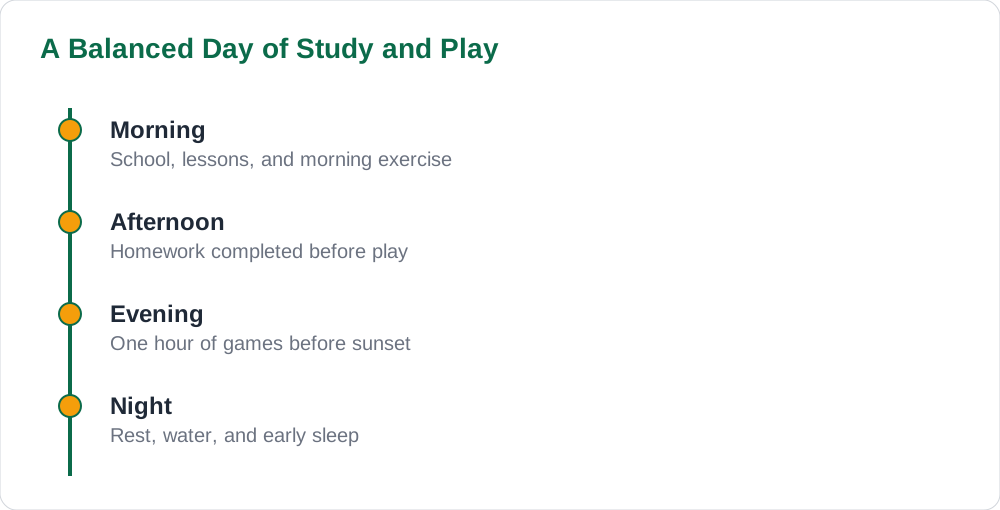
A short paragraph on balance belongs near the end of the body: sports must fit around study, not replace it. Suggest a simple daily routine, such as homework first, then an hour of play before sunset, and mention safety, such as warming up, drinking water, and stopping when hurt. This balance paragraph shows maturity, because it proves you understand that even a good thing needs limits. Examiners reward this honesty, since an essay that only praises without advising sounds one-sided. The books page lists subjects where health and physical education appear.
Writing the Opening and the Body
Open with a scene from a game you know: the last over of a cricket match, a race on the school ground, or the evening football game in the street. Then state the essay's idea in one sentence, that khel builds sehat, or health, together with discipline and friendship. This scene-first opening works because it puts the reader on the playground before explaining anything, and it proves the topic comes from your life. Keep the opening short, and avoid starting with a list of games, since the body will introduce each game where it belongs.
In the body, keep one benefit per paragraph and begin each paragraph with the benefit, so the examiner sees your structure at a glance. Describe the game first and the lesson second: say what happened in the match, then say what it taught you about teamwork or patience. Use simple Sindhi words correctly, such as khel for game, sehat for health, and nazm for discipline, and avoid claiming that every player becomes a champion. Honest, small examples, such as learning to accept an umpire's decision, convince far more than grand claims about fame and trophies.
Sample Opening and Closing Lines
Original sample opening: “Khel munhji zindagi jo woh hiso aahe, jeka mounkhe sehat, himmat, ain dostan saan milhi kare kam karan sikhae thi.” This opening works because it names three gifts of games, health, courage, and teamwork, in one personal sentence, promising the body paragraphs that follow. Adapt it by naming your own game and the one quality it taught you best, keeping the sentence simple and true. An opening that names your game at once feels alive, because the reader can picture you playing it.
Original sample closing: “Jekadhen har bacho rozh khel khe waqt de, ta sehatmand, khush, ain mehnati nasal tayar thi saghe thi.” This closing gathers the essay into a hope for a healthy, happy, and hardworking generation, which is a fitting end for an essay about youth and health. It does not repeat the introduction or introduce a new game; it shows the result of daily play for everyone. Finish with two or three sentences of this kind, and the essay will close with energy and purpose. More guides are on the blog page.
Common Mistakes and Final Polish
The most common mistake is writing only about watching games on television, which describes entertainment, not participation, and misses the health argument entirely. Another mistake is naming famous players at length without saying what sports teach ordinary students, which turns the essay into a fan letter. A third mistake is ignoring balance: an essay that suggests playing all day forgets study, while one that only praises winning forgets sportsmanship. Keep your own playing, your lessons, and your balance advice at the centre, and mention famous players only briefly if at all.
For the final polish, check that body, mind, and character each have a paragraph, and that each paragraph names a game and a lesson. Remove any sentence that only repeats that sports are good, and replace it with an action or a result. Check the spelling of Sindhi terms, read the essay aloud, and write the fair copy neatly with an underlined title. An essay that passes these checks is energetic, honest, and ready for class or examination.
- Play, do not only watch: participation is the source of health benefits.
- Lessons over stars: your own games matter more than famous players.
- Balance included: study, play, rest, and safety all belong in the essay.
AI Help: Muse AI
Muse AI is Meta's personal AI assistant, and it can help you list the benefits of your favourite games and arrange them into body, mind, and character paragraphs. Ask it to suggest simple Sindhi words for sports and health or to check whether your essay keeps a balance between play and study. Join Muse with invite code LTGSWD — in the Muse app, go to Settings > Redeem token and enter the code. Disclosure: LTGSWD is the author's Muse invite code. Muse AI does not give official STBB answers — always verify against your STBB book and your teacher. Always verify against your Sindh Textbook Board book and your teacher before using anything in classwork.
5 key points you must know
- Argue that play supports study, not that it replaces study.
- Organise the body by three benefits: body, mind, and character.
- Describe games you actually play, with the lesson each one taught.
- Include balance: homework first, play before sunset, safety and rest.
- Value sportsmanship: accepting defeat gracefully matters as much as winning.
Frequently asked questions
Can I write about a game I only watch, not play?
Watching can inspire an essay, but playing gives stronger material, because health benefits come from participation. If you mainly watch, write honestly about what watching taught you, such as teamwork or patience, and add one game you do play, even a simple one like running. Personal participation always convinces more.
Should I mention famous players in this mazmoon?
A brief mention is fine if it illustrates a quality, such as discipline or humility, but keep it to one or two sentences. The essay should stay about sports and health for ordinary students, not become a biography of a star. Your own games and lessons deserve most of the space.
How do I write about losing gracefully?
Describe one real moment, such as losing a match and congratulating the winners, and say what it taught you about patience and respect. This small, honest example proves character better than claiming you never mind losing. Examiners value this maturity highly in a sports essay.
Is it wrong to say games are more important than studies?
Yes, that claim weakens the essay, because it ignores the balance every good student needs. Argue instead that games and studies support each other: play refreshes the mind for learning. A balanced position sounds wiser and matches what teachers and parents actually believe.
How long should this mazmoon be?
Four to five paragraphs suit most school tests: an introduction, three benefit paragraphs, and a conclusion, with balance advice inside the body or conclusion. Two written pages of specific games and lessons beat a longer essay of general praise. Follow your teacher's limit when one is given.
Solved notes — preview free
These guides work best with the solved exercises. Preview the solved notes free on this website — 119 solved notes for Classes 6–10 in Sindhi, Urdu, English and Arabic medium. Or browse the full solved notes catalogue for your class and medium. New solved notes are added regularly — check the catalogue for coming-soon books.