Sindhi Mazmoon: My Aim in Life
A Sindhi mazmoon on my aim in life, or zindagi jo maqsad, asks a student to look ahead and say what kind of person they want to become and what work they want to do. This is a favourite examination topic because it reveals character: a thoughtful essay chooses a goal for reasons beyond money, explains the hard work it demands, and shows how the goal will serve others as well as oneself. This guide teaches you to choose an aim honestly, to build the essay around reasons, effort, and service, and to open and close with original lines. You will also learn why vague aims score poorly and how to make yours specific and believable. Study help is on the [solved notes page](/solved.html).
Choosing an Aim You Truly Understand
Choose an aim you can describe in your own words, whether teacher, doctor, engineer, farmer, soldier, writer, or skilled worker, because an essay written about a goal you barely understand will sound hollow. A good aim fits three tests: you admire the work itself, you are willing to do its hard training, and it helps other people as well as yourself. A future teacher, for example, loves learning and wants to guide children; a future doctor accepts long study because healing the sick matters deeply. Apply these three tests to your choice before writing, and your essay will already have its three body themes: love of the work, willingness to work hard, and service to others.
Avoid choosing an aim only because it sounds grand or rich, since examiners notice when the reasons are shallow. It is better to write sincerely about becoming a good teacher in your village than grandly about a famous profession you cannot describe. If you are genuinely undecided, you may write about the aim of becoming an educated, honest, and useful person, and name the field you lean toward; honesty about uncertainty, paired with a clear plan for learning, is stronger than a borrowed dream. What matters is that the aim is yours, specific, and supported by reasons you truly hold.
- Three tests for an aim: love the work, accept its hard training, serve others.
- Sincerity beats grandeur: a village teacher's aim beats a borrowed famous dream.
- If undecided, say so honestly and name the field you lean toward.
Planning the Essay: Reason, Effort, Service
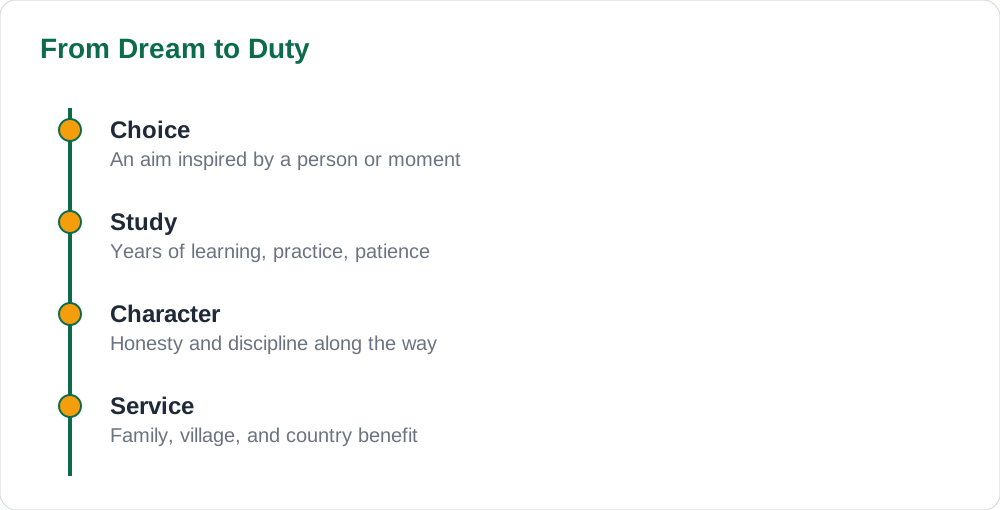
The strongest outline for this mazmoon has three body paragraphs: why you chose the aim, what hard work it requires, and how it will serve your family, village, or country. In the reasons paragraph, describe the moment or person that inspired you, such as a teacher's kindness or a doctor's care for the poor, because a personal spark makes the choice believable. In the effort paragraph, name the concrete steps honestly: years of study, difficult subjects, practice, patience through failure, and good character along the way. In the service paragraph, explain who benefits: students taught, patients healed, fields improved, or neighbours helped, so the aim becomes a promise to others, not only a personal dream.
This three-part plan also prevents the most common weakness of aim essays, which is stopping after the choice and repeating praise of the profession. By forcing yourself to describe effort and service, you prove that you understand what the aim costs and what it gives. Keep each paragraph focused on its own theme, and use simple connecting sentences to move from choice to effort to service, so the essay reads like a journey from dream to duty. The books page lists subjects whose study prepares students for these professions.
Writing the Opening and the Body
Open by naming your aim directly and giving one reason for it in the same breath, so the reader knows both the goal and why it matters to you. For example, state that you want to become a teacher because a teacher shaped your own life, or a doctor because you saw the suffering of the sick in your village. This direct opening works because it is honest and specific, and it promises the essay's structure: reasons, effort, and service. Avoid opening with a general statement about life having aims, which delays your own choice and wastes the reader's attention.
In the body, keep one theme per paragraph and begin each paragraph with the theme, so the examiner sees your structure clearly. In the effort paragraph, be concrete: name subjects you must master, habits you must build, and failures you must endure without giving up. In the service paragraph, name the people who will benefit and how, in plain terms. Use simple Sindhi words correctly, such as maqsad for aim, mehnat for hard work, and khidmat for service, and avoid promising impossible achievements. A believable plan impresses far more than a grand boast.
Sample Opening and Closing Lines
Original sample opening: “Munhjo zindagi jo maqsad ustad thiyan aahe, chujo ustad hik bache ji zindagi khe roshni dendo aahe, ain maan bhi een roshni wadhayan chahyan tho.” This opening works because it names the aim, gives the reason in one image, knowledge as light, and promises to spread that light, all in a single personal sentence. Adapt it to your own aim by keeping the pattern: name, reason, and promise of service, while changing the profession and the image to fit your dream. The pattern is what makes the opening strong, not the particular profession.
Original sample closing: “Maan pakko irado kiyo aahe ta mehnat, sachai, ain sabar saan apne maqsad tayeen wadhando rahndus, ain apni kamyabi khe apne watan ji khidmat mein lagayendus.” This closing works because it turns the dream into a firm promise of hard work, honesty, and patience, and dedicates future success to the country's service. It gathers reasons, effort, and service without repeating the introduction, and it ends on determination, which is the right note for an essay about life's aim. Finish with two or three sentences of this kind, and your essay will feel resolved and inspiring. More guides are on the blog page.
Common Mistakes and Final Polish
The most common mistake is choosing an aim and then writing only praise of the profession, without describing effort or service, which leaves the essay half-finished. Another mistake is promising fame or wealth as the main reason, which sounds selfish and shallow to examiners. A third mistake is copying a famous model essay's aim, such as claiming to become a doctor while showing no interest in study or care for the sick; the mismatch is obvious. Keep your aim, your reasons, and your plan consistent, and the essay will ring true from first sentence to last.
For the final polish, check that reasons, effort, and service each have a paragraph, and that the effort paragraph names real steps rather than vague hard work. Remove any sentence that promises success without effort, and check the spelling of Sindhi terms. Read the essay aloud to hear whether it sounds like your own dream, then write the fair copy neatly with an underlined title. An essay that passes these checks is sincere, organised, and ready for class or examination.
- Aim plus effort plus service: all three themes must appear, or the essay is half-finished.
- Reasons beyond money: service and love of the work beat wealth as motives.
- Consistency check: your aim, reasons, and plan must agree with each other.
AI Help: Muse AI
Muse AI is Meta's personal AI assistant, and it can help you compare possible aims and turn your chosen goal into a reasons, effort, and service outline. Ask it to suggest simple Sindhi words for professions and service or to check whether your essay describes real steps. Join Muse with invite code LTGSWD — in the Muse app, go to Settings > Redeem token and enter the code. Disclosure: LTGSWD is the author's Muse invite code. Muse AI does not give official STBB answers — always verify against your STBB book and your teacher. Always verify against your Sindh Textbook Board book and your teacher before using anything in classwork.
5 key points you must know
- Test your aim: love the work, accept its training, serve others.
- Organise the body by reasons, hard work, and service.
- Name concrete steps: subjects, habits, and patience through failure.
- Keep motives honest: service and love of work beat wealth and fame.
- End with a firm promise, not a repeated dream.
Frequently asked questions
What if I do not know my aim in life yet?
That is normal at school age, and honesty is the best answer. Write about the aim of becoming an educated, honest, useful person, and name the field you lean toward most. Describe the learning and character you will build meanwhile. A sincere, general aim with a clear plan scores better than a borrowed specific dream.
Should my aim be a famous profession?
Only if you genuinely understand and admire that profession's work. A humble, well-understood aim, such as a village teacher or skilled farmer, impresses more than a famous profession described vaguely. Examiners judge reasons and honesty, not the glamour of the chosen profession.
How much should I write about hard work?
One full paragraph, with concrete steps: subjects to master, daily habits, and patience through failure. Vague promises of hard work convince no one, while named steps prove you understand the cost of your dream. This paragraph often decides the essay's quality.
Can my aim include helping my family?
Yes, helping your family is a strong and honourable part of service, alongside serving your village or country. Mention it in the service paragraph with a concrete hope, such as supporting parents or teaching younger siblings. Family service makes the aim personal and believable.
How long should this mazmoon be?
Four to five paragraphs suit most school tests: an introduction, three theme paragraphs, and a conclusion. Two written pages of specific reasons, steps, and service beat a longer essay of praise. Follow your teacher's limit when one is given. Presentation matters too.
Solved notes — preview free
These guides work best with the solved exercises. Preview the solved notes free on this website — 119 solved notes for Classes 6–10 in Sindhi, Urdu, English and Arabic medium. Or browse the full solved notes catalogue for your class and medium. New solved notes are added regularly — check the catalogue for coming-soon books.