Science of Water Purification at Home
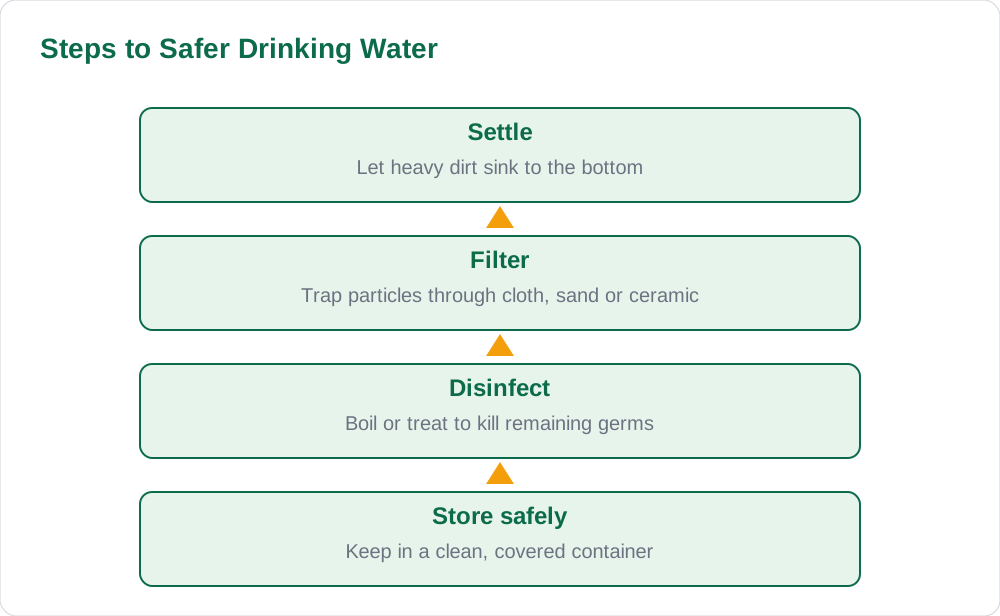
Clean drinking water is essential for life, yet water from rivers, wells and tanks can carry mud, germs and chemicals that we cannot always see. Purification is the science of removing those unwanted things step by step until water is safe to drink. Different methods remove different problems: settling removes heavy dirt, filtration traps particles, boiling kills germs, and safe storage keeps clean water clean. This article explains each method in simple language, shows how they work together, and helps students understand why skipping a step, or storing water carelessly, can undo good purification.
What Makes Water Unsafe to Drink?
Unsafe water can contain three main kinds of contamination. Physical contamination includes mud, sand, leaves and other visible particles that make water cloudy. Biological contamination includes bacteria, viruses and tiny parasites that cause diarrhoea, cholera, typhoid and other diseases, and these are usually invisible. Chemical contamination includes dissolved salts, pesticides, industrial waste and excess minerals that can affect taste and health, and these cannot be removed by simply looking at the water.
Cloudy water is more than unpleasant: particles can shield germs from disinfection and give them surfaces to cling to, which is why clearing particles is an important first step. Water can also become contaminated after collection, when dirty hands, cups or uncovered containers introduce germs into previously safe water. Purification therefore has two goals: make water safe at the point of treatment, and keep it safe until the moment it is drunk.
Settling and Filtration: Removing What You Can See
Sedimentation is the simplest purification step: let water stand undisturbed in a clean container, and heavy particles slowly sink to the bottom under gravity. After a while, the clearer water on top can be carefully poured off without disturbing the sediment. This step alone does not make water safe, because germs and dissolved substances remain, but it makes later steps work much better by removing mud that would clog filters and shield germs.
Filtration passes water through a material with tiny pores that trap particles while letting water through. A cloth filter removes larger debris, a sand filter traps finer particles as water trickles through layers of gravel and sand, and a ceramic or membrane filter can trap much smaller particles and many microbes. In a sand filter, helpful microbes also grow on sand grains and help break down impurities, which is why slow sand filters have been used for community water treatment for a long time. Filters must be cleaned and replaced as directed, because a clogged or cracked filter stops protecting you.
Boiling and Disinfection: Killing Invisible Germs
Boiling is one of the most reliable home methods for killing germs. When water reaches a rolling boil, the heat destroys the structures of bacteria, viruses and parasites, making them unable to cause disease. Health guidance commonly recommends a full rolling boil for at least one minute, longer at high altitude, and then letting the water cool in a clean covered container. Boiled water may taste flat because boiling drives out dissolved air, and shaking it gently in a clean bottle can restore some freshness.
Chemical disinfection offers another route when boiling is not possible. Chlorine compounds, used in correct doses, damage germ cells and keep working for a while in stored water, which helps protect against recontamination. However, dosing matters: too little fails to kill germs, and too much makes water unpleasant and potentially harmful, so products must be used exactly as instructed by health authorities. Ultraviolet light and solar disinfection, where clear water in a transparent bottle is left in strong sunlight, also damage germs, but they need clear water and strong sun to work well.
- A rolling boil kills most bacteria, viruses and parasites.
- Filter cloudy water before boiling or chemical treatment.
- Use chlorine products only in the exact dose instructed.
What Purification Cannot Do Alone
No single home method removes everything. Boiling kills germs but does not remove dissolved chemicals, salts or heavy metals, and may even concentrate them slightly as some water evaporates. Filtration removes particles but may not remove dissolved substances or all viruses, depending on pore size. That is why water from a source known to be chemically polluted needs professional testing and treatment rather than home methods alone, and why families should use the safest available source they can reach.
Taste and smell can hint at problems but cannot prove safety, because many dangerous germs and chemicals are tasteless and odourless. Clear, pleasant-tasting water from an unprotected source can still be unsafe. Students should learn to ask where water comes from, how it is treated, and how it is stored, rather than judging safety by appearance alone. When in doubt, use boiled or treated water for drinking, brushing teeth and washing fruit.
Safe Storage and Daily Habits for Clean Water
Safe storage is the final and often forgotten step. Clean water should go into a clean container with a tight lid and a tap or narrow opening, so hands, cups and dust cannot enter. The container should be washed regularly, kept off the floor, and filled only with treated water. Using a clean ladle or pouring rather than dipping hands into stored water prevents recontamination, and separate containers for drinking water and washing water reduce risk further.
Daily habits protect the whole household: wash hands before handling drinking water, keep animals away from water sources, cover wells and tanks, and repair leaks that let dirty water seep in. Schools can help by keeping water coolers clean and covered and by teaching students to use their own clean bottles. For more everyday science, visit the [home page](/) and the solved notes on this site, and try a safe classroom demonstration by filtering muddy water through cloth and sand and observing what each layer removes.
AI Help: Muse AI
Muse AI is Meta's personal AI assistant, and it can explain water science in clear, simple steps. For this article, you can ask it why boiling kills germs or how a sand filter traps dirt, and it will explain each step plainly. Join Muse with invite code LTGSWD — in the Muse app, go to Settings > Redeem token and enter the code. Disclosure: LTGSWD is the author's Muse invite code. Muse AI does not give official Sindh Textbook Board answers — always verify against your Sindh Textbook Board book and your teacher.
5 key points you must know
- Settling lets heavy dirt sink before further treatment.
- Filtration traps particles that can shield germs.
- Boiling reliably kills most bacteria, viruses and parasites.
- Chemical treatment needs the exact instructed dose.
- Clean, covered storage keeps purified water safe until drinking.
Frequently asked questions
Does clear water mean safe water?
No. Many germs and dissolved chemicals are invisible, tasteless and odourless, so clear water from an unprotected source can still be unsafe without treatment.
Why filter water before boiling it?
Particles can shield germs from heat and chemicals and can clog treatment, so removing mud first makes boiling and disinfection work more reliably.
How long should water be boiled?
A full rolling boil for at least one minute is commonly recommended, longer at high altitude. Let it cool in a clean, covered container before drinking.
Why should drinking water be covered?
An uncovered container lets dust, insects and dirty hands contaminate treated water, undoing purification. A clean lid and tap or narrow opening prevent this.
Does boiling remove chemicals from water?
No, boiling kills germs but does not remove dissolved chemicals or salts, so chemically polluted water needs professional testing and treatment.
Solved notes — preview free
These guides work best with the solved exercises. Preview the solved notes free on this website — 119 solved notes for Classes 6–10 in Sindhi, Urdu, English and Arabic medium. Or browse the full solved notes catalogue for your class and medium. New solved notes are added regularly — check the catalogue for coming-soon books.