Science in Plants and Gardens

A garden is a living science classroom. Roots drink water, leaves catch sunlight, flowers invite insects, and fallen leaves rot into rich soil that feeds the next generation of plants. Behind this quiet activity are powerful processes: photosynthesis, pollination, seed dispersal and decomposition. This article explores garden science through plants you can grow at home, from mint and chillies to marigolds and beans, and shows how simple observations and experiments can turn gardening into one of the most enjoyable ways to learn biology.
Photosynthesis: How Leaves Make Food From Air and Light
Photosynthesis is the process by which green plants make their own food. Inside leaf cells, a green pigment called chlorophyll captures sunlight, and the plant uses that energy to combine water from its roots with carbon dioxide from the air, producing sugars for growth and releasing oxygen as a by-product. The famous word equation is simple to remember: carbon dioxide plus water, using light energy, gives glucose plus oxygen. Without this process, almost all life on Earth would lack food and oxygen, because plants sit at the base of nearly every food chain.
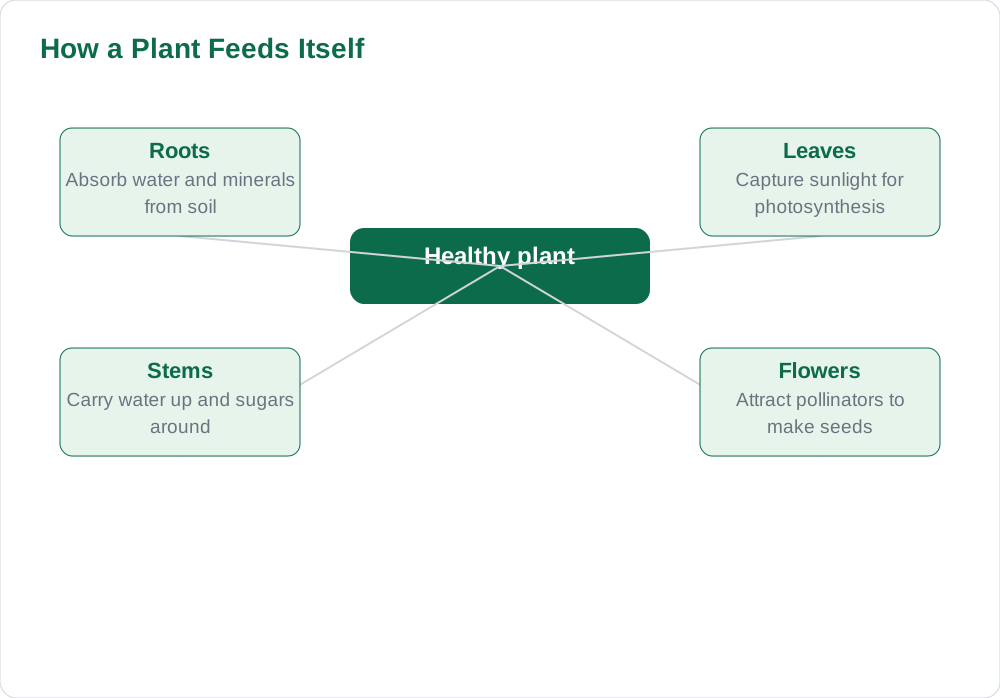
Leaves are beautifully designed for this job. They are broad and flat to catch light, thin so gases can move in and out quickly, and full of tiny pores called stomata that let carbon dioxide in and oxygen and water vapour out. Veins carry water to leaf cells and sugars away to growing parts such as roots, stems and fruits. That is why plants kept in darkness grow pale and weak, and why a plant near a bright window leans toward the light: it is trying to capture more energy for photosynthesis.
Roots, Stems and the Plant Transport System
Roots anchor the plant and absorb water and dissolved minerals from the soil through tiny root hairs, which greatly increase the absorbing surface. The water then travels upward through narrow tubes called xylem, while sugars made in the leaves travel to other parts through tubes called phloem. This transport system works like a plant's blood circulation, though it has no heart: water is pulled upward partly by evaporation from leaves, a process called transpiration, which creates a gentle pull through the whole plant.
Stems hold leaves up toward light and flowers up toward pollinators, while also carrying water and sugars between roots and leaves. Some stems store food, such as potatoes, which are swollen underground stems, while others, like sugarcane, store sweet sap. Gardeners use this knowledge when they water at the base of a plant rather than only wetting leaves, when they mulch soil to reduce evaporation, and when they avoid damaging roots during transplanting, because a damaged transport system starves the whole plant.
Pollination: Flowers, Bees and the Making of Seeds
Pollination is the transfer of pollen from the male part of a flower, the anther, to the female part, the stigma, and it is necessary for most flowering plants to produce seeds and fruit. Bees, butterflies, moths, birds and even wind act as pollinators, carrying pollen as they visit flowers for nectar. Flowers advertise themselves with bright colours, sweet scents and nectar rewards, and bees are especially effective because their hairy bodies pick up pollen and their regular flower visits move it between plants of the same kind.
After pollination, fertilisation follows inside the flower, and the ovary grows into a fruit containing seeds. That is why a garden without pollinators may flower beautifully but produce little fruit. Gardeners can help by growing a mix of flowers that bloom across seasons, avoiding spraying insecticides during flowering, and leaving some wild corners for insects to nest. A simple observation project is to sit quietly near flowers for ten minutes and record which insects visit, what colours they prefer, and how long they stay.
- Pollen moves from anther to stigma during pollination.
- Bees carry pollen on hairy bodies between flowers.
- Fruit forms after pollination and fertilisation.
Compost: Recycling Garden Waste Into Rich Soil
Compost is decayed plant and food material that returns nutrients to the soil, and it is made by microbes, fungi and small creatures such as earthworms. When leaves, vegetable peels and grass cuttings are piled with air, moisture and a mix of green and brown material, decomposers break them down into dark, crumbly humus. This humus improves soil structure, holds moisture, feeds plants slowly, and supports the soil life that keeps gardens healthy without heavy use of chemical fertilisers.
Good composting balances wet, nitrogen-rich green material such as fresh leaves and kitchen vegetable waste with dry, carbon-rich brown material such as dried leaves and paper. Turning the pile adds air, which decomposers need, and keeping it moist but not soggy speeds the process. Meat, dairy and oily foods are usually avoided in home compost because they attract pests and smell. After weeks or months, the finished compost smells earthy and can be mixed into garden beds before planting.
Growing Your Own Garden Experiment
A home garden is an ideal place for fair experiments. You can grow the same bean seeds in sunlight and shade, in sandy and loamy soil, or with different amounts of water, changing only one factor at a time and measuring height every few days. Recording results in a table and drawing a simple graph turns gardening into real scientific investigation, teaching variables, measurement and fair testing far better than reading about them alone. Even a few pots on a balcony can host such experiments.
Gardening also teaches patience, care and respect for living things. Plants need regular water, protection from harsh sun and strong wind, and gentle handling of roots and stems. Harvesting herbs, chillies or tomatoes you grew yourself shows the full journey from seed to food. For more study material, explore the books page and the blog on this site, and start with one easy plant, observe it daily, and write down what surprises you most.
AI Help: Muse AI
Muse AI is Meta's personal AI assistant, and it can explain plant science in simple words with garden examples. For this article, you can ask it how photosynthesis works or why bees are important pollinators. Join Muse with invite code LTGSWD — in the Muse app, go to Settings > Redeem token and enter the code. Disclosure: LTGSWD is the author's Muse invite code. Muse AI does not give official Sindh Textbook Board answers — always verify against your Sindh Textbook Board book and your teacher.
5 key points you must know
- Photosynthesis uses sunlight, water and carbon dioxide to make plant food.
- Xylem carries water up, phloem carries sugars around the plant.
- Pollination moves pollen from anther to stigma for seed production.
- Compost returns nutrients to soil through decomposition.
- Fair garden experiments change only one factor at a time.
Frequently asked questions
What is photosynthesis?
Photosynthesis is the process in which green plants use sunlight, water and carbon dioxide to make glucose for growth, releasing oxygen as a by-product.
Why do plants lean toward light?
Plants grow toward light so their leaves can capture more light energy for photosynthesis, a response called phototropism.
What is the difference between xylem and phloem?
Xylem carries water and dissolved minerals upward from roots to leaves, while phloem carries sugars made in leaves to growing parts of the plant.
Why do gardens need pollinators?
Most flowering plants need pollen transfer to produce seeds and fruit, and pollinators such as bees carry pollen between flowers as they collect nectar.
What makes good compost?
A balance of green, nitrogen-rich material and brown, carbon-rich material, plus air, moisture and time for decomposers to break it into dark, earthy humus.
Solved notes — preview free
These guides work best with the solved exercises. Preview the solved notes free on this website — 119 solved notes for Classes 6–10 in Sindhi, Urdu, English and Arabic medium. Or browse the full solved notes catalogue for your class and medium. New solved notes are added regularly — check the catalogue for coming-soon books.