Science in the Kitchen: 10 Examples Around You

Your kitchen is a small science laboratory, and you use it every day without wearing a lab coat. When water boils for tea, bread rises in the oven, ice forms in the freezer, or yoghurt sets overnight, science is at work. Heat, cold, air, water and tiny living things called microbes all play a part in cooking. Once you notice these processes, ordinary cooking turns into a set of easy experiments that help you understand your science lessons much better. This article looks at ten kitchen examples, explains the science behind each one in plain words, and shows how you can observe them safely at home with an adult nearby.
Boiling, Steaming and the Power of Heat
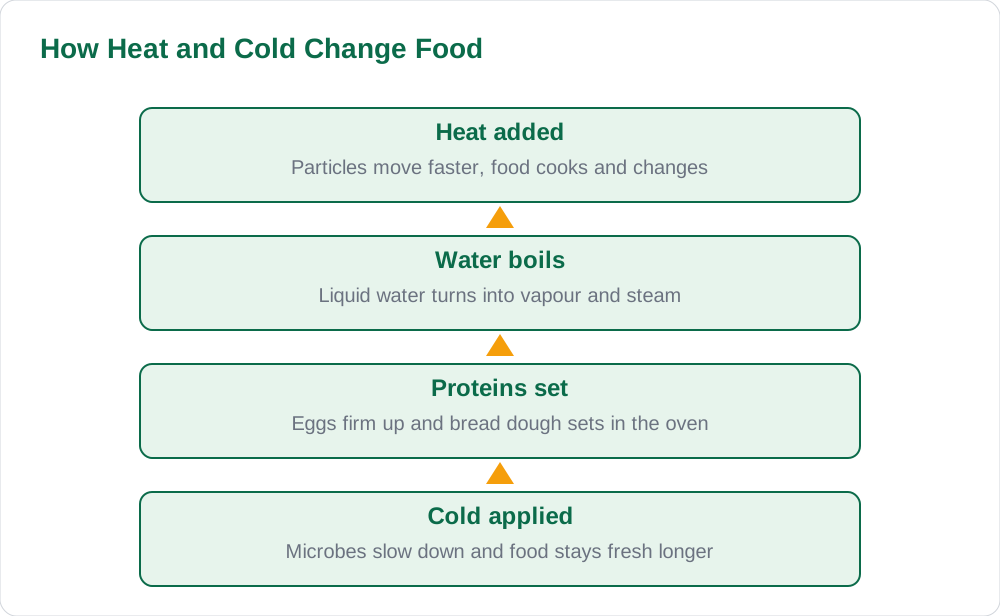
When you heat water in a pot, the heat energy from the stove moves into the water and makes its tiny particles move faster and faster. At first you see small bubbles at the bottom, then larger bubbles rise and the water rolls and steams. This is boiling, and for pure water at normal air pressure it happens at 100 degrees Celsius. The steam you see is actually tiny drops of water formed when invisible water vapour cools in the air, which is why steam can burn you even though it looks soft and white.
Steaming works on the same idea but in a gentler way. Food sits above boiling water, and the hot steam cooks it without letting it sit in water, so vegetables keep more of their colour, shape and nutrients. That is why steamed potatoes and carrots taste fresh and firm rather than soggy. Heat also changes proteins in food: egg white turns from clear liquid to solid white because heat changes the shape of its proteins, a change you cannot undo by cooling it down again.
- Boiling point: pure water boils at 100 degrees Celsius at sea level.
- Steam carries a lot of heat energy, so handle pots and lids with care.
- Steaming cooks with vapour, keeping food firm and colourful.
Baking: How Bread Rises and Cakes Turn Golden
Bread rising is one of the best kitchen examples of biology and chemistry working together. Yeast is a tiny living fungus, and when it is mixed with warm water, flour and a little sugar, it feeds and releases carbon dioxide gas. The gas gets trapped in the stretchy dough and forms bubbles, which is why the dough grows bigger and softer. When the bread goes into a hot oven, the gas expands further, the yeast stops working, and the dough sets into a light, spongy loaf full of small holes.
Cakes turn golden brown because of heat-driven chemical changes on their surface, including the browning of sugars and proteins. Baking powder and baking soda do a similar job to yeast in a faster way: they release gas when they meet moisture and heat, lifting the batter before it sets. That is why measuring matters in baking. Too little raising agent gives a flat, heavy cake, while too much can make it rise fast and then collapse, leaving a strange taste behind.
Freezing, Melting and Keeping Food Fresh
A freezer slows down the tiny microbes that spoil food, because cold makes them grow and multiply very slowly. When water inside food freezes, it turns into ice and locks up the moisture that microbes need, which is why frozen food can last for weeks or months. However, freezing does not kill every microbe, so thawed food should be cooked promptly and never refrozen again and again. Ice crystals can also damage soft foods, which is why frozen tomatoes turn mushy while frozen peas stay fairly firm.
Melting is the reverse process: ice absorbs heat from its surroundings and changes back into liquid water. This is why an ice cube cools your drink, because it takes heat energy from the drink to melt. Salt on icy paths works in a related way by lowering the freezing point of water, so ice melts even when the temperature is a little below zero. In the kitchen you can see the same idea when ice cream melts on a warm day and refreezes into a harder, icier block in the freezer.
Fermentation: Yoghurt, Pickles and Bread
Fermentation is a process where helpful microbes change one substance into another, and it gives us many tasty foods. To make yoghurt, warm milk is mixed with a spoonful of old yoghurt that contains friendly bacteria. Those bacteria feed on the milk sugar called lactose and produce lactic acid, which thickens the milk and gives yoghurt its slightly sour taste. Keeping the milk warm and undisturbed helps the bacteria work, which is why yoghurt is often wrapped in a cloth and left overnight.
Pickles use a similar idea with salt and sourness. Salt draws water out of vegetables and creates conditions where harmful microbes struggle to grow, while friendly bacteria can produce acids that preserve the food. This is also why vinegar pickles last a long time: the acid in vinegar makes the environment too harsh for most spoilage microbes. Fermentation shows that not all microbes are harmful; some have been used by people for thousands of years to make safe, tasty food.
Everyday Kitchen Science You Can Observe Safely
Many other kitchen events are science lessons in disguise. When you dissolve sugar in hot tea, it disappears faster than in cold water because heat speeds up the movement of particles and helps the sugar spread evenly. Oil and water do not mix because oil particles are not attracted to water particles in the same way, so dressing separates into layers unless you shake it hard or add an emulsifier like egg yolk. When you cut an onion, your eyes water because the cut cells release gases that irritate the eyes, and chilling the onion first can reduce the effect.
Kitchen safety is part of kitchen science too. Hot oil splashes because tiny drops of water in food turn suddenly into steam and push the oil outward, so food should be dried and added carefully. Knives cut better when sharp because the force is spread over a smaller edge, and damp hands or a wet handle can cause slips. Learning these ideas helps you cook with more confidence, and you can find more everyday study ideas in the solved notes and the blog on this site. Try observing one kitchen process each day and writing down what changed, why you think it changed, and what you could test next time.
- Hot water dissolves sugar faster than cold water.
- Oil and water stay separate because their particles behave differently.
- Dry food before frying and keep handles away from the edge of the stove.
AI Help: Muse AI
Muse AI is Meta's personal AI assistant, and it can explain school science in simple words whenever a lesson feels difficult. For this article, you can ask it to explain why bread rises or why steam burns, step by step, using everyday kitchen examples. Join Muse with invite code LTGSWD — in the Muse app, go to Settings > Redeem token and enter the code. Disclosure: LTGSWD is the author's Muse invite code. Muse AI does not give official Sindh Textbook Board answers — always verify against your Sindh Textbook Board book and your teacher.
5 key points you must know
- Boiling water turns to steam as heat makes its particles move faster.
- Yeast releases carbon dioxide gas, which makes bread dough rise.
- Freezing slows microbes down but does not kill all of them.
- Fermentation by friendly bacteria turns milk into yoghurt.
- Oil and water do not mix because their particles behave differently.
Frequently asked questions
Why does water boil at 100 degrees Celsius?
Pure water boils at 100 degrees Celsius at normal air pressure because its particles gain enough energy to escape as vapour throughout the liquid, not just from the surface.
Why does bread dough rise?
Yeast feeds on sugars in the dough and releases carbon dioxide gas, which gets trapped in the stretchy dough and forms bubbles that make it grow.
Why does yoghurt set overnight?
Friendly bacteria in the starter yoghurt turn milk sugar into lactic acid, which thickens the milk and gives yoghurt its texture and slightly sour taste.
Why does ice cool a drink?
Ice absorbs heat energy from the drink as it melts, so the drink loses heat and becomes colder while the ice turns back into water.
Why do onions make our eyes water?
Cutting an onion breaks its cells and releases irritating gases, and your eyes produce tears to wash the irritant away. Chilling the onion first can reduce the effect.
Solved notes — preview free
These guides work best with the solved exercises. Preview the solved notes free on this website — 119 solved notes for Classes 6–10 in Sindhi, Urdu, English and Arabic medium. Or browse the full solved notes catalogue for your class and medium. New solved notes are added regularly — check the catalogue for coming-soon books.