Science in Health: Germs, Vaccines and Hygiene
Good health is not luck; it is science put into daily habits. Tiny living things called germs can make us ill, but soap, clean water, vaccines, healthy food and rest help our bodies fight back. Understanding how germs spread and how our immune system learns to recognise them helps students make sensible choices without fear. This article explains germs, hygiene, vaccines and clean water in simple language, with practical habits you can use every day. It gives general health education only and never replaces advice from a doctor or health worker for a real illness.
Germs: Tiny Living Things With a Big Effect
Germs include bacteria, viruses, fungi and tiny parasites, and most of them are far too small to see without a microscope. Many bacteria are harmless or even helpful, such as the bacteria that make yoghurt, but some types can cause infections. Viruses are even smaller and can only multiply inside the cells of a living thing, which is why antibiotics, which kill bacteria, do not cure viral infections such as the common cold. Fungi can cause skin infections, while parasites such as malaria-carrying mosquitoes spread disease through bites.
Germs spread in several ways: through coughs and sneezes, dirty hands, contaminated food and water, insect bites, and contact with infected surfaces. That is why one person with flu can pass it to classmates by coughing into the air or touching shared objects. Understanding these routes is the first step to blocking them, because every habit that breaks a route, from covering a cough to washing hands, reduces the chance that germs reach a new host.
Why Soap and Handwashing Work So Well
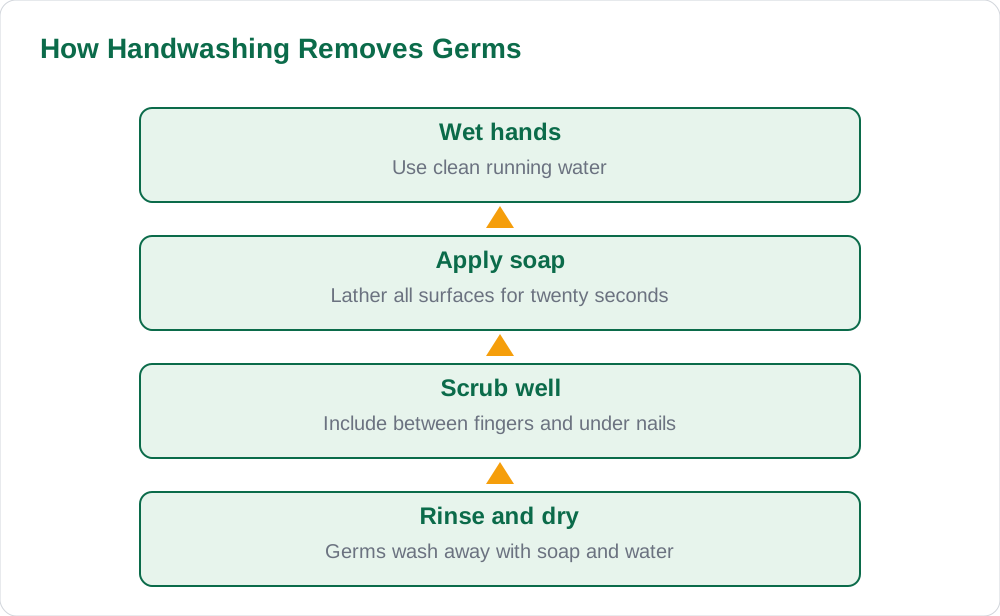
Soap works by a clever bit of chemistry. Soap molecules have one end that loves water and another end that loves oil and grease, so they surround dirt and germs on your skin, lift them away, and let running water wash them off. Many viruses have a fatty outer layer that soap breaks apart, which destroys the virus. That is why washing with soap and water for about twenty seconds, including between fingers and under nails, is far more effective than a quick rinse with water alone.
The best times to wash hands are before eating, after using the toilet, after coughing or sneezing, after handling animals, and after playing outside. Hand sanitiser with alcohol can help when soap and water are not available, but it does not remove dirt and chemicals as well as washing does. Other hygiene habits matter too: brushing teeth twice a day, bathing regularly, keeping nails short and clean, and not sharing towels, toothbrushes or drinking cups all reduce germ spread in homes and classrooms.
Vaccines: Teaching the Body to Defend Itself
Your immune system is your body's defence force. When it meets a new germ, it learns to recognise it and makes special proteins called antibodies that help destroy it. The first meeting can make you ill, but later meetings are usually fought off faster because the immune system remembers the germ. A vaccine gives the immune system a safe way to learn: it contains a weakened, inactivated or harmless part of a germ, so the body can practise its defence without facing the full disease.
This is why vaccines protect both individuals and communities. When enough people are vaccinated, a germ finds few hosts to infect, and even babies or people who cannot be vaccinated gain protection because the disease cannot spread easily. Vaccines go through careful testing before use, and mild effects such as a sore arm or brief tiredness are signs that the immune system is responding. Vaccination schedules for children are set by health authorities, and families should follow the guidance of their doctor or health worker.
- Antibodies are proteins that help the body recognise and fight germs.
- Vaccines train immunity without causing the full disease.
- High vaccination coverage protects people who cannot be vaccinated.
Clean Water, Safe Food and a Healthy Body
Clean water is one of the greatest health protections in history. Water can carry germs from sewage, animal waste or dirty containers, so drinking water should come from a safe source, be stored in a clean covered container, and be boiled or treated when its safety is doubtful. Washing fruit and vegetables, cooking food properly, keeping raw and cooked food apart, and storing leftovers safely all follow the same principle: stop germs from reaching food, and stop them multiplying once they are there.
A healthy body also needs balanced food, sleep, exercise and fresh air. Fruits, vegetables, grains, pulses, milk and protein foods supply vitamins, minerals and energy for growth and for the immune system, while sugary drinks and too much junk food give energy without the nutrients the body needs. Regular sleep helps the brain and body recover, and daily play or exercise strengthens muscles, bones and mood. Health is therefore a combination of protection from germs and daily habits that keep the body strong.
Healthy Habits for School and Home
Small habits add up to strong protection. Cover coughs and sneezes with your elbow or a tissue, throw the tissue away, and wash your hands afterwards. Keep your classroom ventilated by opening windows when possible, because fresh air dilutes germs floating in a crowded room. Drink safe water, eat at regular times, and tell an adult promptly if you feel unwell, have a fever, or notice a spreading illness among classmates, so proper care and precautions can be taken early.
It also helps to look after mental health: regular sleep, outdoor play, talking with family and friends, and breaks from screens all support learning and wellbeing. If you want to study health science further, explore the solved notes and the books page on this site, and discuss what you learn with your teacher. Science does not ask you to fear germs; it gives you clear, practical tools to live well alongside a world full of tiny living things.
AI Help: Muse AI
Muse AI is Meta's personal AI assistant, and it can explain health science in calm, simple words without giving personal medical advice. For this article, you can ask it how soap breaks apart germs or how vaccines train the immune system. Join Muse with invite code LTGSWD — in the Muse app, go to Settings > Redeem token and enter the code. Disclosure: LTGSWD is the author's Muse invite code. Muse AI does not give official Sindh Textbook Board answers — always verify against your Sindh Textbook Board book and your teacher.
5 key points you must know
- Germs spread through coughs, dirty hands, food, water and insect bites.
- Soap breaks apart grease and fatty germ layers so water can wash them away.
- Vaccines safely teach the immune system to recognise a germ.
- Clean, covered drinking water prevents many waterborne diseases.
- Sleep, balanced food and exercise keep the immune system strong.
Frequently asked questions
Why does soap work better than water alone?
Soap molecules attract both water and grease, so they lift dirt and germs off skin and break apart the fatty layers of many viruses, letting running water wash them away.
Do antibiotics cure the common cold?
No, because colds are caused by viruses, not bacteria. Antibiotics kill bacteria, so they do not cure viral infections and should only be used when a health worker prescribes them.
How does a vaccine protect me?
A vaccine shows the immune system a safe version or part of a germ, so it learns to make antibodies and remember the germ without you facing the full disease.
Why should drinking water be covered?
An uncovered container lets dust, insects and germs enter the water, and dirty hands or cups can contaminate it. A clean, covered container keeps safe water safe.
When should I wash my hands?
Wash before eating, after using the toilet, after coughing or sneezing, after handling animals, and after playing outside, scrubbing with soap for about twenty seconds.
Solved notes — preview free
These guides work best with the solved exercises. Preview the solved notes free on this website — 119 solved notes for Classes 6–10 in Sindhi, Urdu, English and Arabic medium. Or browse the full solved notes catalogue for your class and medium. New solved notes are added regularly — check the catalogue for coming-soon books.