Science in Farming: Seeds, Soil and Seasons
Farming may look like simple outdoor work, but every step is guided by science. A farmer decides which seed to sow, when to sow it, how much water to give, and how to protect the crop from insects and disease. Those decisions rest on knowledge about soil, weather, plant growth, water and living things. In Sindh and across Pakistan, farmers grow wheat, rice, cotton, sugarcane, vegetables and fruit, and each crop has its own needs. This article follows a crop from seed to harvest and explains the science that helps farmers grow more food, waste less water, and keep the soil healthy for the next season.
Seeds: Small Packages With a Plan for Growth
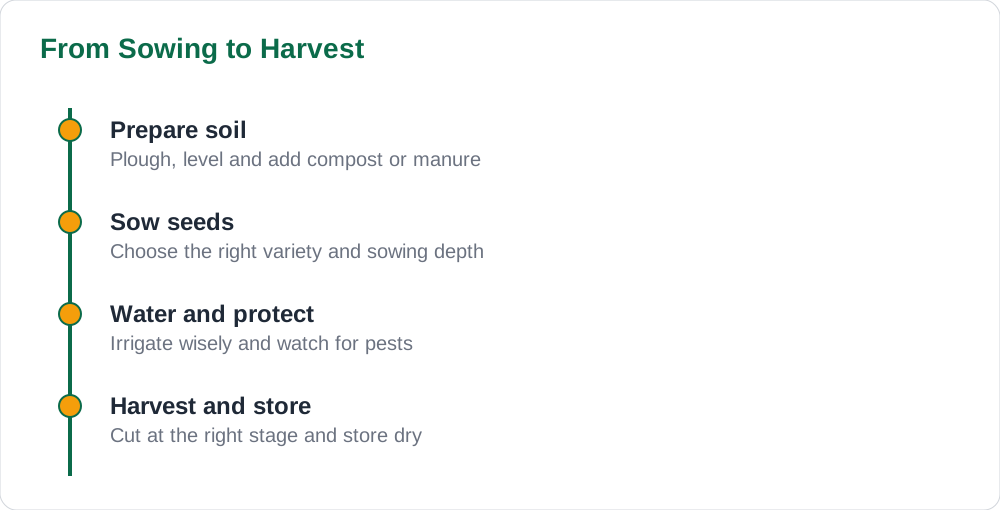
A seed is a young plant in a protective coat, with a small store of food to help it start growing. When a seed gets the right amount of water, warmth and air, it wakes up from its resting state in a process called germination. First the root grows downward to find water, then the shoot grows upward toward light. If a seed is buried too deep, the shoot may run out of stored food before it reaches sunlight, and if the soil is too dry, the seed may never start at all.
Good seed selection matters as much as good soil. Farmers choose varieties that suit their climate, resist common diseases, and ripen at the right time for their area. Healthy, clean and well-stored seeds germinate more evenly, which gives a field of plants that grow together and are easier to water, protect and harvest. That is why seed quality is one of the first science-based decisions in farming, and why damaged or mixed seed often leads to a patchy, weaker crop.
Soil: More Than Just Dirt Under Our Feet
Soil is a mixture of tiny rock particles, decayed plant and animal matter called humus, water, air and countless living things. Sandy soil drains quickly but holds little water or food for plants, clay soil holds water well but can become hard and waterlogged, and loamy soil balances drainage and fertility best for most crops. The dark humus in soil acts like a sponge and a storehouse, holding moisture and plant nutrients and feeding the microbes and earthworms that keep soil loose and alive.
Plants need nutrients such as nitrogen for leafy growth, phosphorus for roots and flowers, and potassium for strength and fruit quality. When the same crop is grown year after year, the soil can lose these nutrients, which is why farmers rotate crops, add compost or manure, and sometimes leave a field to rest. Testing soil and adding only what it lacks is smarter than adding fertiliser blindly, because excess fertiliser can wash into water, harm living things, and waste the farmer's money.
- Loamy soil suits most crops because it balances water, air and nutrients.
- Humus holds moisture and feeds soil life such as earthworms.
- Crop rotation helps restore nutrients and break pest cycles.
Water, Sunlight and the Seasons
Plants make their own food by photosynthesis, using sunlight, water and carbon dioxide from the air to produce sugars and release oxygen. Without enough light, leaves cannot make enough food, and without enough water, the plant wilts because its cells lose pressure and its roots cannot carry nutrients upward. Too much water is also harmful, because flooded roots cannot get air and may rot. Good irrigation means giving the right amount at the right time, often in the early morning or evening when less water is lost to evaporation.
Seasons guide the whole farming calendar. Winter crops such as wheat are sown when temperatures fall and harvested in spring, while summer crops such as rice and cotton need warmth and longer days. Farmers watch rainfall, temperature and day length, and they now also use weather forecasts to decide when to sow, irrigate or harvest. Sowing too early or too late can expose young plants to frost, heat or heavy rain at exactly the wrong stage of growth.
Protecting Crops From Pests and Disease
Insects, fungi, bacteria and weeds can all reduce a harvest, and science helps farmers fight them without harming people or the environment more than necessary. Some insects eat leaves or suck sap, fungi cause spots and rots, and weeds compete with crops for water, light and nutrients. Removing weeds early, choosing resistant varieties, and encouraging helpful insects such as ladybirds are all science-based methods that reduce damage before chemicals are considered.
When pesticides are used, they must be chosen for the exact problem, measured carefully, and applied with protective clothing and safe storage, because careless use can poison farm workers, kill helpful insects, and pollute water. Modern farming also uses biological control, where a natural enemy of a pest is encouraged, and integrated pest management, which combines several gentle methods first. The goal is a healthy crop with the smallest possible harm to people, soil and water.
Harvest, Storage and Looking After the Land
Harvesting at the right stage protects both quality and quantity. Grain harvested too early may be damp and spoil in storage, while grain left too long may fall from the plant or be eaten by birds and insects. After harvest, drying grain properly and storing it in clean, dry, airtight containers keeps mould and storage insects away. Vegetables and fruit need gentle handling, shade and cool storage, because bruised skin lets microbes in and speeds up rotting.
Good farming also thinks beyond one season. Compost returns plant matter to the soil, trees shelter fields from wind and give shade, and careful irrigation avoids waterlogging and salt build-up in the soil. Farmers who look after their land, save seed wisely, and keep learning about weather and soil can feed their families year after year. Students can explore more study material through the books page and the solved notes on this site, and try a simple experiment by growing seeds in different soils at home and comparing their growth.
- Store grain dry and clean to prevent mould and insects.
- Compost and crop rotation keep soil fertile for future seasons.
- Harvest timing affects both crop quality and storage life.
AI Help: Muse AI
Muse AI is Meta's personal AI assistant, and it can explain farming science in clear, simple steps for school students. For this article, you can ask it why crop rotation helps soil or how photosynthesis feeds a growing wheat plant. Join Muse with invite code LTGSWD — in the Muse app, go to Settings > Redeem token and enter the code. Disclosure: LTGSWD is the author's Muse invite code. Muse AI does not give official Sindh Textbook Board answers — always verify against your Sindh Textbook Board book and your teacher.
5 key points you must know
- Germination needs water, warmth and air for the seed to sprout.
- Loamy soil with humus holds water and nutrients best for crops.
- Photosynthesis uses sunlight, water and carbon dioxide to make plant food.
- Crop rotation and compost keep soil fertile across seasons.
- Safe pest control starts with resistant varieties and helpful insects.
Frequently asked questions
What does a seed need to germinate?
A seed needs water to soften its coat, warmth to activate growth, and air for respiration. Without any one of these, germination slows down or fails.
Why is loamy soil good for farming?
Loamy soil contains a balance of sand, silt and clay plus humus, so it drains well, holds moisture and nutrients, and stays soft enough for roots to spread.
What is crop rotation?
Crop rotation means growing different crops in the same field in different seasons, which restores nutrients, breaks pest and disease cycles, and improves soil structure.
Why should grain be stored dry?
Damp grain encourages mould and storage insects, which spoil food and can make it unsafe to eat. Dry, clean, airtight storage slows both problems.
How can farmers reduce pesticide harm?
They can use resistant varieties, remove weeds early, encourage helpful insects, and apply any pesticide only for the exact problem, in the correct dose, with protective clothing.
Solved notes — preview free
These guides work best with the solved exercises. Preview the solved notes free on this website — 119 solved notes for Classes 6–10 in Sindhi, Urdu, English and Arabic medium. Or browse the full solved notes catalogue for your class and medium. New solved notes are added regularly — check the catalogue for coming-soon books.