Recycling at School: Turning Waste Sorting into a Science Lesson
Every school produces waste: paper, plastic bottles, food scraps, broken pens, and packaging. What happens to that waste is not only a cleaning issue; it is a science lesson about materials, resources, and responsibility. When pupils sort waste, they learn which materials can be reused, which can be recycled, and which should be reduced in the first place. When they run a school recycling project, they practise observation, measurement, teamwork, and care for their environment. This article shows how to turn waste sorting into a science lesson that is practical, safe, and genuinely useful, without needing expensive equipment. For more study support, see the [solved notes](/books.html) and the [books page](/books.html).
Reduce, Reuse, Recycle: What Each Word Really Means
Reduce means using less in the first place. A school reduces waste when pupils use both sides of paper, carry reusable water bottles, and avoid single-use plastic where a reusable option exists. Reuse means using the same item again for the same or a new purpose. A jam jar becomes a pencil holder, a cardboard box becomes storage, and a plastic bottle becomes a plant pot. Recycle means collecting a used material so it can be made into a new product. Paper, metal cans, and many plastics can be recycled, but only if they are clean and sorted correctly. Food scraps can be composted, which is a form of recycling that turns waste into soil.
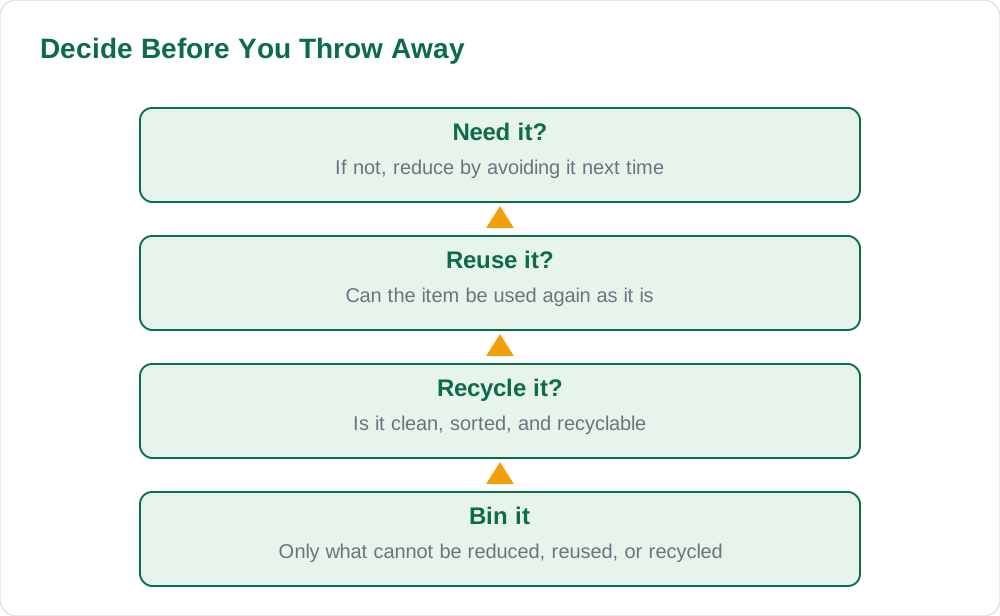
The order matters: reduce first, then reuse, then recycle. Reducing avoids waste entirely, which is better than recycling it later. Reusing keeps the item in use without the energy needed to remake it. Recycling is still valuable, but it uses energy for collection and remaking, so it comes third. Pupils can remember the order by asking three questions about any item: do I need it, can I use it again, and can it be recycled. That habit turns a slogan into a decision. The same careful thinking appears in the article on food chains and ecosystems, where caring for resources protects habitats.
- Reduce: use less in the first place, such as both sides of paper.
- Reuse: use the same item again, such as a jar as a pencil holder.
- Recycle: collect clean, sorted materials to be made into new products.
- Order matters: reduce first, then reuse, then recycle.
Sorting Waste: A Practical Science Activity
Sorting waste is a hands-on way to learn about materials. Set up three or four clearly labelled bins in the classroom: paper and card, plastic bottles, metal cans, and general waste. Food scraps need a separate covered bin if the school composts them. Pupils sort clean, dry items into the right bin and learn why sorting matters: mixed waste is hard to recycle, while sorted waste can be collected and remade. A short sorting activity with safe, clean items, such as paper, cardboard, plastic bottles, and cans, lets pupils practise classification, which is a core science skill.
Safety and hygiene come first. Pupils should wear gloves for sorting, wash hands afterwards, and never sort sharp, broken, dirty, or unknown items. The teacher checks the bins before and after the activity. Items should be empty and dry, because wet or food-covered paper is hard to recycle. Weigh the sorted bins each week and record the totals in a table. Over a term, the class can see whether paper waste is falling, whether plastic bottles are being reused, and whether sorting is improving. That measurement turns recycling from a slogan into a science project with evidence.
- Label bins clearly: paper, plastic bottles, metal, general waste.
- Sort only clean, dry, safe items; never sharp or unknown waste.
- Wear gloves for sorting and wash hands afterwards.
- Weigh bins weekly and record totals to track progress.
Paper, Plastic, Metal, and Food: What Happens Next
Each material has a different story after sorting. Paper is made from wood fibres, and recycling it saves trees, water, and energy compared with making new paper. Pupils can see the fibres by tearing paper and looking closely at the edge. Plastic is made from oil-based materials, and different plastics behave differently, which is why sorting by type matters. Metal cans can be melted and remade many times without losing quality, which makes metal recycling especially valuable. Food scraps can be composted, where decomposers break them down into rich soil for a school garden.
Understanding these stories helps pupils sort correctly. Wet paper, greasy food boxes, and plastic mixed with food are hard to recycle, so they often belong in general waste or compost, depending on school rules. A clean plastic bottle is recyclable, but a bottle half full of drink is not ready for the bin. A metal can should be empty and rinsed. These small habits matter because one dirty item can spoil a whole bin. Pupils can make a simple poster showing what belongs in each bin, with pictures and short labels, and place it above the bins so every class can follow it.
- Paper recycling saves trees, water, and energy.
- Plastic types differ, so sorting by type matters.
- Metal cans can be melted and remade many times.
- Food scraps can be composted into soil for a garden.
School Projects That Teach Real Science
A recycling project can teach measurement, observation, and teamwork at once. A class can run a paper audit: count how many sheets are used in a week, then try to reduce that number by using both sides and reusing scrap paper for rough work. Another class can run a bottle project: collect plastic bottles, count them weekly, and turn some into plant pots or watering cans for the school garden. A third project can build a compost bin for leaves and fruit peels, with pupils recording temperature, moisture, and what the compost looks like each week. Each project has a question, a method, results, and a conclusion, just like any science experiment.
Projects also teach responsibility. Pupils learn that resources are limited, that waste has a cost, and that small actions add up when a whole school acts together. A class that reduces paper waste by a little each week saves a real amount over a term. A school that sorts waste correctly makes recycling possible. Sharing results matters too: a short assembly presentation, a poster in the corridor, or a table in the school newsletter shows other classes what was achieved and how. That sharing is part of science, because science is not complete until results are communicated clearly. For write-up structure, see the science write-up guide.
- Paper audit: count use, then reduce by using both sides and scrap paper.
- Bottle project: count, reuse as plant pots, and track weekly totals.
- Compost project: record temperature, moisture, and appearance weekly.
- Share results in assembly, posters, or the school newsletter.
From School to Home: Habits That Last
The best school recycling lessons change habits at home. Pupils who learn to sort waste at school can help their families sort at home. Pupils who learn to reuse bottles and boxes can suggest reuse ideas in the kitchen. Pupils who learn about compost can help care for a home garden or a pot plant. These habits do not need money or special equipment. They need attention, consistency, and a willingness to do a small task correctly every day. Over time, those small tasks build a sense of responsibility that lasts longer than any single lesson.
Families can help by keeping sorting simple. Two or three labelled bags or boxes at home are enough: paper, plastic and metal, and general waste. Food scraps can go to a compost pile or a garden bed if the family has one. Pupils can teach younger siblings the three questions: do we need it, can we use it again, can it be recycled. That teaching is itself a science skill, because explaining clearly shows real understanding. When school and home both practise the same habits, recycling stops being a project and becomes a normal part of caring for the environment. More on ecosystems and care appears in the water cycle guide.
- Sort waste at home with two or three labelled bags or boxes.
- Reuse bottles, jars, and boxes before throwing them away.
- Teach younger siblings the three questions for every item.
- Small daily habits build lasting responsibility for the environment.
AI Help: Muse AI
Muse AI is Meta's personal AI assistant, and it can help you plan a school recycling project by suggesting a simple sorting system and a way to measure your class's progress.
Join Muse with invite code LTGSWD — in the Muse app, go to Settings > Redeem token and enter the code.
Disclosure: LTGSWD is the author's Muse invite code.
Muse AI does not give official STBB answers — always verify against your Sindh Textbook Board book and your teacher.
5 key points you must know
- Reduce first, then reuse, then recycle, in that order.
- Sorting clean, dry waste correctly makes recycling possible.
- Paper, plastic, metal, and food each have a different recycling story.
- School projects turn recycling into measurement, observation, and teamwork.
- Small daily habits at school and home build lasting responsibility.
Frequently asked questions
What should go in a classroom paper bin?
Clean, dry paper and card, such as used worksheets, notebooks, and cardboard. Wet, greasy, or food-covered paper is hard to recycle and usually belongs in general waste or compost, depending on school rules. Keep paper dry and separate from bottles and cans.
Why must recyclables be clean and dry?
Dirty or wet items can spoil a whole bin of recyclables. Food on paper makes it hard to remake, and liquid in bottles adds weight and smell. Rinsing a can and emptying a bottle takes seconds and keeps the sorted materials usable.
What is compost, and what can go in it?
Compost is broken-down plant and food matter turned into rich soil by decomposers. Leaves, fruit peels, vegetable scraps, and dry leaves can be composted in a school bin. Meat, oily food, plastic, and metal should not go in a school compost bin.
How can a class measure whether recycling is working?
Weigh or count sorted bins each week and record the totals in a table. Compare paper use before and after a reduce campaign, or count bottles collected weekly. A simple table over a term shows whether waste is falling and sorting is improving.
What if my school has no recycling collection?
You can still reduce and reuse: use both sides of paper, reuse bottles and boxes, and compost leaves and peels for a garden. Sorted, clean materials can be stored and shared with a local collector when one is available. The habits still matter.
Solved notes — preview free
These guides work best with the solved exercises. Preview the solved notes free on this website — 119 solved notes for Classes 6–10 in Sindhi, Urdu, English and Arabic medium. Or browse the full solved notes catalogue for your class and medium. New solved notes are added regularly — check the catalogue for coming-soon books.