Sabr: Patience in School Life for Class 8

Sabr means patience: the strength to stay calm, keep trying, and choose a wise response when things feel slow, hard, or unfair. For Class 8 pupils, patience is tested every week. A difficult maths problem refuses to solve, a friend misunderstands you, or exam results fall below your hopes. This guide connects Sabr to exams, setbacks, and disagreements with practical classroom examples. You will learn what patience looks like in real school moments, how to practise it without giving up, and why patient pupils often learn more deeply than pupils who rush. Keep your STBB book nearby and discuss the examples with your teacher.
What Sabr Means Beyond Waiting
Many pupils think patience only means waiting quietly. Sabr is wider than that. It means staying steady while you work, controlling your temper, and continuing even when progress is slow. A patient pupil does not stop studying after one bad test. Instead, that pupil reviews mistakes, asks questions, and tries a better method next time.
Patience also protects relationships. When a classmate speaks rudely, a patient response gives both sides time to cool down. That pause often prevents a small quarrel from becoming a lasting problem. Patience is therefore both a study skill and a social skill, useful in every part of school life.
- Staying steady: keep working when a task is slow or difficult.
- Controlling temper: pause before answering in anger.
- Continuing after failure: review mistakes and try again.
- Waiting fairly: take turns without pushing or complaining.
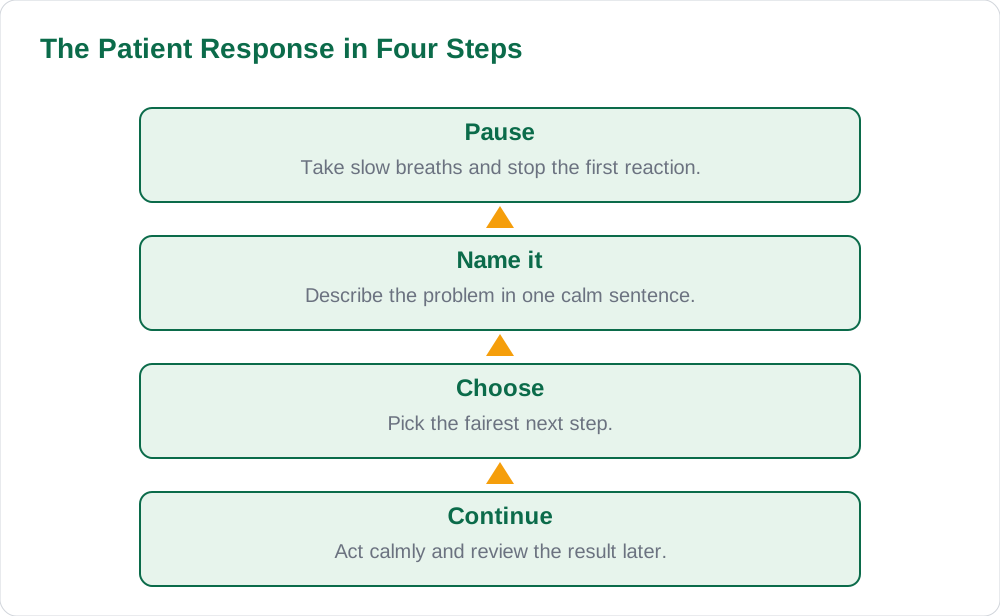
Sabr During Exams and Study
Exams test patience as much as memory. A patient pupil reads each question fully, plans the answer, and checks work before handing it in. An impatient pupil rushes, misreads instructions, and loses marks on questions that were actually understood. Slowing down for the first minute of an exam often saves far more time than it costs.
Study patience matters too. Learning a hard topic may take several short sessions rather than one long night. Break the work into small parts, revise each part, and rest briefly between sessions. If a chapter feels confusing, note the exact point where you got lost and ask your teacher. The solved notes can support revision, but steady practice is what builds lasting understanding.
Sabr After Setbacks and Low Marks
A low mark can feel like a verdict on your ability. Sabr reframes it as information. Ask three questions: which questions did I miss, why did I miss them, and what will I change next time? This review turns disappointment into a plan. Pupils who do this often improve faster than pupils who only feel upset or blame others.
Setbacks also include being left out of a team, losing a competition, or struggling with a new subject. Patience does not remove the hurt, but it stops the hurt from deciding your next action. Talk to a trusted teacher or parent, set one small goal, and take the next step. Small progress, repeated daily, rebuilds confidence more surely than waiting for a perfect day.
- Review the paper before judging yourself.
- Find one fixable cause, such as rushed reading.
- Set one small goal for the next test.
- Ask for help early instead of hiding the problem.
Sabr in Disagreements With Classmates
Disagreements are normal in any classroom. Sabr means listening to the full point before replying, even when you feel sure you are right. Repeat the other pupil's point in your own words to check understanding. This simple habit lowers tension and often reveals that the disagreement is smaller than it first seemed.
If a disagreement becomes heated, step back. Say that you want to discuss it calmly later, then walk away rather than trading insults. Later, with a teacher's help if needed, agree on a fair rule for next time. Pupils who handle disagreements patiently earn respect and keep friendships intact.
Building Patience Every Day
Patience grows through daily practice, not through one lesson. Choose one patience goal each morning, such as listening without interrupting or finishing homework before play. At night, review whether you kept the goal and what helped. Keep the goal small enough to succeed, then raise it gradually over weeks.
Physical habits support patience too. Enough sleep, regular meals, and short breaks during homework reduce irritability. When you feel tense, drink water, stretch, and return to the task. For a companion lesson on character, read the guide on noble character and browse more study help in the blog.
AI Help: Muse AI
Muse AI is Meta's personal AI assistant, and it can help you practise Sabr by breaking a hard topic into small, calm study steps. Muse AI does not give official STBB answers — always verify against your STBB book and your teacher. Always check any study plan against your Sindh Textbook Board book before using it in class.
Join Muse with invite code LTGSWD — in the Muse app, go to Settings > Redeem token and enter the code.
Disclosure: LTGSWD is the author's Muse invite code.
5 key points you must know
- Sabr means staying steady, controlling temper, and continuing after setbacks.
- Patient exam habits include reading questions fully and checking work.
- Low marks become useful when you review mistakes and plan one fix.
- Listening fully before replying prevents small disagreements from growing.
- Daily patience goals, sleep, and breaks make calm responses easier.
Frequently asked questions
What is Sabr in school life?
Sabr is patience in study, exams, and relationships: staying calm, working steadily, and choosing a wise response instead of reacting in anger or giving up.
How does patience help in exams?
It helps you read questions carefully, plan answers, avoid careless errors, and check your work before handing in the paper.
What should I do after a bad result?
Review the paper, find one fixable cause, set one small goal for the next test, and ask your teacher for help on the exact point where you got stuck.
How can I stay patient during an argument?
Pause, listen to the full point, repeat it back calmly, and step away to discuss later if tempers rise.
Solved notes — preview free
These guides work best with the solved exercises. Preview the solved notes free on this website — 119 solved notes for Classes 6–10 in Sindhi, Urdu, English and Arabic medium. Or browse the full solved notes catalogue for your class and medium. New solved notes are added regularly — check the catalogue for coming-soon books.