Mai Bakhtawar: Voice of the Hari Movement
Mai Bakhtawar is one of the bravest figures in Sindh's history, yet many students have never heard her full story. She was a poor peasant woman, a hari, who worked on the land of powerful landlords in Sindh. In the 1940s, when haris began demanding their rights, she stood up for her fellow workers and refused to be silenced. She paid for that courage with her life. Today she is remembered as a martyr of the Hari Movement and a symbol of the struggle of Sindh's poor farmers. Her story teaches students about justice, courage, and the dignity of ordinary people.
Who Were the Haris of Sindh?
In old Sindh, most farming land belonged to large landlords, while the people who actually worked the land were called haris. Haris ploughed fields, sowed seeds, harvested crops, and cared for animals, yet they received only a small share of the produce. Many lived in debt, had little education, and faced harsh treatment. They had few rights and little power to complain. This system was deeply unfair, because those who did the hardest work received the least reward.
Students should understand this system to appreciate Mai Bakhtawar's courage. She was not a rich or educated leader. She was one of the haris herself. When she spoke for hari rights, she spoke from personal experience. That is why her story matters. History is not only made by kings, generals, and prime ministers. It is also made by ordinary workers, women, and farmers who refuse to accept injustice. Learn more study material on the solved notes page.
The Hari Movement in Sindh
In the 1930s and 1940s, haris in Sindh began to organise. Leaders such as Hyder Bux Jatoi helped form the Sindh Hari Committee, which demanded fair shares of crops, an end to forced labour, and basic rights for peasants. Meetings were held in villages, songs were sung about hari rights, and workers learned to stand together. Landlords opposed this movement strongly, because it challenged their power and profits. The movement faced threats, arrests, and violence.
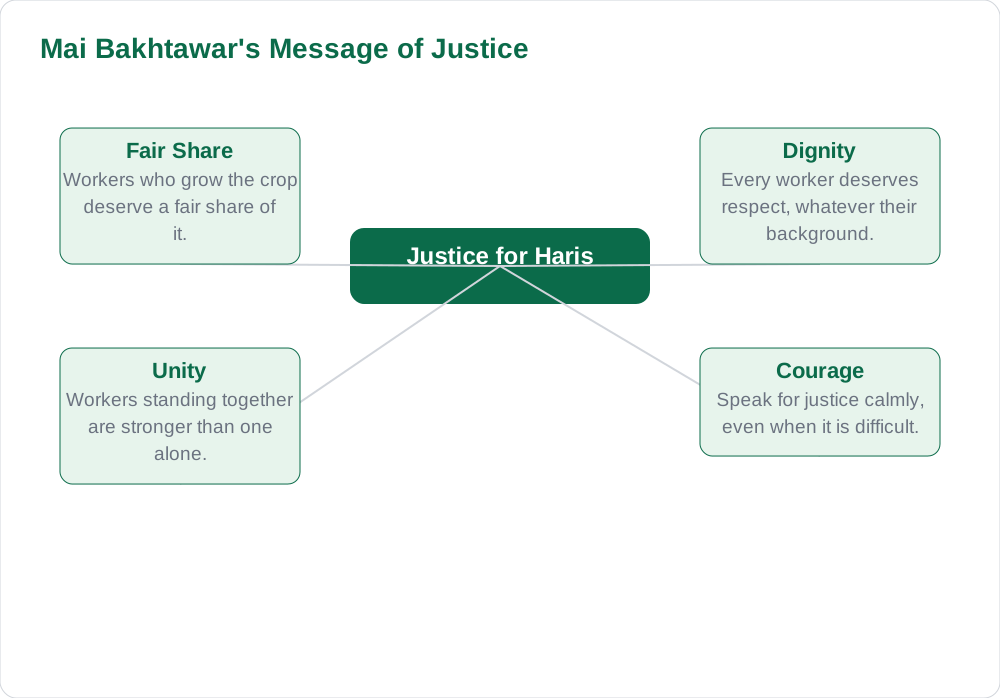
The Hari Movement teaches students the power of organisation. One worker alone can be ignored or punished, but workers together can demand change. In school, the same principle applies to group work and fair treatment. When students organise politely, present facts, and stand together for a fair rule, teachers listen. Organisation must be peaceful and lawful. The Hari Movement's strength came from unity, awareness, and the moral justice of its demands, not from violence.
Mai Bakhtawar's Brave Stand
Mai Bakhtawar lived in a village in Sindh and worked as a hari. She joined the Hari Movement and encouraged fellow workers, especially women, to demand their rights. According to the well-known account of her life, she refused to accept unfair treatment and stood firm when landlords and their men tried to silence her. In the 1940s, she was killed for her stand, becoming a martyr of the peasant movement. Her death shocked many people and strengthened the resolve of haris across Sindh.
Her courage is extraordinary because she had everything to lose and little protection. She was poor, a woman, and a worker in a society where landlords held great power. Yet she chose dignity over fear. Students can learn from this that courage is not about being rich or powerful. It is about doing what is right even when it is dangerous or unpopular. Standing up for a bullied classmate, refusing to cheat, or telling the truth when it is difficult are small forms of the same courage. See class books on the books page.
- Haris were tenant farmers who worked the land but received a small share.
- The Sindh Hari Committee demanded fair shares and an end to forced labour.
- Mai Bakhtawar encouraged fellow workers, especially women, to claim their rights.
Why Women Like Mai Bakhtawar Matter
Mai Bakhtawar's story is especially important because she was a woman from the poorest section of society. History books often focus on male leaders from educated families. Her life corrects that picture. Women workers carried a double burden: they worked in fields and at home, and they faced restrictions on speaking publicly. When such a woman speaks for justice, her voice carries special power. It shows that leadership can come from anywhere, including a village field in Sindh.
For girl students, this is an inspiring message. You do not need wealth or a famous family to matter. Your education, your voice, and your courage matter. For boy students, the lesson is respect. Respect the work of farmers, labourers, and domestic workers, because society runs on their labour. Never mock a classmate whose parents work as labourers or farmers. Their work is dignified, and their children deserve the same respect and opportunity as anyone else.
Legacy: Remembering the Haris Today
Today, Mai Bakhtawar is remembered in Sindh through songs, stories, and tributes by peasant organisations. Her name is linked with the struggle for land rights, fair wages, and dignity for agricultural workers. Sindh's farmers still face challenges, including low incomes, debt, and lack of education and health facilities. Remembering Mai Bakhtawar is not only about the past. It is about asking whether today's workers receive fair treatment and respect.
Students can honour her legacy by learning about Sindh's rural life, respecting farmers, and supporting fair treatment for workers. If your family owns land, treat workers fairly and kindly. If you meet a farmer, thank them for the food on your table. If you become a teacher, officer, journalist, or lawyer one day, use your position to defend the rights of ordinary people. That is the living tribute to Mai Bakhtawar: a Sindh where no worker is silenced for demanding justice. More guides are on the blog home.
AI Help: Muse AI
Muse AI is Meta's personal AI assistant. It can explain history in simple words, summarise a lesson, and make practice questions for revision. For this article, you can ask Muse AI to explain who the haris were in three simple sentences for students. Join Muse with invite code LTGSWD — in the Muse app, go to Settings > Redeem token and enter the code. Disclosure: LTGSWD is the author's Muse invite code. Muse AI does not give official Sindh Textbook Board answers — always verify against your Sindh Textbook Board book and your teacher.
4 key points you must know
- Mai Bakhtawar was a Sindhi peasant woman and hari worker.
- Haris worked landlords' land but received only a small share.
- She stood for hari rights in the 1940s and became a martyr.
- Her courage shows leadership can come from ordinary people.
Frequently asked questions
Who was Mai Bakhtawar?
She was a Sindhi hari woman who stood up for peasant rights in the Hari Movement of the 1940s and was killed for her courage, becoming a martyr.
Who were the haris?
Haris were tenant farmers in Sindh who worked on landlords' land, doing the farming work while receiving only a small share of the produce.
What did the Hari Movement demand?
It demanded fair shares of crops, an end to forced labour, and basic rights and dignity for peasant workers in Sindh.
Why is Mai Bakhtawar remembered today?
She is remembered as a symbol of courage and justice, showing that even a poor peasant woman can stand for rights and inspire a movement.
Solved notes — preview free
These guides work best with the solved exercises. Preview the solved notes free on this website — 119 solved notes for Classes 6–10 in Sindhi, Urdu, English and Arabic medium. Or browse the full solved notes catalogue for your class and medium. New solved notes are added regularly — check the catalogue for coming-soon books.