Important Questions: Class 8 Social Studies (Chapter-wise)
Important questions class 8 social studies revision covers history, geography and civics in one paper, so the students who do best are those who learn a method for each strand rather than memorising one long list of facts. History questions ask for events in order with causes and results, geography questions ask for maps, features and reasons, and civics questions ask for rights, duties and the working of institutions. This guide organises the subject by strand and question type, so you can revise each part with the right technique and use your time well. It is general revision guidance only, not a leaked paper, and every fact should be checked against your textbook and the [solved notes](/solved.html) on this site, together with your [STBB books](/books.html).
Three Strands, Three Methods
Treat Social Studies as three subjects in one paper, and give each strand its own revision method. History is revised as timelines: what happened, why it happened, and what followed, with one significance sentence per event. Geography is revised as maps and reasons: where something is, what it looks like, and why it is there, with a labelled map or diagram for each major topic. Civics is revised as definitions and functions: what an institution is, what it does, and what rights and duties belong to citizens, learned as short exact points. Mixing the methods, such as memorising geography as a story or history as a list, is the most common cause of weak answers.
Keep three sections in your notebook, one per strand, and revise a little of each every week rather than finishing one strand and forgetting it. Short questions come from all three strands, so steady coverage beats deep knowledge of one strand alone. In the exam, read the question and decide which strand it belongs to, then answer in that strand's format: a timeline for history, a labelled map or reasoned points for geography, and definition plus function for civics. The blog guides on this site explain the same strand method for Pakistan Studies, and your class notes show which topics your teacher emphasised.
- History as timelines, geography as maps and reasons, civics as definitions and functions.
- Keep three notebook sections and revise a little of each every week.
- Answer each question in its own strand's format.
History: Events, Causes and Results
History chapters in Class 8 test whether you can place events in order and explain them, not whether you can recite long passages. For each chapter, build a timeline with the event, its cause, and its result, and be able to explain the significance of each event in one or two sentences. Questions on civilisations, rulers, or movements commonly ask for contributions, so learn contributions as distinct points with one example each, rather than as general praise. If a question asks why something happened, give two or three causes in order of importance, and if it asks what followed, give the immediate result first and the longer result second.
Short history questions test names, terms and definitions, so learn key terms exactly as your textbook defines them, and attach each term to one event or example. Avoid adding details you are unsure about, because an incorrect claim damages an otherwise good answer, and keep your language factual and measured. When a question offers a choice, choose the topic whose timeline you can write most completely, not the one that merely looks familiar. Practise writing one event's full account from memory each week, then correct it against the textbook, since writing fixes order far better than reading.
Geography and Map Work
Geography chapters test location, features and reasons, and map questions are the most scoring part of the paper for students who practise them. Learn the major physical features, rivers, regions and cities of the areas your syllabus covers, and practise marking them on an outline map until you can place each one without hesitation. Map questions usually ask for several places at once, so practise in sets of five, and label neatly with the correct spellings, since a misspelt label can lose the mark. Climate, agriculture and population questions follow a pattern: state the feature, explain the reason, and give one example or effect.
Physical geography questions, such as those on mountains, rivers, climate and seasons, are answered best by linking a feature to its cause, for example relating rainfall to a season or a crop to its climate. Human geography questions, on farming, industry, transport and settlements, ask for types, factors and problems, so learn each topic under those three headings. If a question asks for a comparison, such as between two regions or two farming types, give parallel points rather than two separate descriptions. Keep geography answers organised with short points, because examiners award marks per point in these questions.
Civics: Rights, Duties and Institutions
Civics chapters test definitions, functions and the relationship between citizens and the state, and their questions are usually short and precise. Learn fundamental rights and duties as separate lists, with one brief explanation or example for each, since questions often ask for a right and its meaning, or a duty and its importance. Institutions, such as local government, the judiciary, or the legislature where taught, are learned as definition plus functions: what the institution is, what it does, and why it matters. Questions on democracy, citizenship and the constitution at this level ask for meaning and features, so learn them as short exact definitions followed by two or three features.
Civics answers should be balanced and factual, stating principles and functions without personal opinion unless the question asks for it. If a question asks for your opinion, give it briefly with one reason, since an unsupported opinion reads as a guess. Learn the difference between similar terms, such as rights and duties, or rules and laws, as one sentence stating the distinction, because such pairs are favourite short questions. Revise civics in short daily sets, since its points are small and numerous, and test yourself by writing each definition from memory before checking it.
- Learn rights and duties as lists with one explanation each.
- Learn institutions as definition plus functions plus importance.
- Answer distinction questions with one sentence stating the difference.
Economics, Environment and Exam Technique
Economics and environment topics, where included, test basic concepts and their application: resources and their types, occupations, trade, and the problems of pollution and conservation. Learn resources as a classification with examples, and occupations as types with one example each, since classification questions are common and easy to mark. Environment questions ask for causes, effects and solutions, and the best answers give one point under each heading rather than a mixed paragraph. Questions on conservation and sustainable use are answered best by stating the problem, then one practical measure, then its benefit, in that order.
On exam day, attempt short questions and map questions first, since they give steady marks and build confidence, then write the long questions in the structure of their strand. Leave time to check map labels and spellings, dates and names, and any definition you wrote from memory, since small errors are the most common lost marks in this subject. If a question resists you, move on and return to it later, because marks from other questions are safer than time spent on one stubborn question. A complete, well-ordered paper across all three strands is the goal, and steady, factual writing achieves it.
AI Help: Muse AI
Muse AI is Meta's personal AI assistant, and it can help you revise Class 8 Social Studies by turning a chapter into a timeline or a set of map questions. Ask it to explain one civics concept or historical event in simple points, then check every fact against your textbook before writing it down. Join Muse with invite code LTGSWD — in the Muse app, go to Settings > Redeem token and enter the code. Disclosure: LTGSWD is the author's Muse invite code. Muse AI does not give official STBB answers — always verify against your STBB book and your teacher. Always verify against your Sindh Textbook Board book and your teacher before using anything in classwork.
5 key points you must know
- Three strands, three methods: history as timelines, geography as maps, civics as definitions.
- Map practice in sets of five, with neat labels and correct spellings, is high-value.
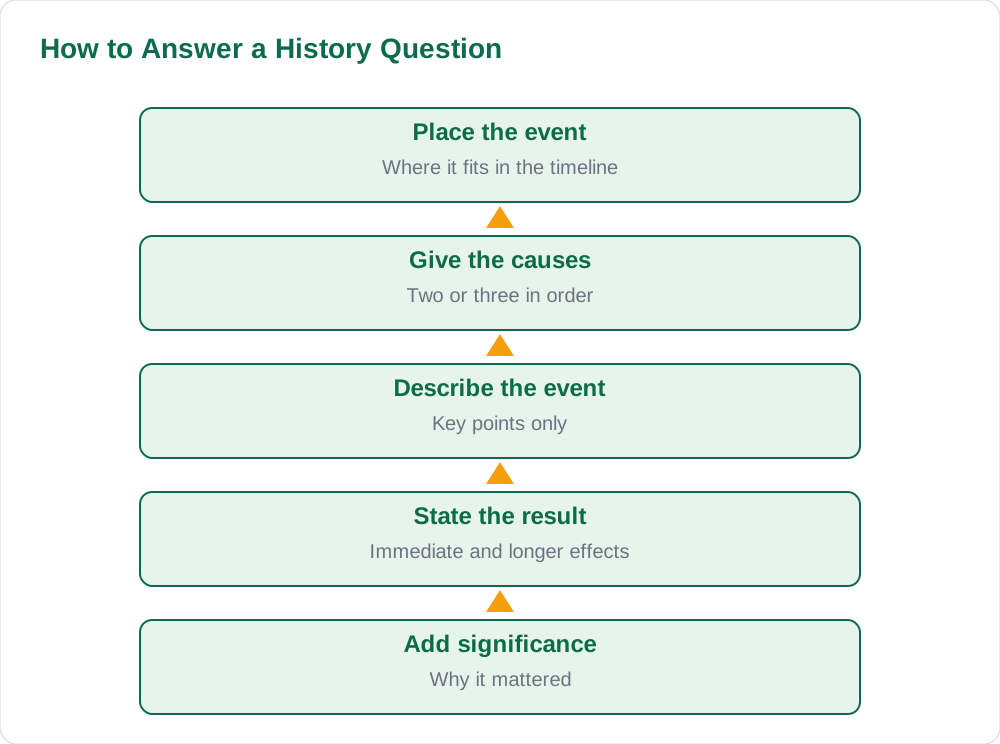
- History answers follow event, causes, description, result and significance.
- Civics institutions are learned as definition plus functions plus importance.
- Attempt short and map questions first, then long questions in strand structure.
Frequently asked questions
How do I practise map questions for Social Studies?
Practise marking places on an outline map in sets of five until you can place each one without hesitation. Label neatly with correct spellings, since a misspelt label can lose the mark. Test yourself by covering the labels and marking the map from memory, and repeat the weak places the next day, because map accuracy comes from repeated practice, not from reading a map.
How should I answer a history long question?
Place the event in its timeline, give two or three causes in order, describe the key points, state the immediate and longer results, and end with its significance. This structure matches how examiners award marks and keeps your answer focused. Avoid adding details you are unsure about, since an incorrect claim damages an otherwise good answer.
What is the best way to learn civics definitions?
Learn each definition in exact words with one example or function beside it, and test yourself with short cards in small daily sets. Group related terms together, such as rights and duties, and learn each pair by the sentence that states their difference. Civics points are small and numerous, so short daily revision beats one long session.
How do I handle a question from a chapter I barely revised?
Write what you know accurately in the question's format, even if it is brief, rather than leaving it blank or guessing wildly. A short accurate answer earns partial marks, while invented details earn none and may damage the rest. After the exam, note the weak chapter and revise it first for the next test, so the gap does not repeat.
Is this guide a guess paper?
No, it describes the question types and strands teachers commonly emphasise, such as maps, timelines, civics definitions and environment questions. It does not predict or leak any exam paper, and no specific question is claimed to appear. Prepare from your textbook and class notes, and use this guide to organise that preparation.
Solved notes — preview free
These guides work best with the solved exercises. Preview the solved notes free on this website — 119 solved notes for Classes 6–10 in Sindhi, Urdu, English and Arabic medium. Or browse the full solved notes catalogue for your class and medium. New solved notes are added regularly — check the catalogue for coming-soon books.