Husn-e-Muashrat: Good Conduct in Society for Class 8
Husn-e-Muashrat means good conduct in society: the manners, speech, and kindness that make shared life pleasant and fair. For Class 8 pupils, society begins at home, continues in the classroom, and extends to neighbours, shopkeepers, and strangers on the street. This guide covers polite speech, respect, and neighbourliness as taught in the Class 8 lesson. You will find practical examples for greeting elders, speaking kindly to classmates, helping neighbours, and behaving well in public places. Good conduct is not a costume for special occasions. It is a daily habit that builds trust in every place you go.
What Good Conduct in Society Means
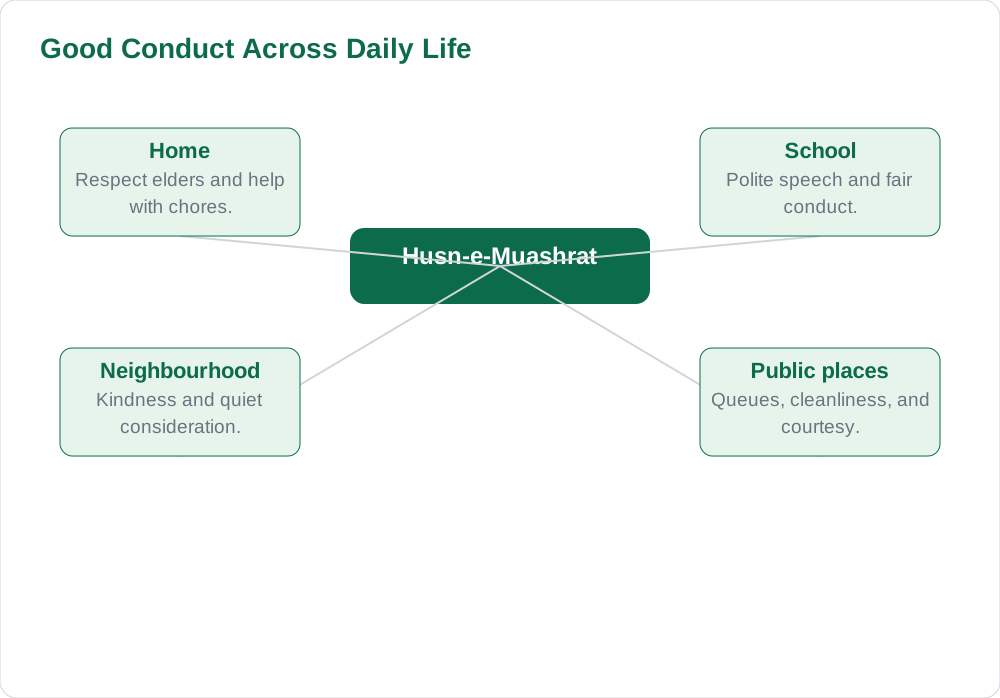
Good conduct in society means treating other people with the dignity you wish for yourself. It includes greeting others warmly, listening without interrupting, and avoiding words that embarrass or hurt. It also means caring for shared spaces: keeping streets clean, queueing fairly, and speaking softly in places where others are working or resting.
Society works best when people follow these courtesies without being forced. A pupil who practises good conduct at school usually practises it at home and in the neighbourhood too. Character travels with you. The solved notes can help you revise the lesson, but real learning happens when you practise these manners in daily life.
- Greet others warmly and reply politely.
- Listen fully before speaking or judging.
- Avoid hurtful jokes, nicknames, and mocking.
- Care for shared spaces, queues, and property.
Polite Speech at Home and School
Polite speech begins with small phrases used sincerely: please, thank you, excuse me, and sorry. These words matter most when they match your tone. A soft, honest apology repairs more than a loud excuse. Likewise, a genuine thank-you encourages the person who helped you to help again.
In class, polite speech means raising your hand, waiting for your turn, and disagreeing without insult. At home, it means speaking respectfully to parents and elders, even when you feel frustrated. If you disagree, explain your view calmly and listen to the reply. Polite speech does not remove disagreement, but it keeps disagreement safe.
Respect for Elders and Younger Pupils
Respect for elders includes greeting them, offering them a seat, and listening to their advice without mocking. Elders carry experience that can save you from avoidable mistakes. You may not agree with every view, but you can still show respect in tone and behaviour. That respect strengthens family and community bonds.
Respect also flows downward. Older pupils should protect younger pupils, not frighten them. Offer directions, share a bench, or stop teasing when you see it. A school where older pupils are kind becomes a place where younger pupils feel safe to learn. For more guidance, explore the books and the blog.
- Greet elders and offer them a seat.
- Listen to advice without mocking or interrupting.
- Protect younger pupils instead of teasing them.
- Speak gently to anyone who feels shy or nervous.
Neighbourliness and Kindness Nearby
Neighbourliness means being a good neighbour in practical ways. Keep noise low, especially at night. Share what you can, such as notes or tools, and offer help when a neighbour is ill or carrying heavy bags. Avoid gossip about neighbours, and settle small problems through calm conversation rather than quarrels.
Kindness to neighbours also includes care for shared paths, water points, and walls. Do not damage property or litter common areas. If you see litter, pick it up when it is safe to do so. These actions may look small, but they shape how a whole street feels to live in.
Good Conduct in Public Places
Public places test conduct because strangers are watching and no teacher is present. Queue fairly at shops and bus stops, speak softly in libraries and hospitals, and keep your belongings tidy so they do not block others. If you make a mistake, apologise promptly and correct it. Strangers judge a school by the conduct of its pupils in public.
Good conduct also means refusing to join behaviour that harms others, such as damaging benches or shouting in quiet areas. If friends pressure you, suggest a better option calmly. Practise the companion lesson on justice and fairness to strengthen the fairness side of good conduct.
AI Help: Muse AI
Muse AI is Meta's personal AI assistant, and it can help you practise Husn-e-Muashrat by suggesting polite replies for greetings, apologies, and disagreements. Muse AI does not give official STBB answers — always verify against your STBB book and your teacher. Always check any lesson summary against your Sindh Textbook Board book before using it in class.
Join Muse with invite code LTGSWD — in the Muse app, go to Settings > Redeem token and enter the code.
Disclosure: LTGSWD is the author's Muse invite code.
5 key points you must know
- Husn-e-Muashrat means good conduct in home, school, neighbourhood, and public life.
- Polite speech uses sincere words, a respectful tone, and calm disagreement.
- Respect elders by listening, and protect younger pupils with kindness.
- Neighbourliness means quiet consideration, practical help, and no gossip.
- Public conduct shows your school's character to strangers.
Frequently asked questions
What is Husn-e-Muashrat?
It is good conduct in society: polite speech, respect, kindness, neighbourliness, and care for shared spaces in daily life.
How can I show good conduct at school?
Greet warmly, wait your turn, disagree without insult, include others, and care for classroom property.
What does neighbourliness mean for a pupil?
It means low noise, practical help, no gossip, care for shared paths and property, and calm conversation when problems arise.
How should I behave in public places?
Queue fairly, speak softly in quiet places, keep belongings tidy, apologise promptly, and refuse to join behaviour that harms others.
Solved notes — preview free
These guides work best with the solved exercises. Preview the solved notes free on this website — 119 solved notes for Classes 6–10 in Sindhi, Urdu, English and Arabic medium. Or browse the full solved notes catalogue for your class and medium. New solved notes are added regularly — check the catalogue for coming-soon books.