Hijrat-e-Madina: Lessons for Class 9 Seerat Study
The Hijrat-e-Madina lessons class 9 Seerat pupils study mark one of the great turning points in Islamic history. The Hijrat was the migration from Makkah to Madina, undertaken when open preaching and worship in Makkah had become extremely difficult. It was not a sudden flight, but a planned move made with trust in Allah, careful preparation, and sacrifice. For Class 9 pupils, the lesson is not only about a journey from one city to another. It is about courage, patience, loyalty, and building a community based on faith and justice. This guide explains the causes, the journey, and the lasting lessons, so you can understand the event clearly and connect it to your own study, character, and daily choices.
Why the Hijrat Became Necessary
In Makkah, the early Muslims faced growing pressure for their beliefs. They were mocked, boycotted, and harmed for refusing to abandon their faith. Preaching openly became harder, and many families suffered loss and fear. The Hijrat grew out of this hardship, when a new home was needed where Muslims could worship freely and live safely.
Meanwhile, people in Yathrib, later called Madina, invited the Prophet (PBUH) to help bring peace to their divided city. Their invitation offered hope and a place to build a fair community. Pupils should see the Hijrat as both a move away from persecution and a move toward a new beginning.
- Faith stayed firm despite hardship and fear.
- The call to truth continued with patience and wisdom.
- A safe place was needed for worship and community life.
- The invitation from Madina opened a new path forward.
The Journey to Madina
The journey was planned with care and secrecy. The Prophet (PBUH) and Abu Bakr (RA) travelled by a less direct route and rested at Quba before entering Madina. Every step showed planning, trust, and reliance on Allah. Pupils can learn that faith and careful preparation work together, rather than replacing each other.
Along the way, loyalty and courage mattered deeply. Companions risked their own safety to protect the mission and keep the plan secure. The arrival in Madina was welcomed with joy and relief. You can explore related Seerat lessons to place this journey beside other key events in the Prophet's life.
What the Hijrat Changed
The Hijrat changed the position of the Muslim community. In Madina, Muslims could pray openly, organise their affairs, and build institutions such as the mosque. The community gained stability, identity, and a shared purpose. For pupils, this shows how a difficult move can lead to growth when it is guided by clear values.
It also changed how Muslims related to one another and to neighbours. Brotherhood bound the Muhajirun and Ansar together, and agreements set fair rules for living side by side. The Hijrat marks the start of a community built on faith, justice, and mutual care. See the books page for the Class 9 Seerat book.
- Open worship became possible in a welcoming city.
- Brotherhood replaced tribal division with shared faith.
- The mosque became a centre for learning and unity.
- Agreements protected rights and encouraged peaceful coexistence.
Lessons of Trust and Sacrifice
Trust in Allah stands at the heart of the Hijrat. The travellers faced danger, yet moved forward with prayer and steady courage. Trust did not mean ignoring danger. It meant preparing well, choosing good companions, and relying on Allah for the outcome. Pupils can practise this balance in exams and projects.
Sacrifice is the second great lesson. Many Muslims left homes, property, and family ties for the sake of faith. Their sacrifice reminds pupils that worthwhile goals often require giving up comfort. Small sacrifices today, such as time, effort, and honesty, prepare you for bigger responsibilities later in life.
How Pupils Can Study This Lesson Well
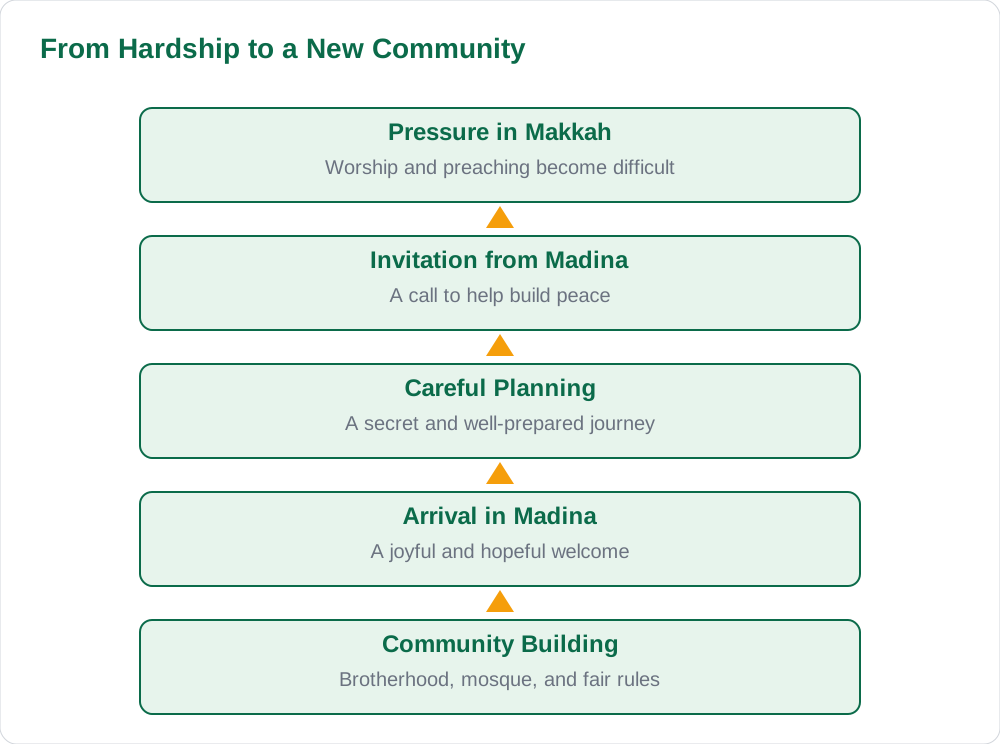
Start by learning the sequence in your own words: causes, invitation, journey, arrival, and community building. Write a short timeline from memory, then check it against your book. Explain each stage aloud as if teaching a friend.
Next, connect each stage to a lesson for today. Ask what patience, trust, or sacrifice looks like in school life. For example, staying honest when cheating seems easier reflects the same values. Browse the solved notes for study methods that help you revise Seerat with understanding and confidence.
AI Help: Muse AI
Muse AI is Meta's personal AI assistant. It can help you summarise the Hijrat in your own words, make a simple timeline for revision, or turn the causes and lessons into practice questions. Muse AI does not give official STBB answers — always verify against your STBB book and your teacher. Always check your notes against your Sindh Textbook Board book and your teacher's guidance.
Join Muse with invite code LTGSWD — in the Muse app, go to Settings > Redeem token and enter the code.
Disclosure: LTGSWD is the author's Muse invite code.
5 key points you must know
- The Hijrat was a planned migration guided by faith, courage, and careful preparation.
- Persecution in Makkah and the invitation from Madina together explain why it happened.
- The journey shows trust in Allah combined with practical planning and loyal companionship.
- In Madina, the community gained open worship, brotherhood, and fair agreements.
- Trust and sacrifice from the Hijrat still guide pupils in study, honesty, and service.
Frequently asked questions
Why is the Hijrat called a turning point in Seerat?
Because it moved the Muslim community from persecution in Makkah to a stable home in Madina, where open worship, brotherhood, and community building became possible.
Who travelled with the Prophet (PBUH) on the Hijrat?
Abu Bakr (RA) travelled with him, showing loyalty and courage. Other Muslims also migrated, leaving homes and property behind for faith and a safe community.
What did the Muslims gain in Madina?
They gained a welcoming home, freedom to worship, a mosque as a learning centre, and bonds of brotherhood. Agreements also set fair rules for living peacefully with neighbours.
How can Class 9 pupils remember this lesson?
Learn the sequence in your own words, make a simple timeline, and link each stage to a value such as trust or sacrifice. Teaching the story to a friend is one of the best ways to remember it.
Solved notes — preview free
These guides work best with the solved exercises. Preview the solved notes free on this website — 119 solved notes for Classes 6–10 in Sindhi, Urdu, English and Arabic medium. Or browse the full solved notes catalogue for your class and medium. New solved notes are added regularly — check the catalogue for coming-soon books.