Dua for Entering Home: Words and Meaning
Coming home should feel peaceful. After school, work, or travel, the door of the house is a place where manners matter. Muslims enter with salam, a greeting of peace, and a dua that asks Allah for a good entry and a good exit. This article explains the words, the meaning, and the simple habits that make home life calmer for everyone. Always check the exact wording with your Islamiat book and your teacher.
The Words of the Dua and Their Meaning
The well-known dua for entering the home is Allahumma inni asaluka khairal mawlaji wa khairal makhraji, bismillahi walajna wa bismillahi kharajna, wa ala rabbina tawakkalna. In simple English this means: O Allah, I ask You for the good of entering and the good of leaving. In the name of Allah we enter, in the name of Allah we leave, and upon our Lord we trust. The dua covers the whole cycle of home life: coming in, going out, and trusting Allah in both.
Children can learn this dua in parts, starting with the meaning. Entering in Allah's name means we bring good manners inside. Leaving in Allah's name means we carry those manners outside too. Trust in Allah means we do not rely only on locks and walls for safety, but on Allah's protection and care. Learn the translation in your own language first, then practise the words slowly.
Why Salam Comes First
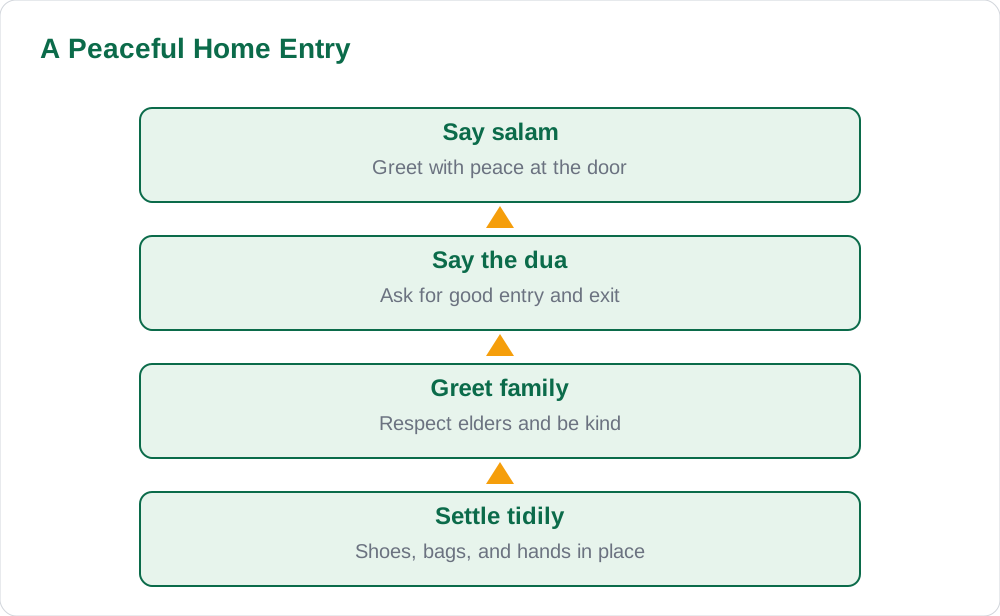
Before the dua, Muslims greet with Assalamu alaikum, meaning peace be upon you. Salam is not a formal hello only; it is a prayer for the people inside. Even if no one is home, saying salam is taught as a greeting of peace for the household. A student who enters with salam sets a peaceful tone, instead of entering silently, shouting, or slamming the door.
Salam also teaches respect for privacy. Knock or announce yourself, wait for a reply, and enter calmly. Do not enter a room without permission, especially bedrooms or rooms where someone may be resting. These manners protect dignity at home. A family that greets each other warmly every day builds closeness that lasts through disagreements.
Manners When Coming Home
Remove shoes where required, wash hands, and greet parents and elders first. Put bags and books in their place instead of dropping them in the doorway. Share a brief account of the day politely, without complaining at length. If you are tired or upset, say so calmly and ask for a short rest, rather than taking frustration out on family members. Small courtesies prevent many home arguments.
Help at home after arrival, even in small ways. Bring water, tidy your room, or help set the table. These actions show that home is a shared responsibility, not a hotel. Students who practise home manners also tend to show better manners at school, because respect becomes a habit rather than a performance for teachers only.
Leaving Home With the Same Care
The dua for entering also mentions leaving, because both moments matter. When leaving, say salam, inform parents where you are going, and leave the house tidy. Carry what you need, lock up properly if asked, and leave with a calm mind. A hurried, rude departure often leads to a stressful day, while a calm departure sets a better tone.
Parents should model this too. A parent who leaves with salam and a kind word teaches more than a lecture on manners. Families can agree on simple rules: greet on entry, inform before leaving, and thank each other for small help. These rules are easy to keep and they make daily life smoother for everyone, including guests.
Teaching Children the Home Dua
Practise the dua at the real door, not only from a book. Say it together when coming home from school for a week, then let the child lead. A small note near the door with the translation can help younger children. Praise the child when they remember salam and the dua without prompting. If they forget, remind them gently the next day.
Teachers can ask students to describe their home entry routine in a few sentences: salam, dua, greeting elders, and tidying up. This turns a lesson into real-life practice. For more daily dua guides, see the solved notes, the blog listing, and the [home page](/) for related articles.
AI Help: Muse AI
Muse AI is Meta's personal AI assistant, and it can explain study topics in simple words, summarise a lesson, and help you practise what you have learned. For this topic, you can ask Muse AI to help you write your home entry routine in simple steps for a class activity. Join Muse with invite code LTGSWD — in the Muse app, go to Settings > Redeem token and enter the code. Disclosure: LTGSWD is the author's Muse invite code. Muse AI does not give official Sindh Textbook Board answers — always verify against your Sindh Textbook Board book and your teacher.
5 key points you must know
- The home dua asks Allah for good entering and good leaving.
- It says we enter and leave in Allah's name and trust in Him.
- Salam is a prayer of peace for the people inside.
- Home manners include greeting elders and keeping things tidy.
- Practise the dua at the real door so children learn by doing.
Frequently asked questions
What is the dua for entering home?
It is Allahumma inni asaluka khairal mawlaji wa khairal makhraji, bismillahi walajna wa bismillahi kharajna, wa ala rabbina tawakkalna, asking for good entry, good exit, and trust in Allah.
What does the dua mean in simple words?
O Allah, I ask for the good of entering and leaving. In Allah's name we enter and leave, and upon our Lord we trust.
Should I say salam even if no one is home?
Yes, salam is taught as a greeting of peace for the household, even when the house appears empty.
What manners go with entering home?
Knock or announce yourself, greet elders, remove shoes where required, wash hands, and put bags and books in their place.
How can children learn this dua easily?
Practise it at the real door daily for a week, learn the meaning first, and let the child lead once they know it.
Solved notes — preview free
These guides work best with the solved exercises. Preview the solved notes free on this website — 119 solved notes for Classes 6–10 in Sindhi, Urdu, English and Arabic medium. Or browse the full solved notes catalogue for your class and medium. New solved notes are added regularly — check the catalogue for coming-soon books.