Dua After Wudu: Words and Meaning

Wudu is more than washing before prayer. It is a preparation of body and heart, a reminder of cleanliness, and a step towards standing before Allah. After completing wudu, Muslims recite a short dua that combines testimony of faith with a request for purity and repentance. This article explains the words, the meaning, and the steps of careful wudu. Always check the exact wording with your Islamiat book and your teacher.
The Words of the Dua and Their Meaning
The well-known dua after wudu is Ashhadu an la ilaha illallah wahdahu la sharika lah, wa ashhadu anna Muhammadan abduhu wa rasuluh. This means: I bear witness that there is no god but Allah alone, without partner, and I bear witness that Muhammad is His servant and messenger. This testimony, called the Shahadah, is the foundation of faith. Saying it after wudu connects outward cleanliness with inward belief.
Many people also add Allahummaj alni minat tawwabeen waj alni minal mutatahhireen. This means: O Allah, make me among those who repent often and among those who purify themselves. The first part asks for a heart that returns to Allah after mistakes. The second part asks for continued purity in body and character. Together, the two parts teach that wudu cleans the body, while repentance cleans the heart.
Why Wudu Ends With This Dua
Wudu follows a fixed order: intention, washing hands, mouth, nose, face, arms, wiping the head, and washing feet. Each step needs care and completeness. Ending with the Shahadah reminds the student why this effort matters. Prayer is not only physical movement, but a meeting with Allah that requires faith, cleanliness, and respect. The dua turns a routine wash into a conscious act of worship.
The addition about repentance also teaches humility. Even after doing wudu correctly, a person still asks Allah for forgiveness and purity. No one is perfect, and every prayer is a fresh chance to improve. For students, this is a useful lesson: doing a task well does not mean boasting about it. The best attitude after a good deed is gratitude plus a request for acceptance.
Performing Wudu Carefully
Start with intention in the heart, then say Bismillah. Wash each part properly, without rushing or wasting water. Wash the face fully, arms up to the elbows, and feet up to the ankles. Wipe the head as taught in your book. Check that water reaches every required area, including between fingers and toes. Careless wudu with dry patches defeats its purpose, so slow and complete washing matters more than speed.
Avoid wasting water, even though water may seem plentiful. Use a moderate amount, turn off the tap between steps where possible, and keep the washing area clean for the next person. At school, students should queue patiently and not splash others. These manners show respect for a shared facility and for the blessing of clean water, which many people in the world lack.
Common Mistakes Students Should Avoid
Common mistakes include rushing through steps, skipping parts, using too much water, and talking loudly during wudu. Another mistake is performing wudu without learning the correct order. Students should learn the steps from their Islamiat teacher and practise at home until the order feels natural. If unsure about a step, ask a teacher rather than guessing silently for years.
Another mistake is thinking wudu is only for prayer time. Cleanliness is a general habit in Islam, and wudu also teaches discipline, order, and self-control. A student who learns careful wudu often becomes more careful in other routines too, such as homework and personal hygiene. The habit transfers because it trains attention to detail.
Making the Dua a Habit After Every Wudu
Say the dua immediately after finishing wudu, while the feeling of cleanliness is fresh. Repeat it slowly for a few days until it is memorised with meaning. Parents can recite it aloud at home so children learn by hearing. Teachers can ask students to write the translation in their own words as a short class task, which checks understanding rather than only recitation.
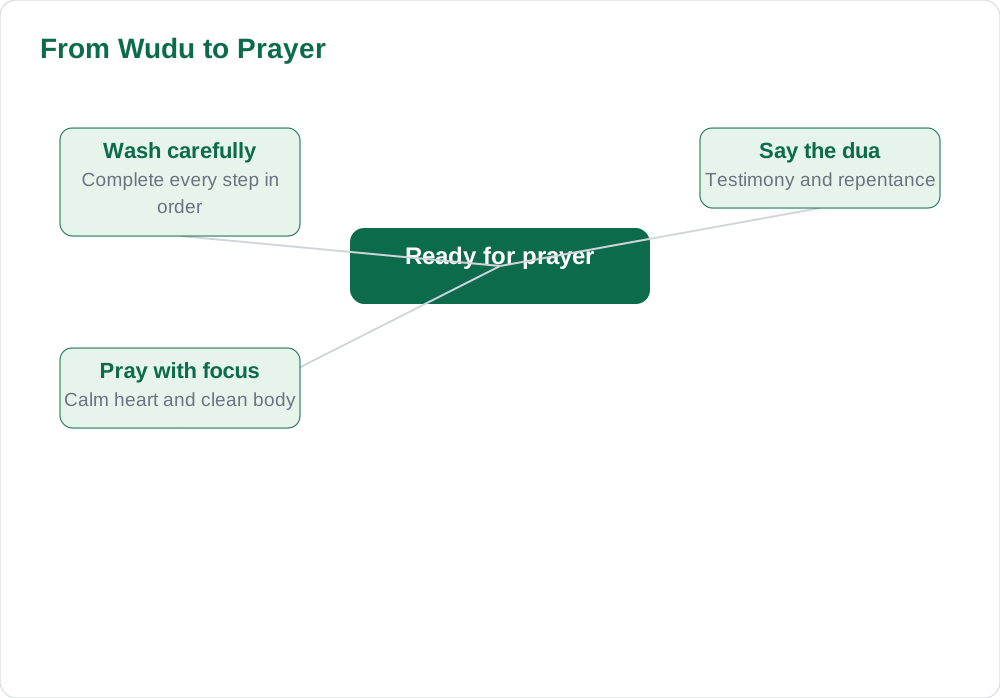
Link the dua to prayer preparation. Wudu, then dua, then prayer forms a smooth chain. A student who follows this chain arrives at prayer calm and ready, not rushed and distracted. For more Islamiat study help, see the solved notes, the book lists, and the about page.
AI Help: Muse AI
Muse AI is Meta's personal AI assistant, and it can explain study topics in simple words, summarise a lesson, and help you practise what you have learned. For this topic, you can ask Muse AI to help you list the steps of wudu in order so you can check your own practice. Join Muse with invite code LTGSWD — in the Muse app, go to Settings > Redeem token and enter the code. Disclosure: LTGSWD is the author's Muse invite code. Muse AI does not give official Sindh Textbook Board answers — always verify against your Sindh Textbook Board book and your teacher.
5 key points you must know
- The dua after wudu begins with the Shahadah testimony of faith.
- It also asks Allah to make us among those who repent and purify themselves.
- Wudu must be complete, careful, and without wasting water.
- The dua links outward cleanliness with inward faith.
- Say it immediately after wudu so it becomes a steady habit.
Frequently asked questions
What is the dua after wudu?
It is Ashhadu an la ilaha illallah wahdahu la sharika lah, wa ashhadu anna Muhammadan abduhu wa rasuluh, meaning I bear witness that there is no god but Allah alone, and Muhammad is His servant and messenger.
Is there an additional dua after wudu?
Many people add Allahummaj alni minat tawwabeen waj alni minal mutatahhireen, asking Allah to make them among those who repent and purify themselves.
Why do we say the Shahadah after wudu?
It connects outward cleanliness with inward faith, reminding us that prayer requires both a clean body and sincere belief.
What are common wudu mistakes?
Rushing, skipping parts, leaving dry patches, wasting water, and not learning the correct order. Slow, complete washing avoids these.
How can children memorise this dua?
Learn the meaning first, repeat it slowly after every wudu for a few days, and hear parents or teachers recite it aloud at home.
Solved notes — preview free
These guides work best with the solved exercises. Preview the solved notes free on this website — 119 solved notes for Classes 6–10 in Sindhi, Urdu, English and Arabic medium. Or browse the full solved notes catalogue for your class and medium. New solved notes are added regularly — check the catalogue for coming-soon books.