Class 9 Islamiat: Namaz Conditions and Method

Namaz, or Salah, is the second pillar of Islam and the daily act of worship that connects a Muslim directly with Allah. It is performed five times a day, and it is the first deed about which a person will be asked on the Day of Judgement. For Class 9 students, learning Namaz properly means understanding its conditions, such as cleanliness and correct timing, as well as its method, from standing and recitation to bowing, prostration, and sitting. This guide explains wudu, prayer times, faraiz, and the method of prayer in simple, step-by-step language that students can follow and revise with confidence. Each section below builds on the last, so students can revise the whole topic in order.
Why Prayer Holds the First Place
Namaz is called the pillar of religion because it keeps faith alive throughout the day, not only on special occasions. Five daily prayers divide the day into moments of remembrance, so a Muslim pauses work, study, and play to stand before Allah, recite His words, and ask for guidance. This regular rhythm protects a person from forgetting Allah amid busy routines. For students, prayer also builds discipline: waking for Fajr teaches time management, praying on time teaches punctuality, and praying with focus teaches concentration that carries over into study and examinations as well.
The Quran describes prayer as a protection against shameful and unjust deeds, and this effect becomes clear when prayer is performed with attention rather than as a rushed habit. A person who stands before Allah five times a day finds it harder to lie, cheat, or harm others, because the same heart that seeks forgiveness in prayer cannot easily plan wrongdoing afterwards. Students should therefore treat Namaz as more than a ritual to complete; it is a daily training in honesty, humility, and self-control. When prayer improves, character usually improves alongside it, and teachers and parents notice the difference.
Wudu: Cleanliness Before Prayer
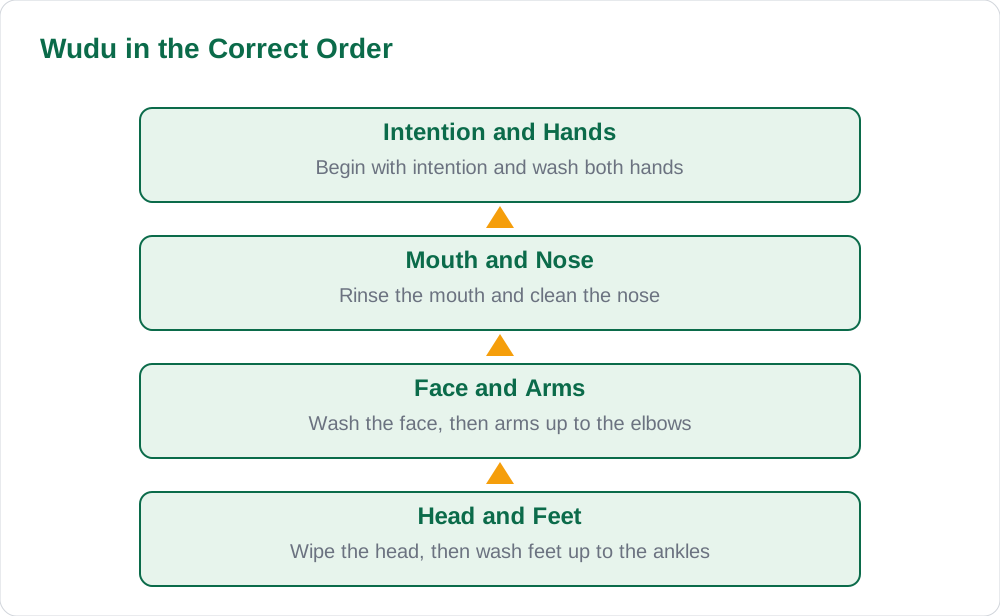
Wudu is the ablution performed before prayer, and it teaches both physical cleanliness and spiritual readiness. It begins with intention and washing the hands, then rinsing the mouth and nose, washing the face, washing the arms up to the elbows, wiping over the head, and washing the feet up to the ankles. Each step is performed in order, and the whole process takes only a few minutes once it becomes a habit. Students should learn the steps in sequence rather than rushing, because correct wudu is a condition for valid prayer, and carelessness at this stage affects the prayer that follows it.
Cleanliness in Islam goes beyond wudu and includes clean clothes, a clean place of prayer, and covering the body properly. A student who keeps these conditions in mind will naturally develop habits of tidiness and respect for shared spaces, such as the classroom and the mosque. It is also important to know what breaks wudu, such as using the toilet or falling into deep sleep, so that wudu can be renewed when needed. Teachers often test this topic through simple questions about order and conditions, so revising the steps aloud, in sequence, is one of the best ways to remember them accurately.
Prayer Times and Conditions
The five daily prayers each have a fixed time: Fajr before sunrise, Zuhr after midday, Asr in the afternoon, Maghrib just after sunset, and Isha at night. Praying within its time is a condition of valid prayer, so students should learn the approximate timings for their area and plan study and play around them. Other conditions include being in a state of cleanliness, facing the Qiblah, covering the body, and having the intention to pray. When these conditions are met, the prayer is performed correctly; when one is missing without excuse, the prayer may need to be repeated or made up according to Islamic guidance.
Students often ask how to manage prayer during school hours, and the answer is planning and communication. Zuhr usually falls during or near school time, so students can ask teachers about a short break or pray during the lunch interval where facilities exist. Keeping a small prayer mat and knowing the Qiblah direction in advance removes excuses and makes prayer easy. It also helps to pray with classmates when possible, because congregation encourages regularity. A student who plans prayer into the timetable, just like homework or revision, rarely misses it, even on busy school days.
The Faraiz and Method of Prayer
The faraiz of prayer are its essential parts, without which prayer is not complete, and students should learn them as a clear list rather than a vague idea. They include standing for those who are able, the opening takbir, recitation of the Quran including Surah Al-Fatihah, bowing, prostration, sitting for the final tashahhud, and ending with salam. Each part has a purpose: standing shows humility before Allah, recitation brings His words into the heart, bowing and prostration express submission, and salam closes the prayer with peace. Learning the faraiz in order helps students check their own prayer and answer examination questions with confidence.
The method of prayer follows a calm and dignified sequence that students can practise step by step. After intention and takbir, the worshipper recites, bows with a straight back, stands again, prostrates with forehead on the ground, sits briefly, and repeats the cycle for each rakah. Movements should be unhurried, with a pause in each position, because rushing through prayer weakens its purpose. Beginners should learn one rakah perfectly first, then extend the same pattern to two, three, or four rakahs as required. Practising with a knowledgeable teacher or family member, and correcting mistakes gently, is the fastest way to build a correct and confident prayer.
Focus, Mistakes, and Daily Habit
Khushu, or humble focus, is the heart of prayer, and it is built gradually rather than achieved in a single day. Students can improve focus by understanding the meanings of what they recite, praying in a quiet place, and avoiding rush before prayer begins. When the mind wanders, a worshipper should gently bring attention back to the words being recited, without becoming frustrated or abandoning the prayer. Common mistakes, such as praying too quickly, skipping a position, or looking around, can be corrected with practice and guidance. Teachers appreciate students who admit mistakes and ask how to correct them, because that attitude leads to real improvement.
Building a daily prayer habit is easier when prayer is linked to existing routines, such as praying Fajr before breakfast, Zuhr during the school break, and Maghrib after returning home. Families can help by praying together when possible and by reminding one another kindly rather than scolding. For revision and solved notes, students can explore Solved Notes and the wider collection on Books. A student who guards the five prayers will find that study, character, and peace of mind all improve, because prayer orders the day around remembrance of Allah and responsibility to others.
AI Help: Muse AI
Muse AI is Meta's personal AI assistant, and it can help you learn Namaz by explaining wudu steps and prayer conditions in a simple, ordered list you can revise. You can ask it to quiz you on the faraiz, to explain the meaning of a short recitation, or to help you plan prayer times around your school day. Muse AI does not give official STBB answers — always verify against your STBB book and your teacher. Always verify against your Sindh Textbook Board book and your teacher before using anything in classwork.
Join Muse with invite code LTGSWD — in the Muse app, go to Settings > Redeem token and enter the code. Disclosure: LTGSWD is the author's Muse invite code.
5 key points you must know
- Namaz is performed five times daily and is the second pillar of Islam.
- Wudu follows a fixed order: hands, mouth, nose, face, arms, head, and feet.
- Prayer conditions include cleanliness, correct time, Qiblah, and intention.
- The faraiz include standing, recitation, bowing, prostration, and salam.
- Focus and calm movements matter more than rushing through prayer.
Frequently asked questions
What are the five daily prayers and their times?
The five prayers are Fajr before sunrise, Zuhr after midday, Asr in the afternoon, Maghrib just after sunset, and Isha at night. Each prayer must be performed within its fixed time, so students should learn local timings and plan study and play around them. Praying on time is itself a condition of valid prayer and a sign of discipline.
What is the correct order of wudu?
Wudu begins with intention and washing the hands, followed by rinsing the mouth and nose, washing the face, washing the arms up to the elbows, wiping over the head, and washing the feet up to the ankles. Learning this order by practising aloud helps students remember it for examinations and daily life. Clean clothes and a clean place of prayer are also part of preparation.
What are the faraiz of prayer?
The faraiz are the essential parts of prayer, including standing for those who are able, the opening takbir, recitation including Surah Al-Fatihah, bowing, prostration, sitting for the final tashahhud, and ending with salam. If an essential part is missed without excuse, the prayer may be incomplete. Students should learn the faraiz as an ordered list for clear examination answers.
How can a student pray Zuhr during school?
A student can plan ahead by learning the Zuhr time, asking a teacher about a short break or lunch-interval prayer, and knowing the Qiblah direction and a suitable place in advance. Praying with classmates, where possible, encourages regularity and makes the habit easier. Planning prayer into the school timetable, like homework, helps students rarely miss it even on busy days.
How can I improve focus in prayer?
Focus improves by understanding the meanings of recitations, praying in a quiet place, and moving calmly with a pause in each position. When the mind wanders, gently return attention to the words being recited without frustration. Practising one rakah correctly first, then building up, and asking a teacher to correct mistakes, are the most effective ways to develop humble, attentive prayer over time.
Solved notes — preview free
These guides work best with the solved exercises. Preview the solved notes free on this website — 119 solved notes for Classes 6–10 in Sindhi, Urdu, English and Arabic medium. Or browse the full solved notes catalogue for your class and medium. New solved notes are added regularly — check the catalogue for coming-soon books.