Class 10 Urdu Khutut Nigari: Letters That Score

Letter writing, or khutut nigari, is one of the most reliable scoring areas in the Class 10 Urdu paper, because its format is fixed and its marks reward correctness rather than creativity alone. Yet many students lose easy marks by forgetting the address, misplacing the date, or writing a formal letter in a casual tone. The good news is that letter writing is a skill you can master completely with practice: once you know the two main formats, every letter becomes a matter of filling the right structure with relevant content. This guide gives you model formats for formal and personal letters, shows you how to organise the body, and lists the mistakes to avoid. Practise with topics of your own choice, since exam topics vary every year.
Why Letters Score Well and What Examiners Check
Examiners mark letters on four things: correct format, appropriate tone, relevant content, and clean language. Format includes the sender's address, the date, the greeting, the subject line in formal letters, the body paragraphs, and the closing. Tone means a formal letter sounds respectful and to the point, while a personal letter sounds warm and natural. Content means every paragraph answers the purpose of the letter, whether that is a request, a complaint, an invitation, or news for a friend. Language means simple, correct Urdu with proper spelling and punctuation, since errors in a short letter stand out more than in a long essay.
Because the marking is so structured, a well-formatted letter with ordinary content often scores better than a beautifully written letter with a broken format. Think of format as the frame and content as the picture: both matter, but a picture without a frame looks unfinished to the examiner. Before writing, spend one minute planning: decide the letter type, note the three points your body must cover, and choose the correct greeting and closing. That minute of planning prevents the most common disaster, which is realising halfway through that you used the wrong format. Model formats and more practice guidance appear on Solved Notes and the Blog.
Formal Letter Format: Step by Step
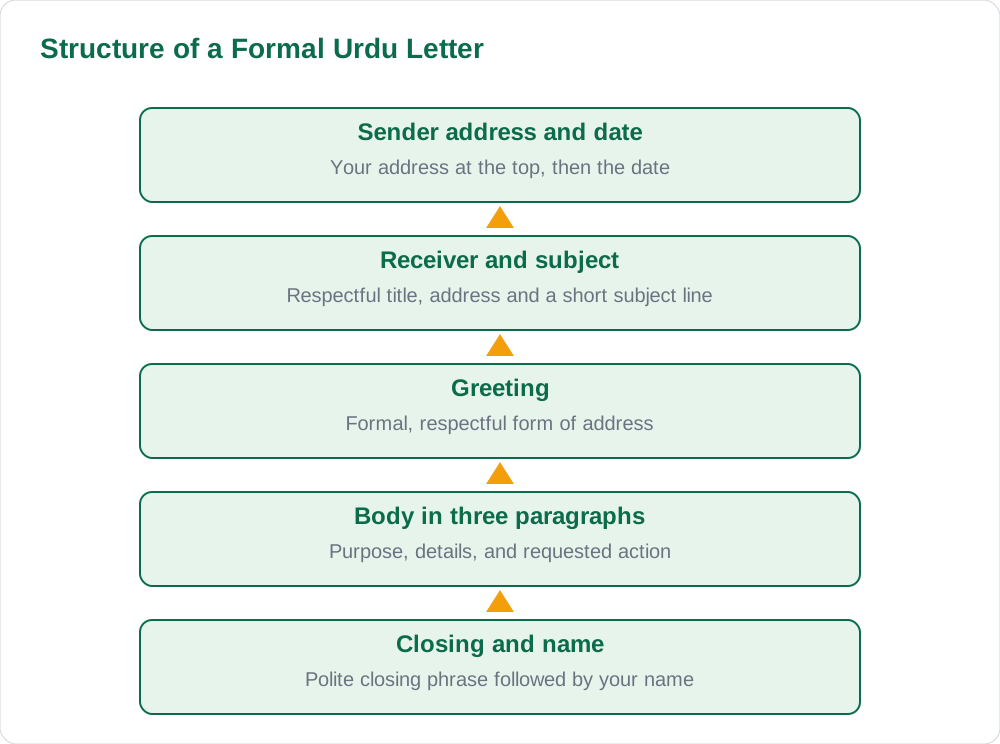
A formal letter begins with the sender's address at the top, followed by the date on the next line. Next comes the receiver's title and address, such as the editor of a newspaper or the head of an institution, written respectfully. Then write a clear subject line stating the purpose of the letter in a few words, because it helps the reader immediately understand your request. The greeting follows, using a respectful form of address appropriate to the receiver. These opening lines are not decoration; examiners award separate marks for them, so never skip the address, date, or subject line to save time.
The body of a formal letter usually has three paragraphs: an introduction stating your purpose, a middle paragraph giving details or reasons, and a closing paragraph stating what action you request or expect. Keep each paragraph focused on one idea, and keep the whole letter brief and to the point, since formal letters value clarity over length. End with a respectful closing phrase and your name, and sign if the question asks for a signature. Avoid slang, emotional language, or unnecessary stories in formal letters; a calm, polite, factual tone is exactly right. Practise this format with different purposes, such as a request, a complaint, or an application, so the structure becomes automatic.
Personal Letter Format: Warm, Natural and Organised
A personal letter also begins with the sender's address and date, but its tone is warm and conversational rather than formal. The greeting uses an affectionate form of address suited to the relationship, such as for a friend, a parent, or an elder relative. The body usually opens with greetings and well-wishes, then shares news or responds to the friend's letter, and finally asks about the reader or makes a request. Unlike a formal letter, a personal letter may include feelings, memories, and everyday details, but it should still stay organised: one idea per paragraph keeps it readable and pleasant.
Students often make personal letters too long or too vague, writing page after page without a clear purpose. Avoid this by deciding the letter's main purpose before you start: congratulations, invitation, advice, apology, or sharing news. Write two or three paragraphs on that purpose, add a short personal touch such as asking after the reader's health or family, and close warmly. The closing of a personal letter is affectionate but dignified, followed by your name or a familiar form of it. Remember that even a personal letter in an exam is a formal exercise: keep the language clean, the spelling correct, and the handwriting neat.
Writing the Body: Three Paragraphs That Do the Work
The body is where most letter marks are earned, so organise it deliberately instead of writing whatever comes to mind. Paragraph one should state the purpose clearly: why you are writing, in one or two sentences. Paragraph two should give the details: facts, reasons, dates, or examples that support your purpose. Paragraph three should conclude: what you request, hope, or expect, and a polite closing thought. This three-paragraph shape works for almost every exam letter, formal or personal, with only the tone changing between the two types. If the question gives specific points to cover, make sure each point appears in your body, and tick them off mentally before finishing.
Content quality matters as much as structure, so keep your details realistic and relevant. A request letter should explain why the request is reasonable; a complaint letter should state the problem, when it happened, and what solution you seek; an invitation should give the occasion, date, time, and place clearly. Avoid exaggeration and avoid inventing official facts, such as fake reference numbers or false claims, because examiners value honest, sensible content. Use simple sentences and connect them smoothly, rather than writing very long sentences that lose their meaning halfway. After drafting, read the body once and ask whether a stranger could understand your purpose and your request from it alone.
Common Mistakes That Cost Easy Marks
The most frequent mistake is a missing or misplaced date, address, or subject line, each of which carries its own marks. The second is using the wrong greeting or closing, such as a casual greeting in a formal letter or a stiff formal closing in a letter to a friend. The third is writing only one long paragraph instead of organised paragraphs, which makes the letter hard to follow. The fourth is spelling and punctuation errors, which examiners notice quickly in a short piece of writing. The fifth is drifting off topic, for example turning a request letter into a general essay about the subject.
Prevent all five with a simple pre-writing checklist: address, date, receiver, subject, greeting, three body paragraphs, closing, name. Write this checklist on your rough work page if the exam allows it, and tick each item as you complete it. Practise one letter per week, alternating formal and personal types, and ask your teacher to mark the format separately from the content so you can see which side needs work. Keep a small collection of your corrected letters, because revising your own mistakes teaches more than reading model letters alone. With steady practice, letter writing becomes the safest question on your Urdu paper. More exam preparation is available on the Blog and book information on Books.
AI Help: Muse AI
Muse AI is Meta's personal AI assistant, and it can help with khutut nigari by checking whether your letter draft follows the correct format, or by suggesting a polite subject line for a formal request. You can ask it to review the order of your letter's parts before you write the final version. Join Muse with invite code LTGSWD — in the Muse app, go to Settings > Redeem token and enter the code. Disclosure: LTGSWD is the author's Muse invite code. Muse AI does not give official STBB answers — always verify against your STBB book and your teacher. Remember to verify against your Sindh Textbook Board book before writing any letter in your exam.
5 key points you must know
- Letters are marked on format, tone, content, and language — format first.
- Formal letters need sender address, date, receiver, subject, greeting, body, closing.
- Personal letters use the same skeleton with a warm, natural tone.
- Organise the body as purpose, details, and requested action or closing thought.
- Use a pre-writing checklist to avoid missing dates, subjects, or closings.
Frequently asked questions
What is the correct order of parts in a formal Urdu letter?
The order is: sender's address, date, receiver's title and address, subject line, greeting, body paragraphs, respectful closing, and your name. Each part carries marks, so skipping one, especially the subject line or date, loses marks even if the body is good. Write the parts in this order every time you practise, so the sequence becomes automatic under exam pressure. If you are unsure about a receiver's exact title, use a respectful general form rather than guessing a specific name.
How do personal and formal letters differ in tone?
A formal letter is respectful, brief, and factual, avoiding slang, emotion, and personal stories. A personal letter is warm, conversational, and may include feelings, greetings, and everyday details. The structure is similar, but the greeting, closing, and vocabulary change with the relationship. Mixing the tones, such as a casual greeting in a formal letter, is a common error that examiners penalise. Decide the letter type before writing and keep the tone consistent throughout.
How long should an exam letter be?
A letter of about one to one and a half pages is usually right: complete format plus three body paragraphs. Shorter letters risk missing required points, while much longer ones often drift off topic and waste time. Focus on covering every point the question asks for, in organised paragraphs, rather than on reaching a particular length. If the question lists specific points, check each one off in your body before finishing.
Should I write my real name and address in an exam letter?
Follow your teacher's and exam instructions on this point, since practices vary. Many students use a clearly placeholder-style name or the name given in the question, and examiners accept this when the format is otherwise correct. What matters most is that the address, date, and closing positions are correct and the name is written in the right place. Never invent an official-looking address or reference number to sound authentic, since invented official details are not rewarded.
How can I practise letter writing effectively?
Write one letter per week, alternating formal and personal types, and ask your teacher to mark format and content separately. Keep a checklist of the letter parts and tick each one before submitting your practice. Reuse the same three-paragraph body structure with different topics, so the format becomes habit and you can focus on content in the exam. Revise your corrected letters regularly, because your own past mistakes are the best guide to what still needs work.
Solved notes — preview free
These guides work best with the solved exercises. Preview the solved notes free on this website — 119 solved notes for Classes 6–10 in Sindhi, Urdu, English and Arabic medium. Or browse the full solved notes catalogue for your class and medium. New solved notes are added regularly — check the catalogue for coming-soon books.