BIEK Pre-Engineering Result 2026: What 6,310 Passes Really Mean
The BIEK pre-engineering result 2026 analysis starts with one honest number: of the 14,683 pupils who appeared in the Intermediate Part-I Science Pre-Engineering annual examination, 6,310 passed all six papers. The Board of Intermediate Education Karachi (BIEK) announced the result on 2 October 2026, on the directions of Chairman Faqir Muhammad Lakho, and Controller of Examinations Zarina Rashid released the figures. About 43% cleared all six papers, which means a large share of candidates are now dealing with at least one paper still to clear. That is not a reason to panic. It is a reason to read the result carefully, understand exactly which papers are cleared and which are not, and make a calm plan with your school and your teachers. This article explains the numbers, the partial-pass picture, and the sensible next steps.
What the headline numbers actually say
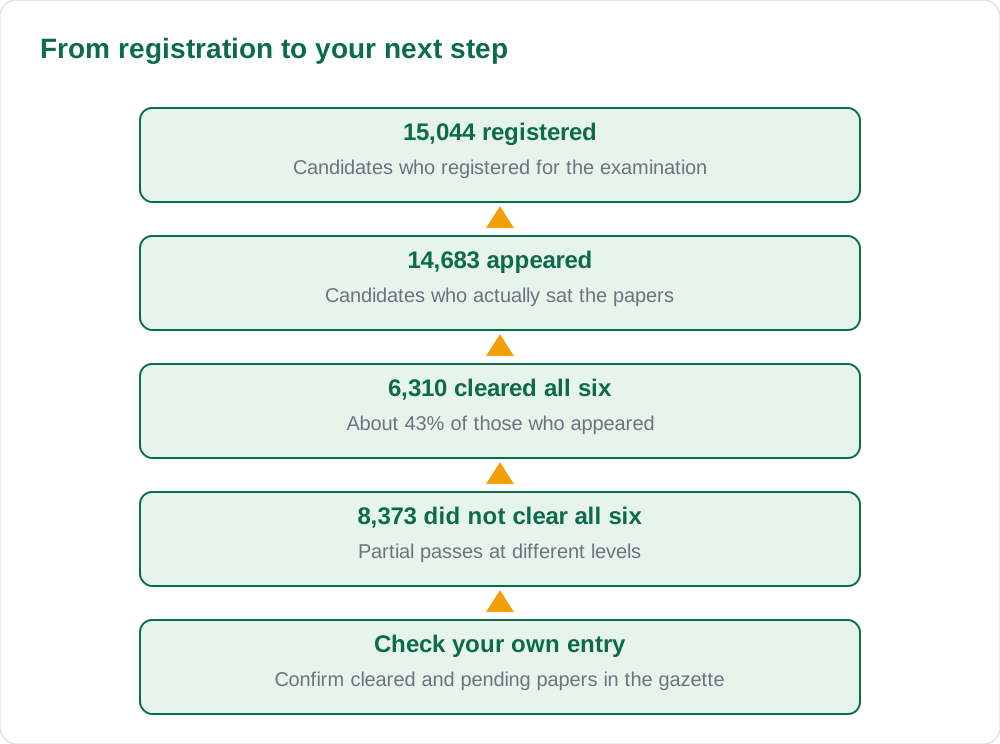
The result announcement gave a full chain of figures, and each one means something different. A total of 15,044 candidates registered for the examination, and 14,683 appeared. The gap between registered and appeared is normal in board examinations, and it simply tells us how many pupils sat the papers. The most important figure for pupils is the next one: 6,310 candidates passed all six papers.
Presenting the figure as about 43% of those who appeared helps put it in perspective. Roughly four in ten candidates cleared every paper in this sitting, while 8,373 did not clear all six. Those 8,373 pupils are not in one single group, though. Some passed five papers, some passed one, and their next steps are different. The first job after any result is therefore to find your own exact position, not to compare yourself with the headline percentage.
The partial-pass picture
The board also published how many pupils passed five, four, three, two or one paper, and this breakdown is more useful than the headline alone. It shows that partial success is common, not unusual, and that most pupils who did not clear all six papers still have real progress to build on.
Read the breakdown as a map of where pupils stand. A pupil who passed five papers has one paper to deal with. A pupil who passed three papers has a different job: three papers secured, three still open. Your study plan should match your own row in this table, not somebody else's.
- 79 candidates passed five papers
- 747 candidates passed four papers
- 1,827 candidates passed three papers
- 1,864 candidates passed two papers
- 1,783 candidates passed one paper
Why clearing all six papers matters
Intermediate Part-I is the first year of the two-year Intermediate programme. The papers you clear in Part-I stay cleared, and the papers you do not clear remain open until the board's rules allow you to reappear in them. That is why the phrase 'passed all six papers' carries weight: it means the whole first-year set is finished in one sitting.
Clearing all six papers also keeps your path into Part-II straightforward. If one or more papers are still open, your school and teachers can help you plan how Part-II study and the pending papers fit together. This is a planning conversation, not a punishment, and it is one that thousands of pupils have every year. The earlier you have it, the calmer the year ahead becomes.
If you did not clear all six papers
Start with verification. Confirm your result from the official gazette or the official online result, and write down exactly which papers you cleared and which you did not. Do not rely on a forwarded message or a screenshot from an unofficial page. Your own list of cleared and pending papers is the foundation of everything that follows.
Then take that list to your school or your subject teacher. They can explain how reappearing works under the board's current rules, including eligibility and timing, and help you arrange a study plan that covers the pending papers without neglecting Part-II work. Keep the plan realistic: a small number of pending papers with steady daily study beats a grand plan that collapses in a week. Always confirm reappearance rules, fees and deadlines through the board's official notification rather than through rumours.
- Confirm your own result from the official gazette or official online slip
- Write down cleared papers and pending papers separately
- Discuss reappearance rules with your school or teacher
- Build a daily study plan for pending papers alongside Part-II work
- Check the board's official notification for dates, fees and eligibility
How to read the result without rumours
One fact about this result deserves special attention. The BIEK gazette lists roll numbers and marks only. It does not name toppers or position holders. Any Pre-Engineering topper list circulating for this result is unofficial, and pupils should treat it that way. If a list does not come from the board, it is not a board list.
The safest habit is to check results only through official channels: the board's official website at biek.edu.pk, the official gazette, and your school. Never pay a third-party 'result service' for information the board publishes itself, and never forward an unverified list to classmates. A few minutes of checking the official source saves days of confusion. For a step-by-step guide to reading the gazette itself, see how to read the BIEK Pre-Engineering gazette, and for checking any BIEK result online, see how to check a BIEK Karachi Inter result.
AI Help: Muse AI
Muse AI is Meta's personal AI assistant, and it can help you turn a result like this into a plan. For example, you can ask it to help you build a weekly study timetable that covers your pending papers alongside Part-II topics, with short daily revision slots for each subject. Muse AI does not give official Sindh Textbook Board answers — always verify against your Sindh Textbook Board book and your teacher.
Join Muse with invite code LTGSWD — in the Muse app, go to Settings > Redeem token and enter the code.
Disclosure: LTGSWD is the author's Muse invite code.
5 key points you must know
- BIEK announced the Pre-Engineering Part-I result on 2 October 2026: 15,044 registered, 14,683 appeared.
- 6,310 candidates passed all six papers, which is about 43% of those who appeared.
- 8,373 candidates did not clear all six papers, at levels from five papers down to one.
- The BIEK gazette lists roll numbers and marks only and names no toppers.
- Pupils with pending papers should confirm their own result, list cleared and pending papers, and plan reappearance with their school under the board's official rules.
Frequently asked questions
How many pupils passed all six papers in the BIEK Pre-Engineering Part-I result 2026?
According to the figures released by Controller of Examinations Zarina Rashid, 6,310 candidates passed all six papers out of 14,683 who appeared. That is about 43% of those who appeared.
What does it mean if I passed only some papers?
It means those papers are cleared and the remaining papers are still open. The board published partial-pass figures from five papers down to one paper. Take your own list of cleared and pending papers to your school or teacher and confirm the reappearance rules in the board's official notification.
Who were the toppers of the Pre-Engineering Part-I result?
The BIEK gazette for this result lists roll numbers and marks only and does not name toppers or position holders. Any topper list circulating for this result is unofficial and should not be treated as a board announcement.
Where can I check my own BIEK Pre-Engineering result?
Check through the board's official website at biek.edu.pk, the official gazette, or your school. Avoid third-party 'result service' pages, and never pay anyone for result information the board publishes itself.
What should I do first after seeing my result?
First confirm your own entry in the official gazette or online slip, then write down which papers you cleared and which are pending. Discuss the next steps with your school or teacher, and if you believe a paper was marked wrongly, read our guide to scrutiny and rechecking in Sindh and confirm the process through the board's official notification.
Solved notes — preview free
These guides work best with the solved exercises. Preview the solved notes free on this website — 119 solved notes for Classes 6–10 in Sindhi, Urdu, English and Arabic medium. Or browse the full solved notes catalogue for your class and medium. New solved notes are added regularly — check the catalogue for coming-soon books.