Abdus Sattar Edhi: A Life of Humanity
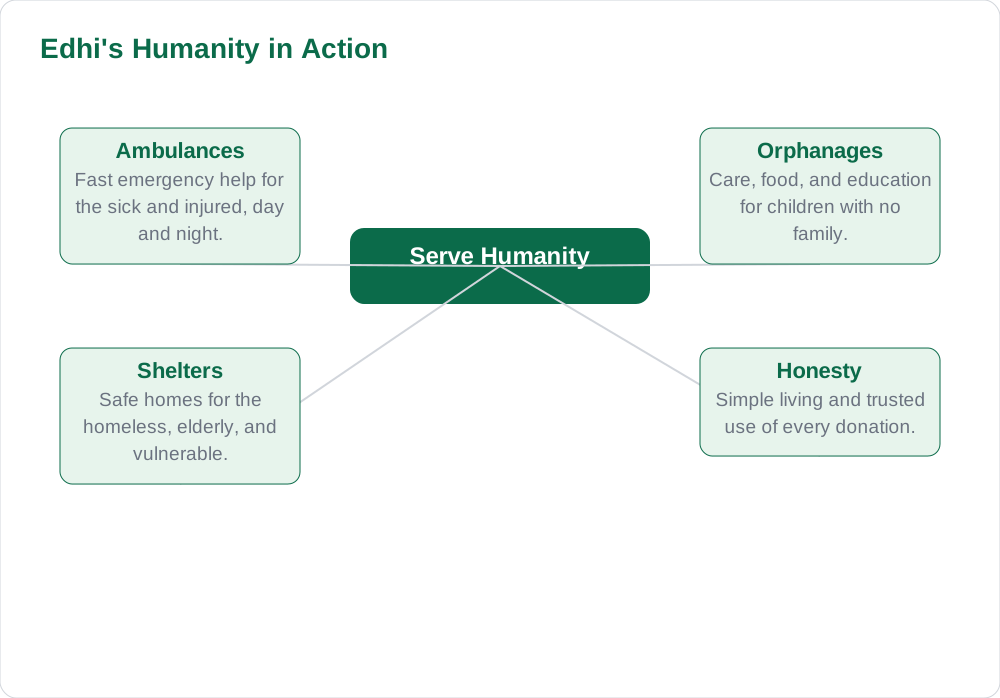
Abdus Sattar Edhi is known around the world as one of the greatest humanitarians of modern times. He started with almost nothing and built Pakistan's largest welfare network: ambulances, hospitals, orphanages, shelters, and burial services for the unclaimed dead. He lived simply, wore simple clothes, and refused luxury even when donations poured in. He served people of every religion, caste, and background without asking about their identity. For students, Edhi's life is a lesson in kindness, honesty, and the power of small, consistent service.
A Simple Beginning in Karachi
Edhi was born in 1928 in Gujarat, India, and migrated to Pakistan after independence. In Karachi, he saw poverty, sickness, and homeless people on the streets. Instead of only feeling sad, he decided to act. He started a small dispensary and bought an old van to serve as an ambulance. He begged for donations on the streets, not for himself but for the poor. That humble beginning teaches students an important truth: you do not need wealth to start helping. You need a willing heart and a first step.
Many students wait for a big chance to do good. Edhi shows that service starts small. Helping a classmate with homework, sharing lunch with a hungry child, visiting a sick neighbour, or keeping your street clean are all real service. Small acts, done regularly, grow into big change. Edhi's first ambulance was old and simple, but it carried hope. Your first good act, however small, can carry the same hope for someone else.
The Edhi Foundation: Ambulances and Hospitals
Over decades, the Edhi Foundation grew into a huge network across Pakistan. Its ambulances became a familiar sight in cities and towns, rushing the sick and injured to hospitals at all hours. The foundation also ran hospitals, clinics, maternity homes, and homes for the mentally ill and disabled. During floods, earthquakes, and accidents, Edhi workers were often among the first to arrive. Their service was fast, free or very low cost, and open to everyone.
Students can learn organisation from this growth. Edhi did not build everything in one day. He added one ambulance, then another, then a shelter, then a hospital, step by step. A student building a habit can do the same: one chapter a day, one good deed a day, one revision session a day. Big results come from steady addition, not from one dramatic effort. The foundation also shows teamwork. Thousands of volunteers and workers, not one man alone, kept the service running day and night. You can find class notes on the solved notes page.
- Start service small: one good deed done regularly matters.
- Build big goals step by step, not in one dramatic effort.
- Teamwork keeps a service running when one person cannot.
Orphanages, Shelters, and the Cradle
One of Edhi's most famous acts was placing a cradle outside Edhi centres, where parents who could not care for a baby could leave the child safely instead of abandoning the child in danger. The foundation raised these children in orphanages, giving them food, education, and care. Edhi homes also sheltered runaway children, homeless women, and elderly people with no family. He believed that every human life has dignity, even when society has forgotten that person.
For students, this teaches respect for every human being. Do not mock a poor classmate, a disabled child, or a child without parents. Kindness costs nothing, but it changes lives. If you see a new student sitting alone, invite them to join your group. If a classmate cannot afford books, share your notes quietly without embarrassing them. Edhi's cradle was a symbol of mercy. Your kind words and inclusive behaviour can be a cradle of safety for someone in your own class.
Honesty With Donations and a Simple Life
Edhi was famous for his honesty with public money. People trusted him because he lived simply and spent donations on service, not on himself. He owned few possessions, slept in a simple room, and refused offers of luxury. That trust is why donations kept coming for decades. In a country where people often doubt charities, Edhi's personal honesty was his greatest asset. Students should understand that trust is earned by behaviour, not by words.
Honesty in student life works the same way. A student who returns lost money, admits a mistake, and refuses to cheat earns the trust of teachers and friends. That trust opens doors: leadership roles, recommendations, and respect. A student who cheats may pass one test but loses trust for a long time. Edhi teaches that a simple, honest life is not a weakness. It is strength. It frees you from greed and lets you focus on what truly matters: serving others and living with a clear conscience.
Lessons for Students: Humanity Without Reward
Edhi often said that he served humanity without expecting reward, and he refused honours that would distract from his work. He served Muslims, Hindus, Christians, and people of all backgrounds equally, because suffering has no religion. Students in Sindh, where people of many communities live together, should learn this tolerance deeply. Help everyone, respect every faith, and never ask about caste or religion before offering kindness. That is the real meaning of humanity.
You can practise Edhi's message this week. Donate old books or clothes, help an elderly neighbour, keep drinking water available for workers in summer, or volunteer for a school cleanliness drive. Do it quietly, without taking photos for praise. Edhi worked without seeking fame, yet the world honoured him. True service does not need an audience. It needs a sincere heart. When students learn to serve without reward, they become the kind of citizens every nation needs. More study material is on the books page.
AI Help: Muse AI
Muse AI is Meta's personal AI assistant. It can explain a topic in simple words, summarise a lesson, and make practice questions for revision. For this article, you can ask Muse AI for three small acts of kindness a student can do this week. Join Muse with invite code LTGSWD — in the Muse app, go to Settings > Redeem token and enter the code. Disclosure: LTGSWD is the author's Muse invite code. Muse AI does not give official Sindh Textbook Board answers — always verify against your Sindh Textbook Board book and your teacher.
4 key points you must know
- Edhi started with a small dispensary and one old ambulance in Karachi.
- The Edhi Foundation grew into ambulances, hospitals, orphanages, and shelters.
- His cradle gave abandoned babies safety, care, and education.
- Simple living and honesty with donations earned lifelong public trust.
Frequently asked questions
Who was Abdus Sattar Edhi?
He was Pakistan's most famous humanitarian, founder of the Edhi Foundation, which runs ambulances, hospitals, orphanages, and shelters across the country.
What was the Edhi cradle?
It was a cradle placed outside Edhi centres where parents unable to care for a baby could leave the child safely, so the foundation could raise the child with care and education.
Why did people trust Edhi with donations?
He lived very simply, spent donations on service rather than himself, and served people of every religion and background without discrimination.
How can students follow Edhi's example?
Start small: help classmates, share notes quietly, respect every person, donate old books or clothes, and serve without seeking praise or reward.
Solved notes — preview free
These guides work best with the solved exercises. Preview the solved notes free on this website — 119 solved notes for Classes 6–10 in Sindhi, Urdu, English and Arabic medium. Or browse the full solved notes catalogue for your class and medium. New solved notes are added regularly — check the catalogue for coming-soon books.